Progressive template
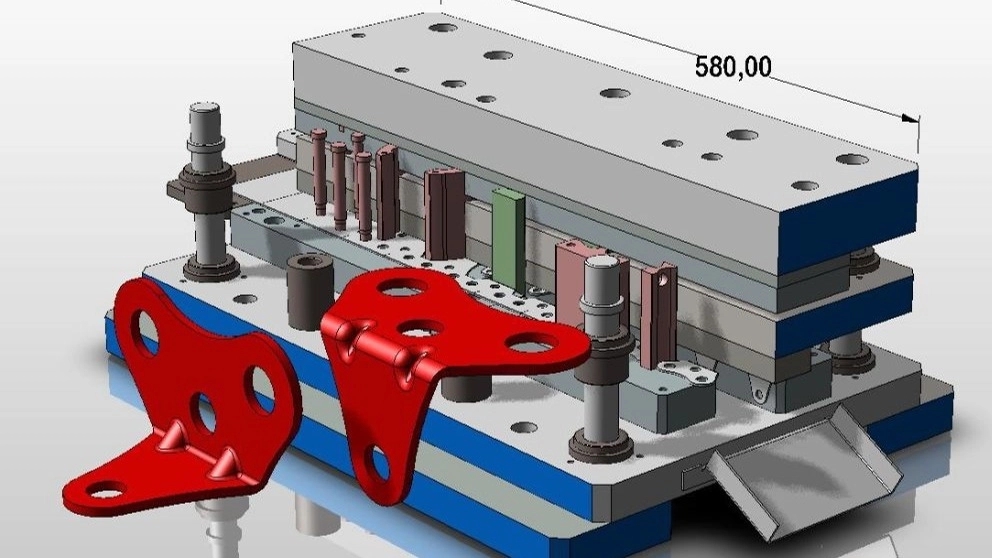
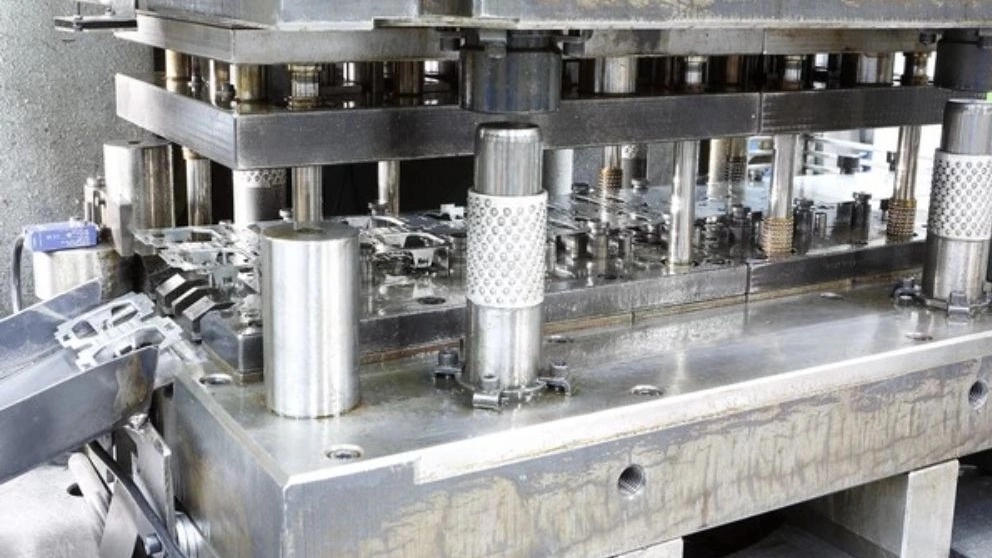
Progressive templates are templates that perform more than one operational step on the output product. Now this operation can be cutting, bending, stretching, etc. or a combination of some or all of these steps.
Progresso templates:
⦁ Simple Penn and Simple Step Matrix (Simple Progress)
Progressive template is a combination of several separate templates that are compactly designed in one template and perform the action that several separate templates do in several steps in one step. For example, if you have a part that has several cuts and punches and finally a peripheral cut where a mold must be made for each of these steps, you can use a single step progressive mold. The progressive die is usually used for oval cuts and geometric shapes, as well as punching and cutting.
⦁ Molding of composite stage matrix (composite progress)
This format is also simple like the progressive format, with the difference that in the compound progressive format, operations such as marking, punching, bending, stretching, etc. can be considered according to the technical drawing. It should be noted that the technical calculations of these types of molds for different applications are completely different and require high technical knowledge to reach the desired part.
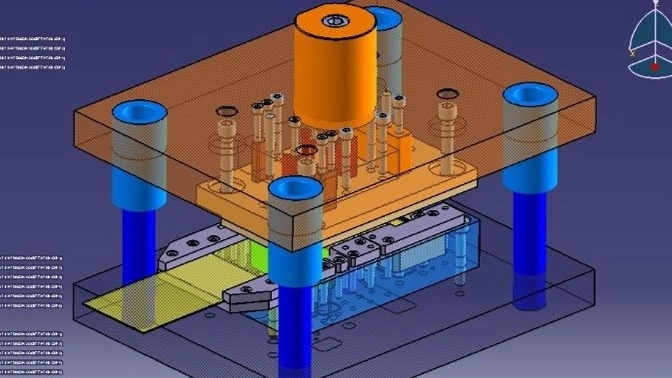
⦁ Side Cutter Side Matrix Matrix template
In this type of mold, the width of the sheet is obtained according to technical calculations and a tolerance of a few millimeters is considered for it, and a mandrel is placed in the upper or lower part of the channel, which is also the size of the cutting station, and is cut. it causes: - The life of the mold increases - Speed of production increases - The accuracy of the mold and the part produced is very high and therefore it is more suitable for obtaining standard parts.
⦁ Mold of the punch and the matrix of the crush
The efficiency of this mold is only for stamping and especially for engraving various trademarks and brands on industrial parts. Another application of this method is lead and aluminum rivets for fixing piece by piece.
⦁ Matrix molds with feed bar (Feeder)
This type of template can be used in all formatting methods with different design conditions. The difference between this method and other methods is that instead of being produced from a cut sheet, the desired piece is fed from the material in a ball roll in the form of sheets.