
Industrial rebar
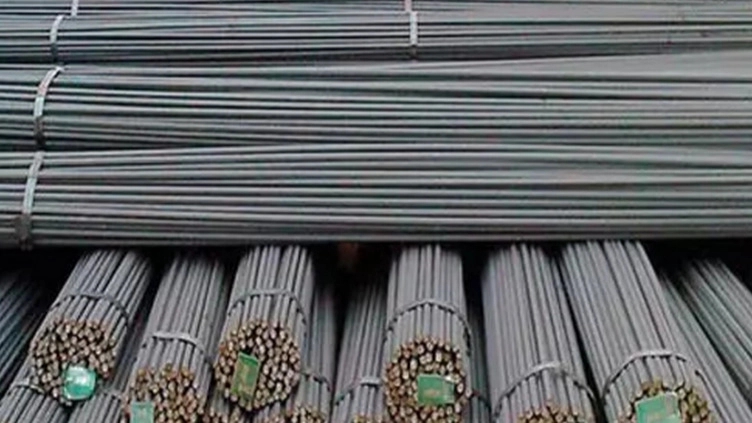
Industrial rebar, as its name suggests, is used in industry and is produced and supplied according to the needs of industries. This type of rebar is not suitable for construction purposes and is only used in industrial sectors. Steel is also used to make these rebars; But in terms of diameter and structure, they are different from ordinary rebars. Unlike construction rebars, which are ribbed, industrial rebars have a smooth and polished surface and no grooves can be seen on them. The reason for these teeth and treads is that the treads increase the friction between rebar and concrete. Of course, it goes without saying that ribbed bars are also used for some industrial activities; But in general, industrial rebars are often not ribbed. In terms of diameter, industrial rebars have a larger diameter compared to construction rebars, and they naturally have more bending resistance (breaking strength).
Construction rebar
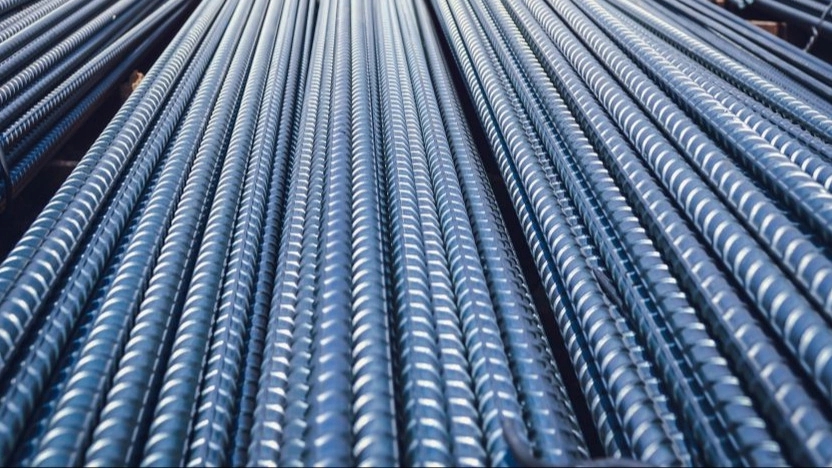
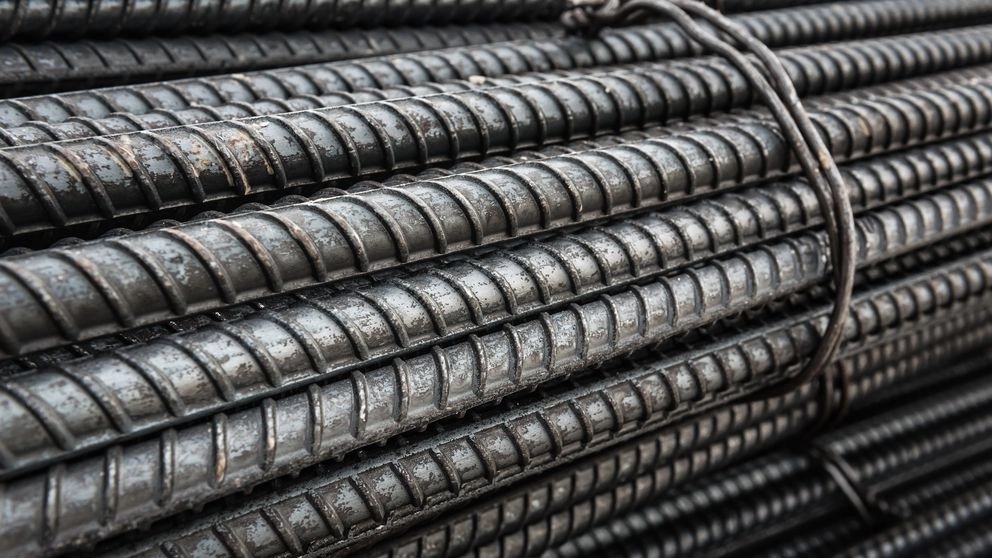
Construction rebar is placed inside it with the purpose of strengthening concrete. Construction rebars have teeth and treads so that the rebar is placed more firmly in the concrete and greatly reduces the possibility of breaking the concrete. As mentioned, the role of rebar in concrete is very important and vital. It is true that concrete has good strength and performs well under different building pressures, but if this pressure is applied to the central part of the concrete, the concrete breaks easily. But concrete that is reinforced with rebar does not break with any pressure; Because the pressure is absorbed and neutralized by the rebar, without the slightest damage to the concrete itself.
One of the important applications of rebar in concrete is to reduce its thickness; Therefore, the use of rebar in construction saves costs. The rebar inside the concrete strengthens the concrete; In such a way that there is no need to pour thick concrete anymore, and the rebar inside it greatly reduces the cracking property of concrete.
The differences of bars from different angles
As we have mentioned several points in the above material, rebars are used both in industry and in construction, so we should better understand the difference between industrial rebar and construction rebar, hence apart from the difference between construction rebar and industrial rebar that In addition to the similarities, we see differences in appearance, mechanical appeal, chemical composition, you should also know the difference between simple and ribbed rebar, but in the following we will point out the differences between industrial and construction rebar in detail and in principle.
The appearance of the bars
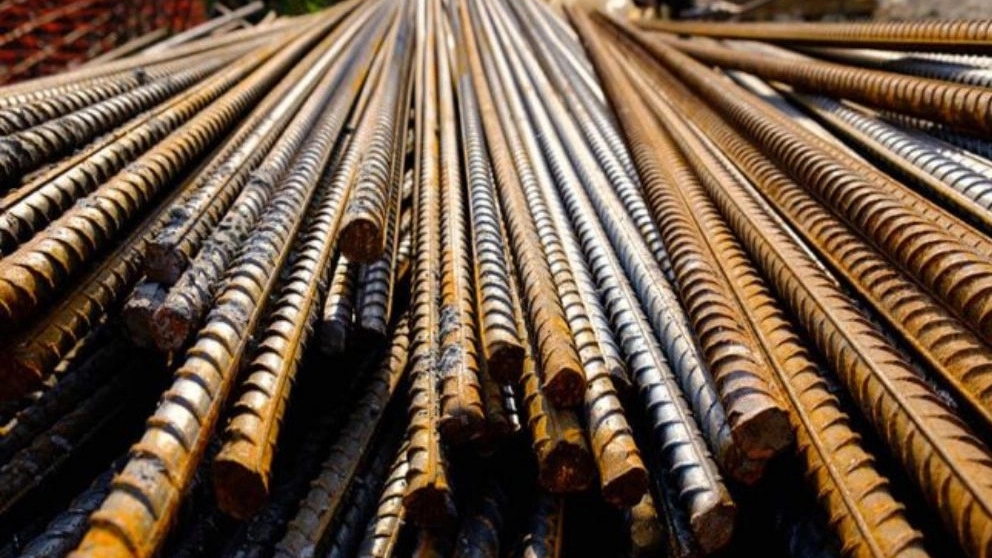
According to the appearance of the rebars, they can be divided into two categories: ribbed and simple. The appearance of rebars is one of the factors that determine the type of production standard of rebars, and the common standards in Iran are the Iranian national standard and the Russian standard. According to the Russian GOST standard, rebars are divided into four categories: A1, A2, A3, and A4, and Iron Melting Rebar also uses the GOST standard to produce its rebars. A1 rebar has a simple shape and no tread. This rebar has the ability to change its shape and has a tensile strength equal to 360 MPa. A2 rebar is made of semi-dry steel and has uniform spring, parallel, spiral and spindle-like teeth and treads. The tensile strength of A2 ribbed rebar is equal to 500 MPa, and these rebars are produced in sizes 8 to 40, and sizes 8, 10 and 14 have more efficiency and uses.
A3 ribbed rebars are classified as hard and dry steels, whose ribs are furred or uniform. This type of rebar is used for construction and has a tensile strength of 600 MPa. Needless to say, it is not recommended to use these rebars for welding. A4 ribbed bars are classified as hard steel and have compound ribs and their tensile strength is equal to 650 MPa. A1 rebars are used in industry and ribbed rebars are used in construction.
Mechanical properties of bars
The mechanical properties of rebars, both industrial and construction, are different according to their type of alloy, and for this reason, the mechanical properties of rebars may be weaker compared to other rebars. The mechanical properties expected from construction rebars are related to their tensile strength and hardness, and perhaps the flexibility of these products is less appreciated by consumers. On the other hand, due to the wide range of alloys used in their production, industrial rebars have the ability to simultaneously provide properties such as high strength, machinability, flexibility, etc.
The chemical composition of the bars
One of the important differences between industrial and construction rebars is their chemical composition. Due to the fact that the application of construction rebars is limited compared to industrial rebars, for this reason, high alloy diversity is not considered in the production of these rebars and St37 alloy is often used in their production. On the other hand, in the production of industrial rebars, due to their many applications in different industries, heat treatment steels, types of steels, refractory, etc. are used, each of these alloys has unique characteristics and fulfills many needs in different industries.
The size and size of the rebar
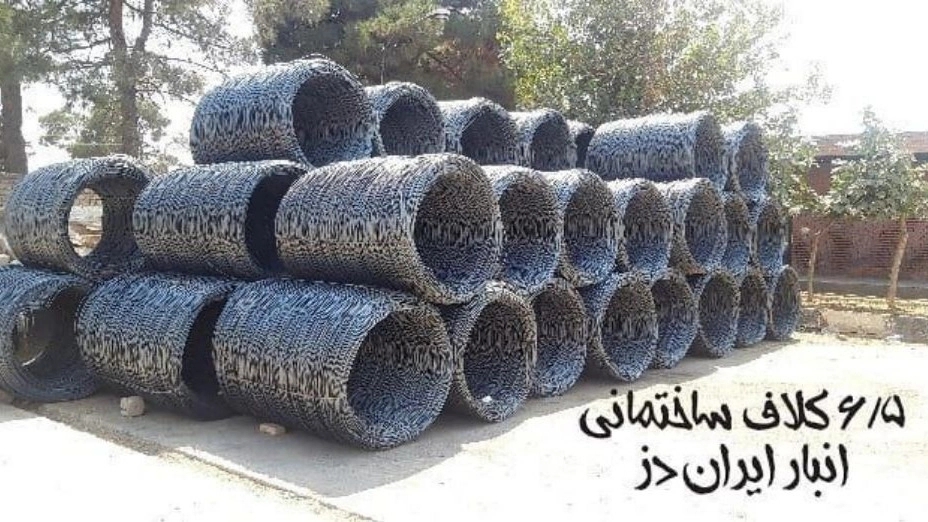
We mean the size of the rebar, the diameter of the rebar. The variety of sizes of industrial rebars is very high compared to construction rebars, and most of the construction rebars are produced in the size range of 8 to 32 mm. But industrial rebars are produced and supplied in higher sizes and dimensions. Rebars, both plain and ribbed, are sold in bundles or coils according to their different sizes. In this way, the sizes less than 12 mm are sold as coils and the sizes above 12 mm are sold as branches.
Price of rebar
In buying products, one of the important factors for consumers in choosing a product is its price. In buying these products, the price of iron materials, including industrial and construction rebar, is also very important. On the other hand, the price of rebar changes under the influence of various factors in the market. Rebar type, material, size, currency fluctuations, supply and demand, and political events are some of the factors that have a significant impact on the price of rebar. Each of these factors can directly or indirectly affect the price of rebar alone. Among the prices of different rebars, the price of iron smelting rebar has a lower price fluctuation. It goes without saying that the price of industrial rebars is higher compared to construction rebars, due to the fact that they have a wide range of applications and are often custom-made.