

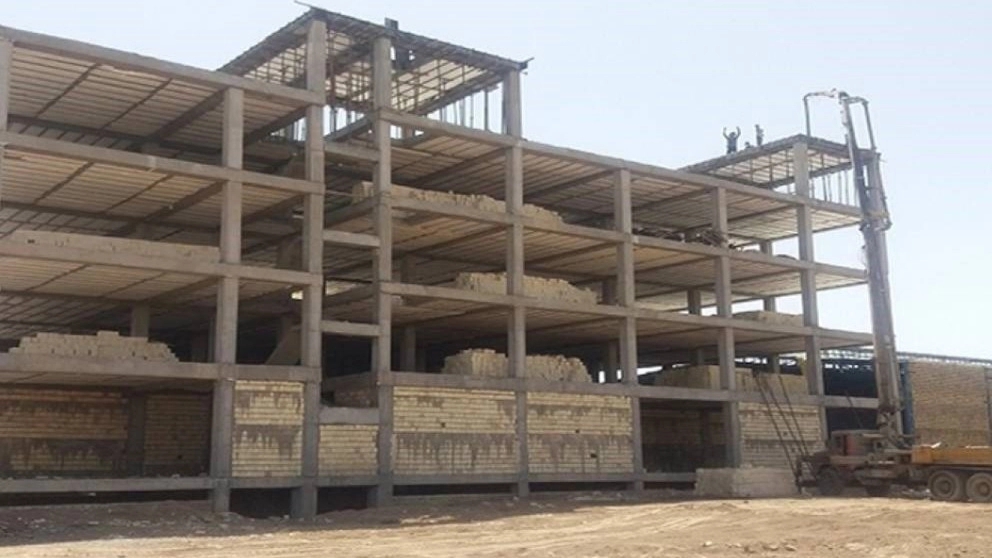

Achieving reinforced concrete technology began in France in 1850 and its use in the construction of concrete skeletons dates back to the end of the 18th century. In the early 19th century, the first multi-story concrete building was built in Paris. After that, due to technological advances, the construction of concrete structures also made great progress. It should be noted that Iran's first concrete frame structure was built in Tehran.
What is the concrete skeleton?
Concrete frame is actually an interconnected frame of members, each of which is firmly connected to each other. Concrete frame structures have bending joints in 99.9% of cases. There are other types of joints, including hinged joints, which are used in steel structures. The main task of concrete skeletons is to resist various loads that are applied to it over time.
Dead loads: The force applied to the building, which includes the weight of structural components such as walls, facades and similar things.
Live loads: It is a force which is introduced into the skeleton from the weight of occupants and assets including furniture, shelves, etc. Usually, these loads are specified in the building regulations and according to the intended space, the live load will be different, for example, the live load of residential, office, and industrial spaces are different from each other. Usually the live load for residential houses is at least 200 kg/m2, offices 250 kg/m2 and industrial 1000 kg/m2 which is 1 ton/m2.
Dynamic loads: This Loads usually occur in bridges and similar infrastructures.
Wind loads: Consideration of wind loads is especially important for tall buildings or buildings with a large area. The buildings are designed so that they don't need special measures against normal wind; But in some special areas, there are strong winds that must be applied in the design of the structure.
Earthquake loads: During an earthquake, the ground strongly shakes the building horizontally and vertically. This can cause the building to collapse. The heavier the building, the greater the force on it. Therefore, it is necessary to apply earthquake loads in the design of the structure.