



Necessity to use poison and fertilizer for plants
Increasing the production of agricultural products to meet the needs of society requires the use of fertilizers. Farmers and crop producers use fertilizers in order to strengthen agricultural lands, improve soil fertility, and subsequently increase production. Nowadays, eliminating or reducing the consumption of chemical fertilizers such as phosphate and nitrate and replacing them with organic and biological fertilizers is very important. The use of chemical fertilizers for the production of more agricultural products has significant and irreparable environmental effects, which include reducing the quality of soil, water and their pollution, affecting living organisms, reducing soil nutrients, reducing microbial activity, and losing organic materials. Soil fertility, environmental degradation, soil and accumulation of heavy elements mentioned. Organic fertilizers include plant and animal remains that are added to provide nutrients needed by the plant and improve the soil. Organic materials are important as an important factor in soil fertility due to their positive effects on physical, chemical and biological properties. Being cheap, less pollution than chemical fertilizers and reducing the negative environmental effects of using chemical fertilizers, improving crop production, increasing fertility, preventing erosion and improving soil performance, increasing the ability of plants to absorb nutrients and adapt to it, among other features. And the advantages of using these fertilizers are.
Fertilizers are used in order to complete the natural food supply of the soil, and their high consumption is necessary to increase the yield per unit area. The first fertilizer law in Federal Germany is stated as follows: Fertilizers are substances whose use is directly or indirectly useful to accelerate the growth of agricultural plants and increase the yield or improve their quality. Any natural or artificial material that contains at least 5% of one or a number of the three primary nutritional elements N, P2O5, K2O can be called fertilizer. In addition to the amount of nutrients in fertilizers, their physical quality with granularity, hardness and density, The level of resistance to moisture and physical damage and the degree of their clumping is determined. From the point of view of transportation, storage and use in farms, the density of fertilizers is also of particular importance. The fertilizer unit based on the amount of primary nutritional elements is usually expressed as a percentage from the left side of K2O, P2O5, N. Fertilizer refers to any type of mineral, organic or biological substance that has nutritional elements and increases soil fertility and also increases the quantitative and qualitative yield of the product. In other words, the materials that are added to the soil to increase its fertility and compensate for the lost materials are called fertilizers. Fertilizers that contain only one nutritional element are called single-element fertilizers, and those fertilizers that contain two or three primary nutritional elements are called multi-element, sometimes two-element or three-element fertilizers. The degree of effectiveness of rice rotan production ability due to the use of fertilizer stated that in fertilizer treatments, the increase in yield compared to the control indicates the positive effect of fertilizer on the yield of rice raton. By influencing the size, life span, formation and survival of the claw, increasing the size and durability of the stem, plant size, leaf area index and leaf area durability, nitrogen caused dry matter production and yield. Potassium can cause an increase in the number of stomata on the surface of rice leaves, and the result is gas exchange and more carbon dioxide absorption, and as a result, increasing the intensity of photosynthesis and increasing the growth and yield of rice.

Long -term use of chemical fertilizers in the soil
According to research done in different parts of the world, it has been determined that only a little more than 30% of the chemical fertilizers used in the fields are absorbed by the plants and almost 70% of these fertilizers enter the natural cycles in different forms. It is obvious that this will bring very unfortunate environmental and health results and will affect factors such as soil, living organisms, ecosystem, and the quality of running and underground water
The most important effects of using chemical fertilizers are as follows:< br>
soil, water and environment pollution
reduction of plant nutrients in the soil
loss of biological and physical properties of soils
accumulation of heavy and toxic elements in the human body that are produced from plants with the help of Chemicals feed
Increased immunity to pests and plant diseases due to long-term use of fertilizers and poisons
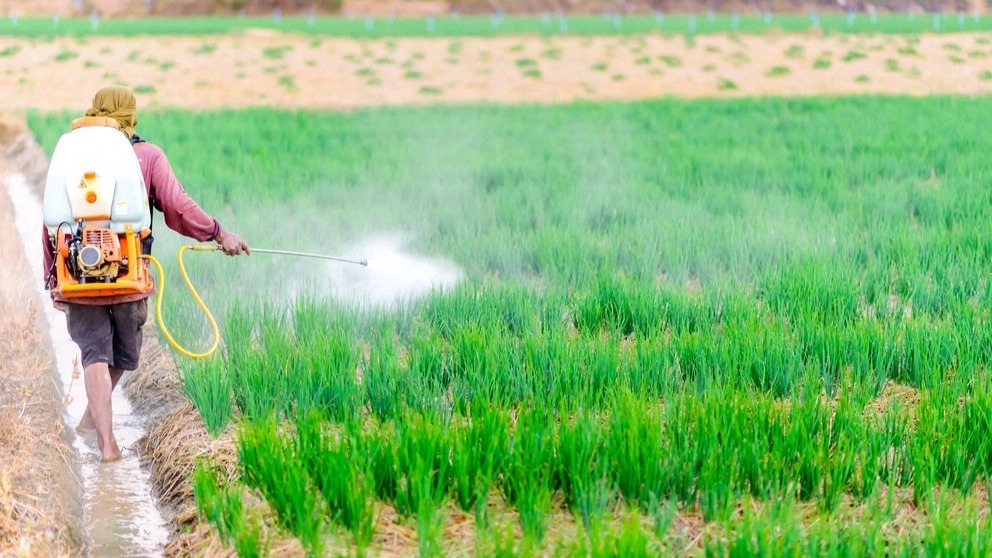
According to the report of the World Health Organization, every year more than one million people are poisoned by the use of insecticides and die. They lose about 20,000 people
The activity of microbes and all kinds of earthworms decreases and the soil loses its fertility due to the lack of biological activities. The amount of irrigation water needed increases