
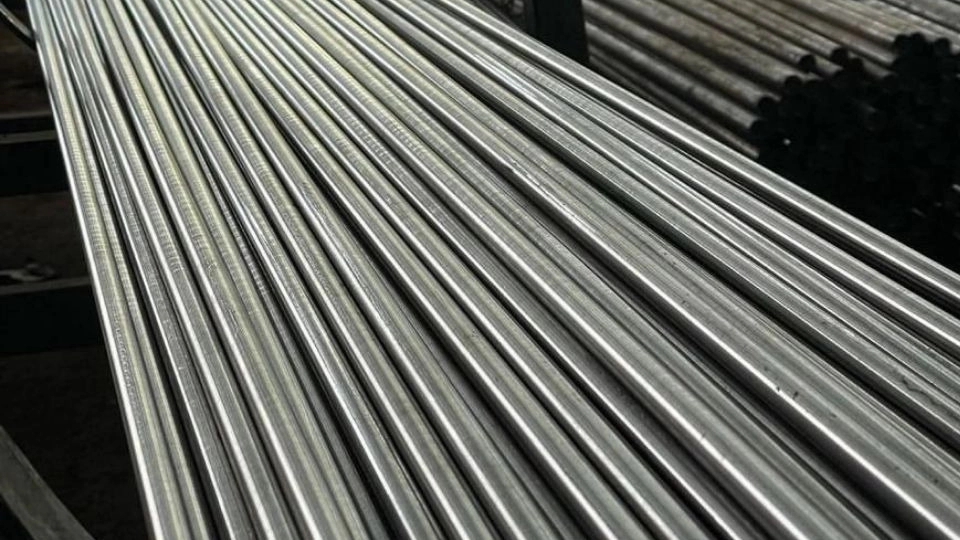

Trans (tensile) rebar is a non-treaded rebar that has a smooth polished surface and is produced with one-tenth precision according to the customer's order. This type of rebar has a higher resistance than other rebars in the market. Trans rebar is used for the production of industrial parts due to its smooth surface. Tensile bars are used in bolt and nut manufacturing industries, automobile and machinery manufacturing, agricultural equipment and machinery manufacturing, food production equipment and devices manufacturing, manufacturing and production of all kinds of fittings, and manufacturing of Khamut.
The benefits of using tensile rebar
In order to use rebar in the component industry, it is necessary that the surface of the rebar is smooth and without ovality. Simple rebars without stretching do not have the same size. By stretching the rebar, the surface of the rebar is smooth and without deviation. It is possible that machining costs will decrease. On the other hand, stretching increases the length of the rebar, which increases the number of produced parts, which is also considered a benefit for the part makers, that's why the part makers are interested in using tensile rebar.
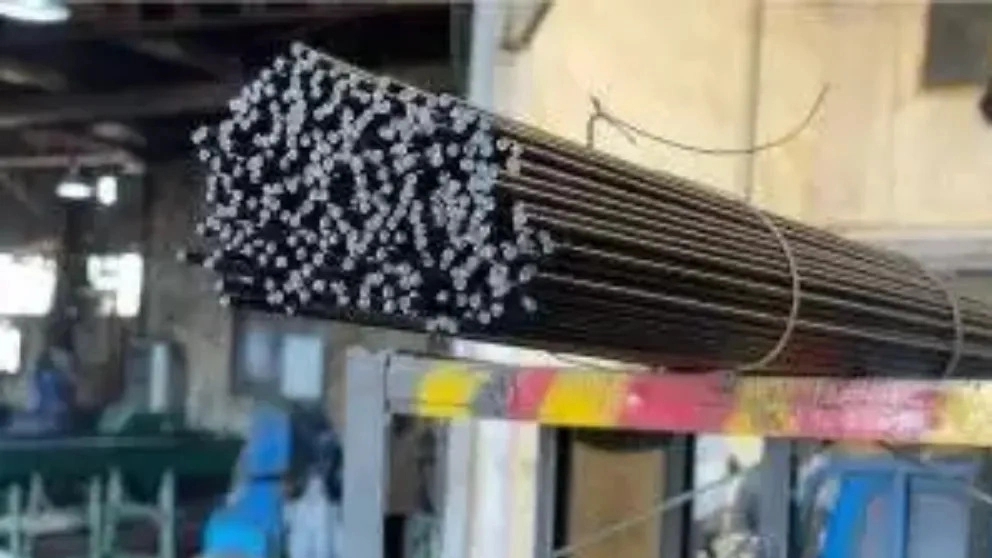
Rebar's stretching process
The stretching process is done in a cold way. This method has several steps, which we will mention below. The first step is to wash the rebars with acid, which is also called acid washing. So that after the raw rebars enter the factory, they are washed with acid. Because due to heat, many scales are formed on the raw rebar, and at this stage, these dirts and scales are removed from the raw rebar, and after the acid washing stage, chemical operations are performed on the rebar. In this step, special chemical solutions are used, which creates a protective and slippery surface on the rebar. This chemical solution used on the surface of the rebar increases its resistance.

The second step is to cut the tensile bar head. After acid washing the rebars, they are dried in the dryer. After drying, about 10 to 15 cm from the tips of the rebars are reduced in diameter so that they do not have a problem to pass through the tension mold. The third stage is stretching. At this stage, the rebar from the part that was reduced in diameter is placed in the tension device. The next step is rebar cutting, the rebar produced in the previous steps is cut into specific lengths according to the customer's order by placing it in the cutting machine, and then the cut rebars are wrapped in the bending machine so that they do not have any burrs. Ready to send to the customer and other operations.