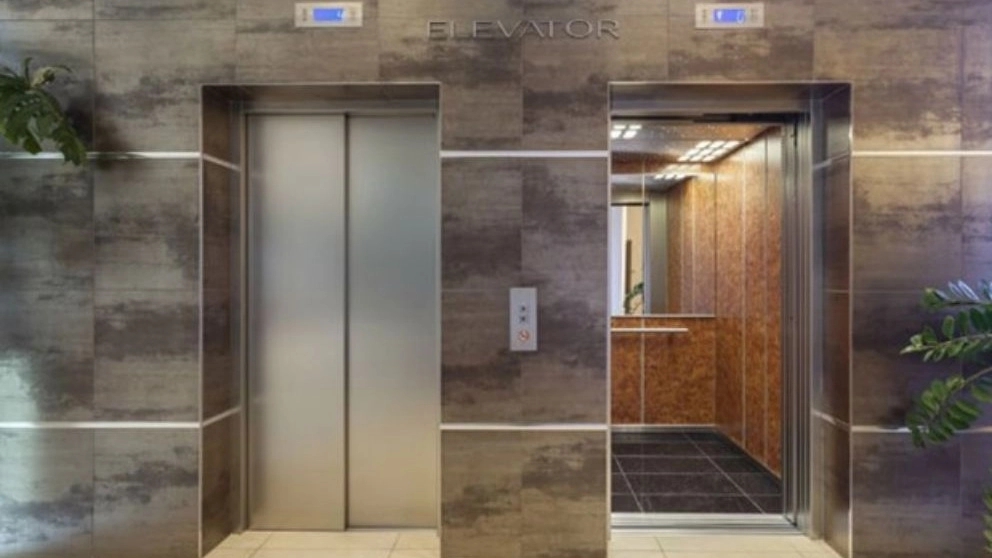




What is the elevator?
An elevator is an electromechanical machine, which moves vertically around an axis to move people or cargo between levels of a building. Most modern elevators are driven by electric motors and with the help of counterweights through a system of cables and grooves. Famco Hyper Sanat Group is a supplier of all kinds of elevators and its equipment.
Types of elevators
Traction elevators
< font color="#2c3e50">hydraulic elevators
pneumatic elevators
Tensile lifts
The most common type of elevators are traction elevators. Different types of traction elevators are installed and operated in different buildings depending on the location conditions. Most of the passenger elevators that have been installed and implemented in the world have used the traction system. Traction elevators are also divided into different types, which are mentioned below:
Traction elevators with gearbox motor
Traction elevators with gearless motor
Rumless traction elevators MRL
Traction elevators with VVVF function
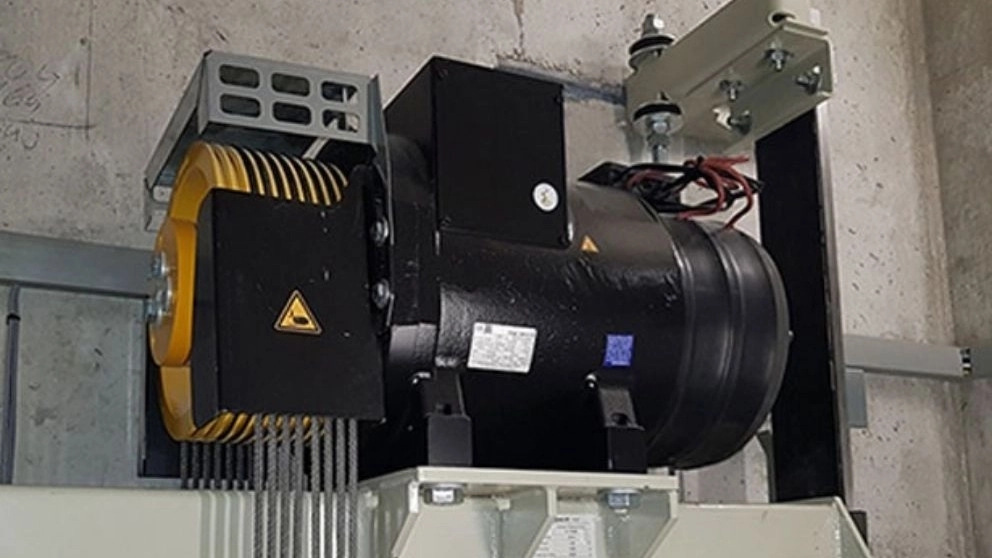
Tensile elevator with gearbox motor
The motor has always been one of the main and important equipment in electrical and mechanical devices. Different types of elevator motors can be used in traction elevators. Elevator gearbox motors are from the early and old generations in the elevator industry. In the gearbox elevator motor, gear and spiral gear are used in such a way that when the gear is moving, the gear and the motor are rotated by the coil of the motor. And for this reason, these types of engines have more volume and definitely need oil. The movement speed of the cabin in this type of elevator motors is usually 1 millisecond, although gearbox motors are produced at higher speeds, but they are not used due to the lack of economic justification and the presence of gearless motors. The gearbox motors are installed on the concrete slab above the elevator shaft and in the motor room, and the generated driving force rotates the gearbox and moves the elevator between different floors of the building.
Tensile elevator
Today, due to the advancement of technology, it has become very common to use gearless engines. Gearless elevator motors, as their name suggests, do not have a gearbox. Elevator gearless motors have much higher advantages than gearbox types. In gearless engines, due to the absence of a gearbox, oil is not needed, and as a result, they have less weight and noise than gearbox engines, as well as efficiency and longevity, smaller dimensions and size, and the speed of the cabin in gearless engines from 1m/s to 4m/s. It is available according to the type of engine.
Tensile lift without MRL motorcycles
Rumless elevators or MRL elevators are considered a new generation of elevators. These elevators do not need a motor room with their very advanced design. In MRL elevators or without motor room, the motor is installed inside the elevator well and the highest part of the well, and the elevator control panel is installed next to the door of the highest floor. The design and calculations of such elevators must be very accurate and appropriate so that the parts and equipment are correctly and standardly. be placed and installed.
Tensile lifts with VVVF performance
Traction elevators with 3VF control system have entered the market of this industry for a long time. In this type of systems, single-speed elevator motors are used, and if two-speed motors are used, the high speed of the motor is used. The control panel of these elevators is equipped with an inverter (drive), which manages the speed of the elevator by controlling the frequency of the motor input. In this way, the speed of the motor increases slowly during the start by the inverter and the speed of the motor decreases slowly when it comes to a complete stop, which improves the comfort of the user and the people inside the cabin along the way due to the increase in the quality of the elevator movement. Elevators do not feel any impulse or vibration. Actually, in panels equipped with an inverter, the user does not feel a shock during the start and step of the elevator. Also, in such systems, electricity consumption, elevator friction, engine working temperature and elevator noise will be much lower. Therefore, the movement of such elevators is uniform and very desirable.
Hydraulic elevator
Hydraulic elevators are a very safe system of elevators. These types of elevators are usually less used in office and residential buildings. Hydraulic elevators have a long useful life due to their special design. The mechanism of operation of hydraulic elevators is such that the engine room is located in the elevator shaft and is moved between the floors using oil pumping to the jack and the elevator cabin. Hydraulic elevators are installed and operated in two ways, direct jack or indirect jack, according to the location conditions. The movement speed of the cabin in this type of elevators is usually 0.5 m/s. One of the advantages of hydraulic elevators is the removal of the weight rail and balance weight frame, which means that less space is needed. Hydraulic elevators are usually used in factories, elevators for transporting cargo, elevators for moving cars, etc., which have a capacity between 300 and 3000 kg.
Pneumatic elevator
Pneumatic or vacuum elevators are used in buildings with low floors, for example, in villas or buildings with two to four floors, they can be installed and placed in a short period of time. The movement of these types of elevators is in the form of air suction and blowing. The air inside the piston of pneumatic elevators is completely vacuum and it works like a piston in this way that with the air blowing or pressure, the elevator cabin moves up and with the air suction or suction of the cabin moves down. These types of elevators can be started with single-phase electricity and placed in small spaces without digging a pit or engine room. Another advantage of this type of elevator is that it does not use oil and is easy to move, so that it can be dismantled and moved to another place without any damage.
How to select elevator parts
To choose and buy elevator parts or to install and operate a complete set of elevators in a project, many points should be taken into account. There are various types of equipment related to the elevator, as well as the general elevator system also has various types. Therefore, based on the needs of the customers, the experts in this field will have the best choice for the users according to the conditions of the building.
Elevator performance
Elevator safety
Always in human inventions and inventions, maintaining the safety and security of human lives has been the most important part. A few decades after the invention of the first passenger elevator, Mr. Otis presented an elevator system in 1852 in New York, America, which was more advanced in terms of safety than the previous types. And this safety is due to the invention and installation of the emergency brake system of elevators, which prevented the elevators from falling by means of this system, and the reason for people's confidence and trust in the elevator today, as well as its expansion, is the existence of this emergency brake system of elevators. Over time, according to the progress and evolution of science, they made significant progress in terms of speed, quality and security of the user's life.
Lift application
Elevators are classified according to different applications and needs. We mention some of the most common elevators:
Apartment elevators: these types of elevators are designed for use in houses and building complexes. They have low capacity and usually serve fewer floors than other elevators.
Commercial elevators: These elevators are used in commercial and office buildings. Their capacity is more and they are usually used in the number of high floors.
Freight elevators: These types of elevators are used to transport loads and heavy objects in buildings, hotels, hospitals and industries. Their capacity is very high and they have special systems for loading and unloading.
Hospital elevators: These elevators are used to transport patients and medical equipment in hospitals and medical centers. Their capacity is usually suitable for moving patients and stretchers.
Industrial elevators: These elevators are designed for use in industries and factories, and their capacity and speed can be adjusted depending on the needs of the industry.