
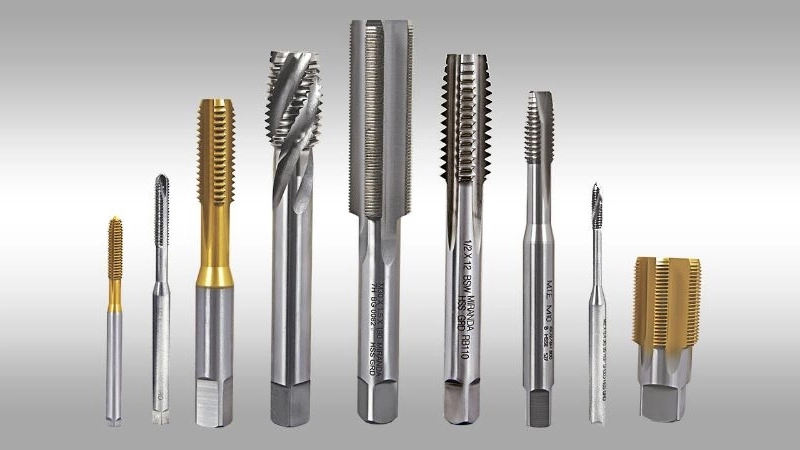
A tapper is a tool with a special design that is used to cut internal threads in various parts of machinery. They are used manually with the help of a hammer or by machine.
In industry, a number of small parts are connected together to complete a large part. Bolts and nuts are used to connect these parts together. Nuts are tools used to thread the female part of a pair of metal fasteners (nuts). On the other hand, a tap is a tool used for threading male parts (screws). Pins are usually made of high carbon steel, HSS steel, alloy steel, etc.
Constituent parts
Qalaviz consists of a steel stem in the first place. The body part contains sharp teeth that create internal threads. As the teeth sink into the hole walls, excess material is removed as twisted chips. There are a number of grooves in the body part that help the removal of chips and the entry of cutting fluid. The end part of the stem is in a square shape, which is used to fit inside the wrench and cartridge. Below are the main parts of the wrench: Body: Part The main one is the hook and the threads are created by it. Stem: It is called the flat part above the body. Its cross-section is round and the characteristics of the kalaweez including size, material and brand of the manufacturer are engraved on it.
Drive: It is called the upper part of the stem. The cross-section of this part is square and it is placed inside the handle of the khalawiz or the khalawiz machine.
Grooves: Grooves can be seen along the entire length of the body from top to bottom. The chips created when cutting the threads are removed through these grooves. Also, these grooves are used for lubricant to enter the hole.
Cutting edge: It is called the cutting face of the tool on which the chips move.
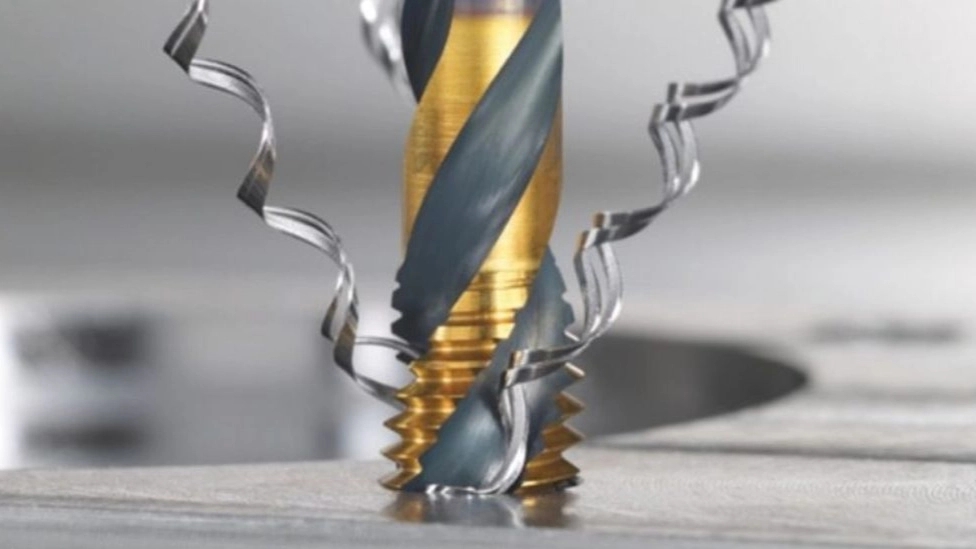
How does the calende work?
Chisels act as a cutting tool by removing material from the workpiece using sharp teeth. They are rotated into a hole in the workpiece and scrape along the sides of the hole to create a spiral ramp. A reamer can be used to create new threads for the first time, or it can be run into a hole that has already been tapped to help repair damaged threads. Taps usually only cut in one direction (clockwise for standard threads). To remove the screw from the hole, you must turn it in the opposite direction.