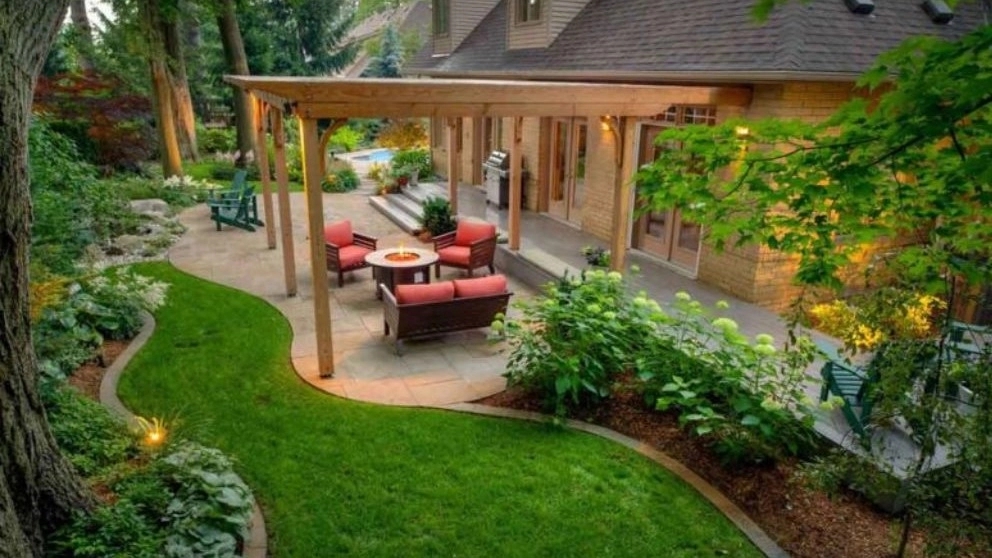
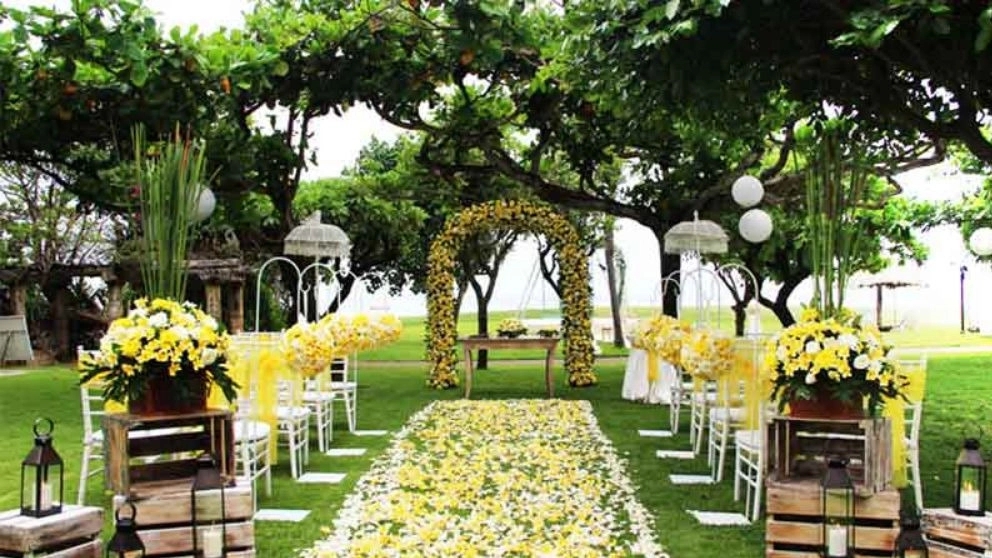

Environment- The construction of a structure, whether residential or non-residential, includes various steps, many of which are related to the interior space and many of which are related to the exterior space.
Although many people do not pay much attention to the space and area outside the building, in some situations, their importance is really no less than the environment inside the building, and one should make the utmost effort in their design.
Landscaping follows certain principles and standards, the correct understanding and use of which will ultimately lead to a perfect landscape that suits the individual's needs.
What is the landscaping?
Landscaping is essentially a part of architecture and design, which is mainly known as landscape architecture, but if we want to simplify the discussion, landscaping includes the use of various elements in a specific environment to shape it based on pre-planned designs. has been specified.
The use of these elements should be done according to certain principles and rules in order to achieve a favorable result. Regarding the elements used, we should add that these can be anything.
The most important principles to adhere to landscaping
Surely, these are the principles and rules that make everything purposeful.
In this regard; Landscaping also has key principles and rules that having a correct understanding of them will certainly lead a person to better results. These principles are mentioned below.
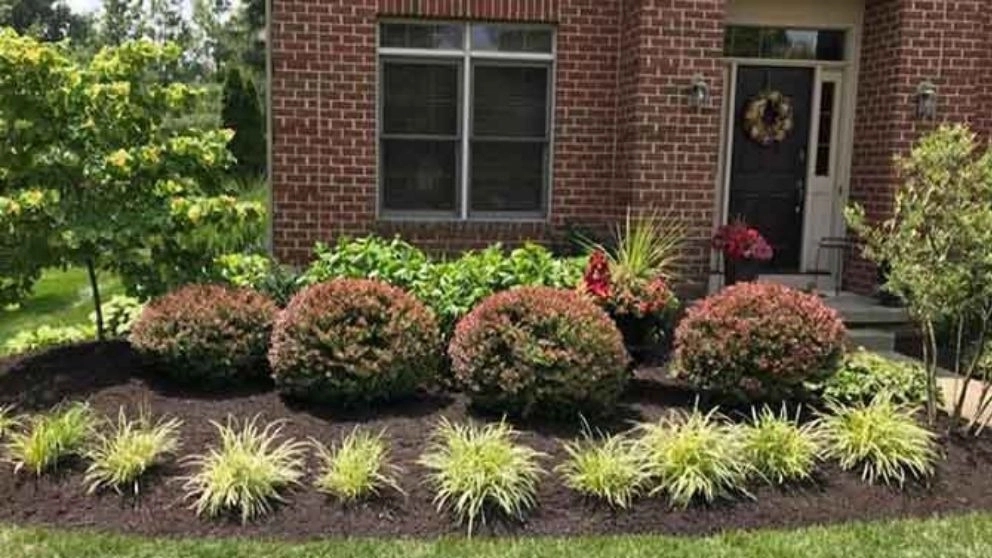
Be careful about using elements to maintain balance.
This principle and law in landscaping will help you not to overuse an element or a group of elements. The balance makes seeing a landscape and area more pleasant than before.
Whether you use symmetrical or asymmetrical balance in your landscaping, both can be satisfying.
In general, symmetrical balance is used in formal landscaping, and on the opposite side, asymmetrical type is used more in informal landscaping.
Find your job with a focus…
Having focus is one of the other important principles in landscaping.
The focal point of focus can be seen in all the outstanding designs of the grounds and green spaces.
This point is actually the place or element that the user is attracted to at first glance.
In other words, the focal point is actually the strongest element in the area that can be seen from any angle.
In landscaping, this focal point should be an element close to the entrance door.
The area may have several focal points, but care must be taken not to overuse it.
Simple but beautiful work!
In landscaping, one should try to keep the space as simple as possible and avoid any clutter. It goes without saying that the principle of simplicity is not in conflict with complexity.
In other words, many simple landscaping include very complex designs.
An area that gives a person the necessary sense of calmness and confidence is free of any overtime in coloring, different geometric shapes, lines and curves.
Don't confuse simplicity with being boring and devoid of any imagination.
Get help from songs and lines
Rhythm actually represents the regular repetition of an element in the landscaping process.
In landscaping, space allows you to create rhythm and lines, and for this purpose, you can use plants, lights, and all kinds of bushes.
Lines are also formed in the area using the shape and condition of the bed on which the plants are placed and the sidewalks.
The proper use of the principle of the song (rhythm) and the line will bring the space and area out of the state of stagnation.
Keep the ratio in the use of elements
Proportion is one of the important principles in landscaping and it refers to the relationships between the elements of an area based on size, which includes vertical, horizontal and spatial relationships. People with different heights will have different understandings of an area.
Consider the unity in the use of elements
Unity and cohesion are among the basic principles and rules in landscaping and if the other five principles are properly implemented, it will be possible to achieve this principle easily.
Unity and cohesion in the area and green space means that all its parts join hands and form a coherent space.
What are the steps of landscaping?
Environment in any style and in any way and scale, its implementation will be according to a series of specific steps.
which will be necessary to achieve the desired goal. How to implement landscaping steps is given below.
The first stage, the idea and the start of the project
This stage itself includes a series of actions that you will definitely go through if you entrust the landscaping process to the employer. In the first step, after finding the desired contractor, you consult with him about your idea. In the next step, based on the conversation he had with you, the contractor will present his proposal in writing or verbally, in which a summary of the project details will also be presented. After the approval of the proposal by the employer, the contractor conducts a more detailed examination of the project. In the next step, it is time to inspect the site, and after obtaining an understanding, the contractor enters the second step.
The second stage, concept design
After examining various aspects of the project, the contractor draws up a simple plan based on the client's wishes and factors such as land and weather conditions.
The main purpose of this stage is to give the employer a correct understanding of the details of the project.
The third stage, the original design
After the initial design and concept is presented to the client and the details are agreed upon, the contractor will begin to draw the master plan of the project in more detail. It is at this stage that the designer develops his and the client's ideas to ensure their feasibility. The employer can directly supervise the main design of the project and if any correction is needed, he can share it with the designer.
Four, Construction Documentation
After finalizing the main design of the desired area, the contractor prepares the necessary documents, including plans, sections, schedule, construction details, quantities and other details, in order to estimate the cost of landscaping based on them. After reviewing the documents, the employer will confirm or change the details.
Stage Five, the beginning of the construction of the area
After agreeing on the costs, the contractor is settled in the desired location. The landscaping process generally includes the following steps.
Demolition of any disturbing structure or structure and clearing the land
Trenching and drilling
Installation of equipment including drainage system, irrigation, electricity, etc
Implementation of swimming pool and water structures if needed
Proper leveling or creation of posts and elevations specified in the plan.
Implementation of hard landscape structures, including earthworks, compaction, foundations, walls, sidewalks, etc.
Planting trees and plants that have been selected in advance based on various factors including weather conditions.
Installation and implementation of lighting, furniture, etc
Diagnosing possible problems and fixing them
Completion of the construction process