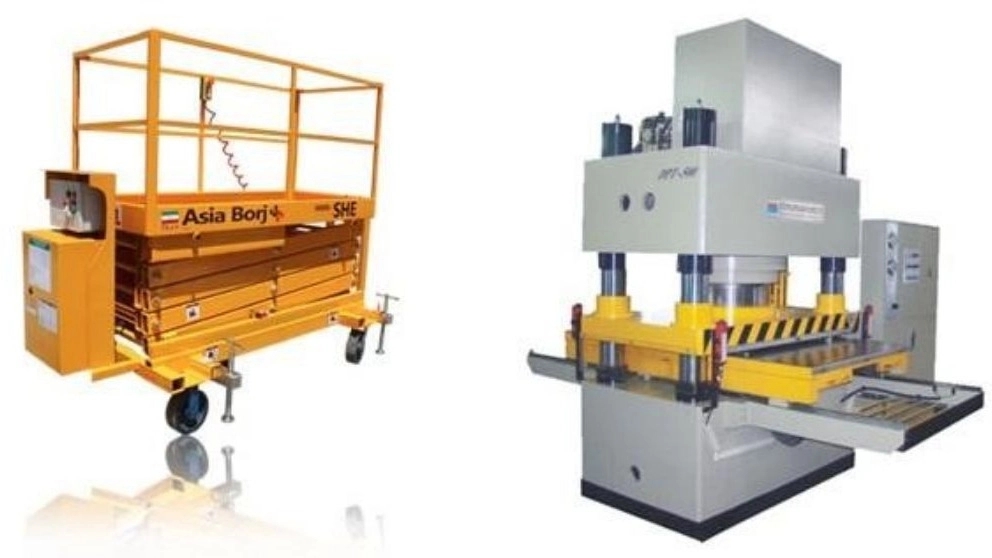




What is the lift?
Forklifts are machines that are used to carry people or cargo, perform work at height, and also transfer cargo in production lines.
Lifts are equipment that are used in many industrial and commercial fields.
And they are used to transfer goods in warehouses or unload cargo from trucks and other cases.
Various mechanisms are used for lifting, which have many differences with similar mechanical machines
They have cranes, forklifts and other tractors.
Types of Lifts
Lifts are generally divided into two types:
1. Mobile lifts
2. fixed lifts
Mobile Lift
1. Mobile elevators: These types of elevators are used for work, transporting people or loads and doing things like installing and setting up equipment, painting, building structures, etc.
The working mechanism of this type of lift can be self-extending or heli push around.
Mobile lifts are powered by electricity or diesel fuel.
One of the advantages of the lift that works with self-extension force is that the operator can move the load or do any other work as easily as possible by means of the rotating button.
Mobile lifts are also divided into two categories of mobile lifts with vertical access and horizontal-vertical access.
Mobile elevators with vertical access can carry loads or people vertically, and the most common ones include hydraulic accordion elevators and aluminum column elevators, which only work on purpose.
But mobile lifts with horizontal-vertical access, or boom lifts, which are available in two types, articulated hydraulic lift and telescopic hydraulic lift, and can facilitate work at high heights and remote locations, and with the presence of a hydraulic security system They also provide a very good service for transporting goods and people.
Fixed Lift
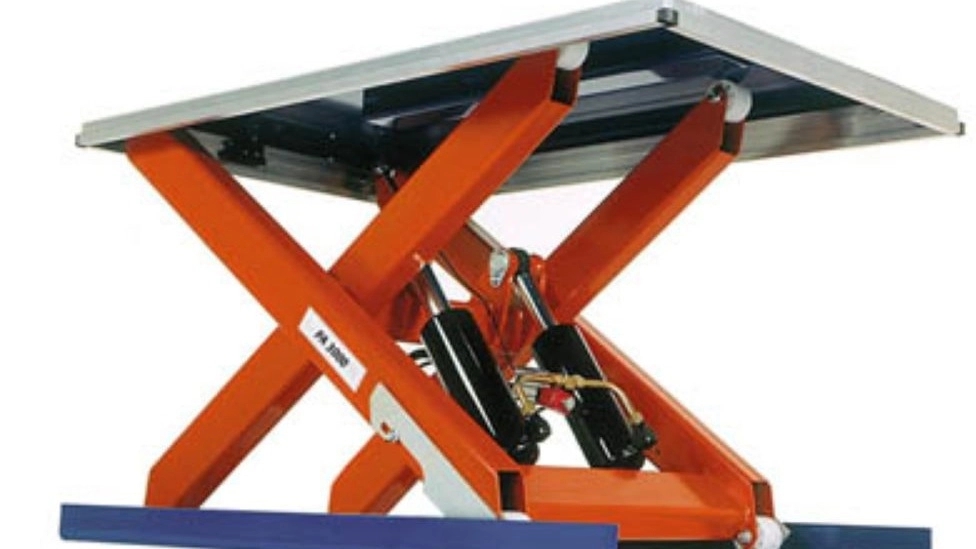
What is a hydraulic lift?
Hydraulic lift is a type of lift that uses hydraulic jacks to move. Hydraulic lift has different types and is made in different types for special and different places. They use hydraulic lifts in shops, stores, repair shops, etc. A hydraulic lift can be used at home for the elderly next to the stairs. These types of lifts move objects of different weights. A variety of hydraulic jacks are used in this type of lift, so that the lifter wants to move a heavier object, it needs stronger and bigger jacks. This type of elevator is one of the most used types of elevators that people use for their affairs. The hydraulic lift can also be used in closed spaces.
Hydraulic Lift Mechanism
Hydraulic lift generally follows Newton's laws. According to these laws, the relationship between force and mass is permanent. In order to better understand how the hydraulic lifting mechanism works and to simplify this matter, we need to know the definition of a series of words that we will discuss below. Pressure: When we divide the force into unit area, the result of this action is called pressure. Density: Density or volume mass which actually shows the relationship between the unit volume and the mass of a material. Viscosity: The resistance of a fluid (liquid or gas) to flow, or in other words, the internal friction of the molecules of a fluid against flow, is called the viscosity or stickiness of that material. Now we will look at how each of the lifting definitions affects the hydraulic lifting mechanism. Oil plays the same role as a fluid, and in hydraulic lifts, if its viscosity is high, i.e. the oil is too thick, it causes malfunctions in the movement of valves and valves, and this issue after a while causes the failure of the pump, motor, and circuit. The lift becomes hydraulic, and on the other hand, the low viscosity or dilution of the oil due to the low friction when the hydraulic lift goes down leads to an increase in the temperature of the oil and the production of heat. For this reason, one of the main factors in choosing hydraulic oil is its concentration. The viscosity of a good oil in a hydraulic lift is between 90 and 100 centistokes. But how can pressure affect the hydraulic lifting mechanism? Consider two pistons that have different levels. If these pistons are moved by a certain force, the fluid pressure in the piston that has a smaller cross-section increases, and the fluid pressure in the larger piston decreases, and such lifting hydraulic levers move. Future . The fixed hydraulic lift needs a well to be assembled so that the device can be placed inside it and level with the ground. One of the best types of hydraulic lift is the fixed accordion hydraulic lift, whose advantages include a high safety factor, low pit depth compared to other lifts, the possibility of not using a guardrail, and the ability to design for high capacities and tonnages. , the ability to design for large dimensions (a large work table, for example, to transport a car). The accordion hydraulic lift has some disadvantages, the most important of which are the low speed and the height being related to the length of the table.
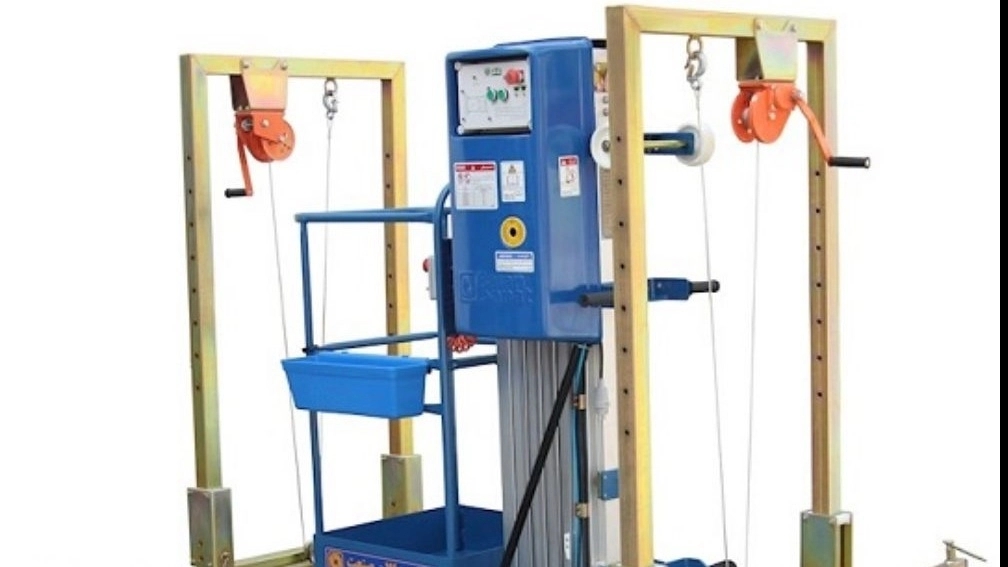
What is the use of hydraulic lifts?
Hydraulic lift is designed and built in different types, whose duty is to carry cargo and people, leveling, work at heights, etc., hence hydraulic lift in various industries such as shipping, automobile manufacturing, transportation and lifting very heavy objects, construction industry, aircraft manufacturing, transportation industry, etc.
Who uses hydraulic lifts?
Hydraulic lift can be very easily available to you and maybe you deal with it every day and never paid attention. Like a hydraulic wheelchair! Also, this system can be used in manufacturing facilities, auto repair shops, docks, warehouses, construction sites, etc. The strength and durability of the hydraulic lift, along with the required dimensions, are important criteria for choosing a perfect example of it. Hydraulic lifters require special care and regular maintenance to ensure that they operate in the desired manner. Elevators that are not properly maintained can cause serious injuries. As with other hydraulic systems, precautions must be taken when using a hydraulic lift. Even when the entire system is shut down, the oil can still be pressurized.
What is there in a hydraulic lift?
Hydraulic lift, like other hydraulic systems, is made of different parts, the most important part of which is the hydraulic system. In the new age industry, the use of hydraulic systems has increased dramatically, the simplest of which is the car brake system. It is worth mentioning that in all hydraulic systems, such as hydraulic lift, pump performance is the first word. The mechanical design of these machines is similar to all systems that use hydraulic technology.
The main components of a hydraulic lift are:
A piston inside a cylinder
Oil reservoir or source
pump
Motor (to drive the pump)
valve
Although in the new generation of hydraulic lifts, less space is occupied by the engine room of the system, but in its older types, due to the area that is needed to maintain some equipment such as the engine room and pump, etc., you must choose the space you want to install the hydraulic lift in. Install it in a suitable position. The performance of hydraulic lifters is such that the pump must direct the oil to the inner side of the cylinder with maximum power so that the piston rises. This is while this process is reversed to go down, and with the help of the earth's gravity, we see a vertical downward movement. (The image below shows the return mode of this system).