

What is the wire?
Electrical energy is a useless concept without a method of transmission. As we know, wires are used to transmit electrical energy. A wire is a thin metal string that can transfer electrical energy from one point to another. Wires are also used for circuit connections and sometimes specifically for data transmission. The components of the wire are a copper or aluminum conductor layer and an insulating layer for protection. The copper conductor is more conductive than the aluminum conductor, but in terms of price It is more expensive than aluminum. Sometimes the wires have a color code that helps to identify them.
What is cable?
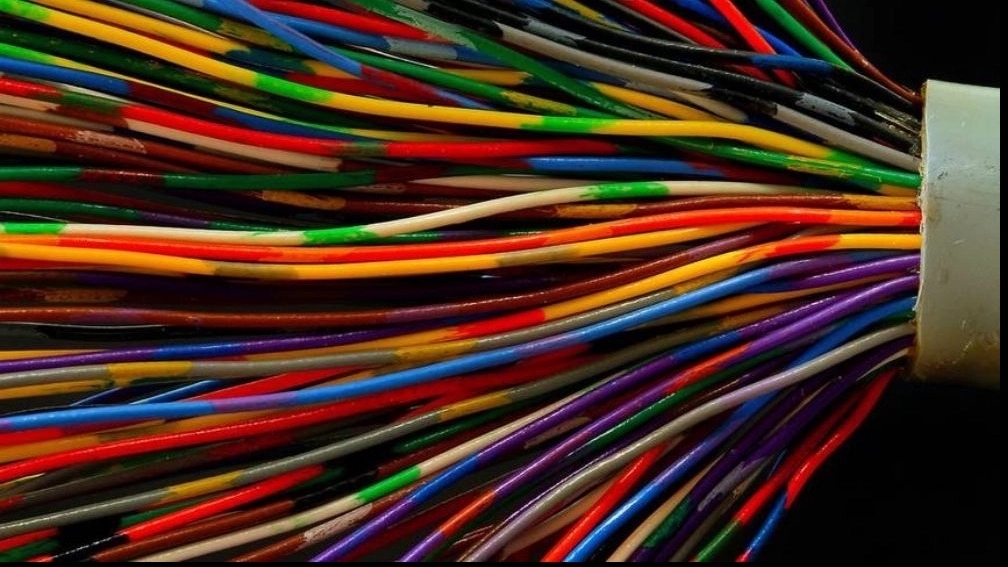
A cable often consists of two or more wires that are twisted or braided together to form a single assembly. In the mechanical field, a cable is referred to as a rope. Strong and heavy refers to what is called wire rope in the term and it is used for lifting, pulling, towing or transmitting power through tension. In electrical engineering, cable is used to transmit electric current such as data, telephone signal And... is used.
The differences of wires and cables
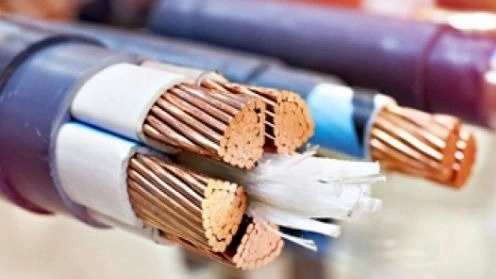
In fact, as we mentioned in the definition of wire and cable, in order to protect the conductor against leakage, electric shock and other cases, a layer called insulation is stretched over it to prevent the mentioned cases and a structure called wire Forms. Then, if we need layers such as shield, armor, screen, or we want to put several wires on top of each other, we use another layer called the outer sheath or jacket. The jacket layer that is placed on top of other layers makes another device called cable.
At first glance, the terms wire and cable seem similar, but if they are examined in a specialized way, their differences will be revealed. In simpler language, the main differences between wire and cable can be mentioned as follows:
Conductor with a layer of insulating coating: wire
Conductor with two covers (insulation + jacket): cable
The scope and application of wires can be different, it should be noted that wires are more widely used than cables.
In terms of strength, cables are stronger than wires and have higher strength.
The diameter of the wires is measured and the wires are usually classified by the size of the diameter and the type of insulation, but the cables are classified according to the number of wires present.
Cables usually include a positive line that carries current, a neutral line that completes the loop, and a neutral line that is grounded.
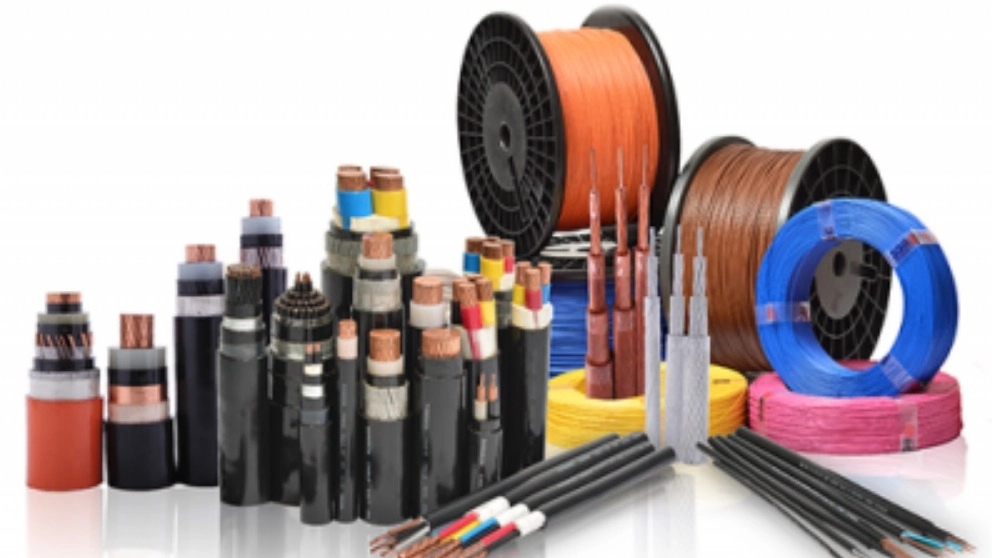
Another difference between wires and cables is their types, which lead to various applications. For example, twisted pair cables are used to transmit energy over long distances, or multi-core cables are used to connect different parts of a computer. is used.
Cables' public instance
Flexibility
Cable size
Impedance specifications
Carrier current capacity
How to produce, transfer and distribute electrical energy
The role of electrical energy in nature is like the flow of blood in the veins of living beings. One of the most important advantages of electrical energy is the ease of transferring and distributing this valuable energy over long distances, which compares it to other forms of energy. Energy becomes the most consumed form of energy. To produce electrical energy, a mechanical energy is needed to move the electrical generator. This power can be water, steam or combustion. After production, electric energy reaches the distribution place through ground or aerial cables with the help of foundations, and from there it reaches factories, stores, etc. for consumption.
In the beginning, the process of electric power transmission was carried out according to the voltage of consumers, which was due to the use of DC electric power and considering that different types of consumer devices, such as electric motors or lamps, work with different voltages. it was necessary to use a separate generator for each of these consumers, for this reason, it was not possible to design and use a nationwide electricity transmission and distribution network.
Electric energy production: One of the methods of producing electric energy is through water energy, which is obtained by storing water behind dams. But it should be kept in mind that the dams are far from residential areas. Another method is to use fossil fuels and the energy produced from gasoline, diesel and diesel fuel is converted into motion through combustion machines, this energy is transmitted through the axis of the electricity generator. found and appeared in the output.
Transmission of electrical energy: due to natural conditions, power plants are far from consumption centers. Therefore, to transfer energy from power plants to consumption centers, conductors with a large diameter are needed. Finds. Experts found out that to reduce the losses in energy transmission, they should use a transformer that increases the voltage and decreases the current. As a result, the cross-sectional area of the conductor is also reduced, and the losses and cost of the network are reduced. After the voltage is increased by the transformer, the electrical energy is transferred to the consumption centers through aerial or ground cables, and the voltage is reduced by another transformer according to the needs of the consumption center.
Distribution of electrical energy: As we know, the voltage of electrical energy is reduced through the transformer according to the consumption centers, but this voltage is still high for the consumption network, so the distribution posts of the neighborhoods are used, which are yellow in color. These posts convert 11kV voltage to 411V three-phase and 180V single-phase voltage.
Cables' public instance
Impedance specifications
Capacity of carrier currents
Cable size
flexibility
Impedance specifications: according to international standards, impedance specifications for low capacity cables are from 100 ohms to 150 ohms, for high impedance and power, 50 and 75 ohm cables are needed.
Carrier current: The capacity of the carrier current is proportional to the cross-sectional area of the core, and the voltage drop in the cable and the heat created occur when the passing current is limited.
Cable size: To size the cable, you should pay attention to things like attenuation, power and voltage. The attenuation depends on the photo of the cross-section of the conductor, but the power and voltage depend on the cross-sectional area of the conductor. To reduce the cost, the cross-section and mechanical length of the cable should be decrease, the reduction of this parameter leads to the reduction of damping. Finally, considering all these factors, the standard size is selected.
Flexibility: The flexibility of the cable core can be controlled, and the higher the standard flexibility of the cable, the greater the cable leakage.
Factors Affecting Cable Selection
Desired load and allowed capacity nominal voltage Allowable voltage drop circuit protection Short circuit load Mechanical conditions Environmental conditions Technical specifications