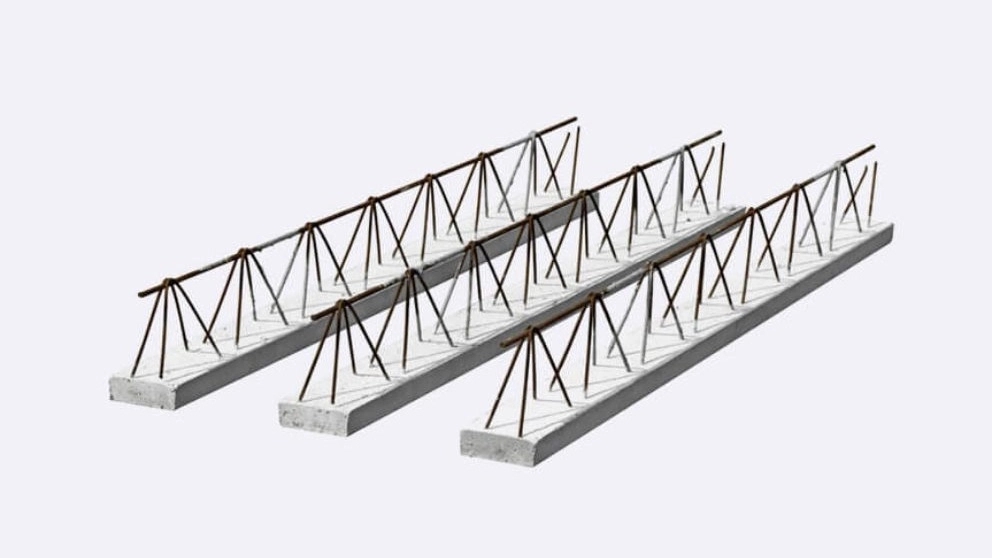
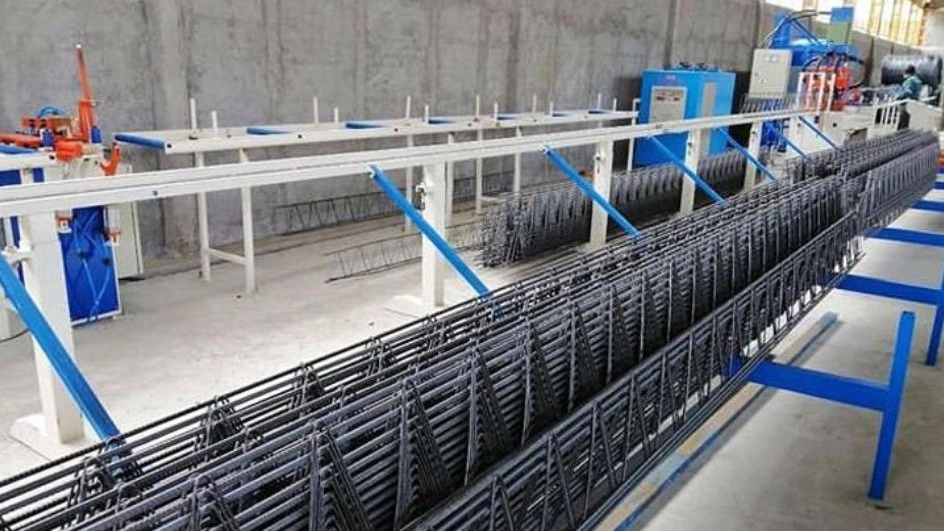

What is an Industrial Job?
Industrial beam truss is a truss that is completely automatically produced. The process of automatic production of industrial truss is such that the lower rebar and the upper rebar, which is called the main rebar, enter the machine at the same time.
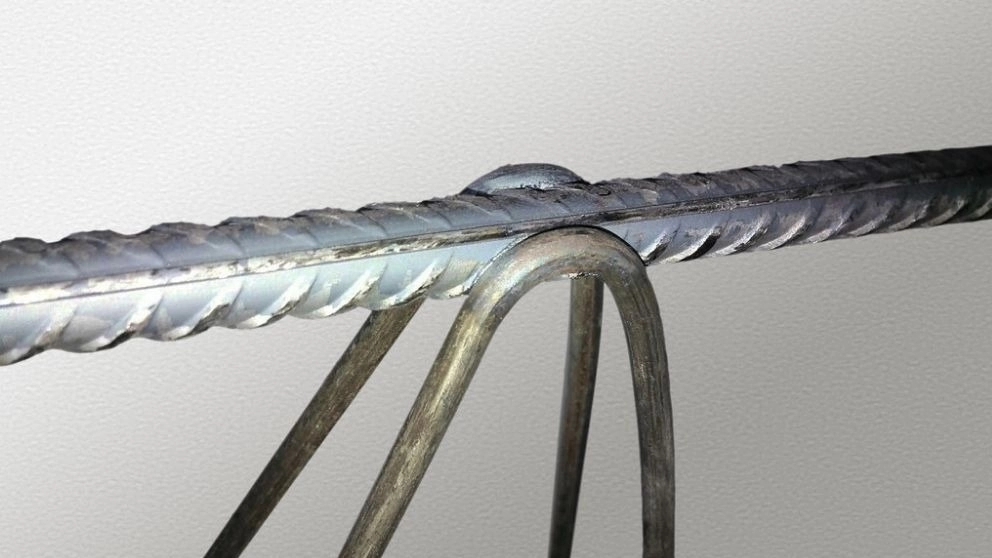
Industrial beam trusses are trusses that are produced through spot welding. In fact, in these beams that are made automatically and mechanized; Unlike the traditional type, electric arc welding is not used for production. As a result, beam breakage is reduced. The appearance of this piece is triangular and quadrangular, and its components are connected without any curvature.
The components of the industrial joists
1- Stretching reinforcement (lower truss bars)
In the first stage of loading the beam, the lower rebar of the beam, as a tensile member of the beam truss, must be able to withstand the tensile force (resulting from the bending anchor) caused by the weight of the beam itself during transportation. In the second stage of beam loading, this member must be able to withstand the tensile force (resulting from the bending anchor) caused by the dead load of the roof in the distance from the axis to the axis of the beams and between two temporary supports (candles). In the third stage of beam loading (operation stage), the lower rebar acts as a tensile member of the T-shaped beam.
2- transverse reinforcement (zigzag or diagonal rebar)
In the first stage of loading, the transverse reinforcements act like the diagonal member of the truss and with the help of the lower and upper tensile members, they provide the necessary stability to bear the weight of the beam itself during transportation. In the second stage of loading, these reinforcements provide the necessary stability to bear the dead load of the roof between the temporary supports during execution. In the third stage of loading the beams, the transverse reinforcements create the necessary connection between the tensile reinforcement of the truss and the in-situ cover concrete.
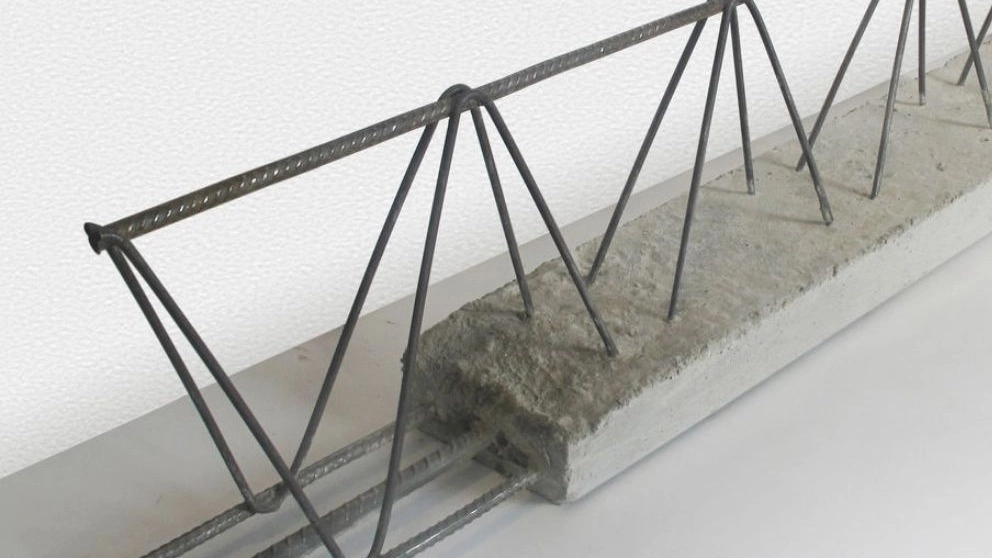
3- The upper reinforcement (assembly rebar)
In the first and second stages of loading, the reinforcement installed in the upper part of the beam acts as the upper member of the truss and with the help of other members of the truss, it supports the weight of the beam during transportation and also the dead load of the roof in the distance between two The temporary support supports during molding and concreting.
In the third stage of beam loading, if the upper armature is placed in the thickness of the cover concrete and above the levels of the blocks, it acts as a reinforcement and heat, or the thermal rebar, and if it is placed below the levels of the blocks, it will not play such a role. and should be used separately with thermal rebar.