
Loader (Loader)
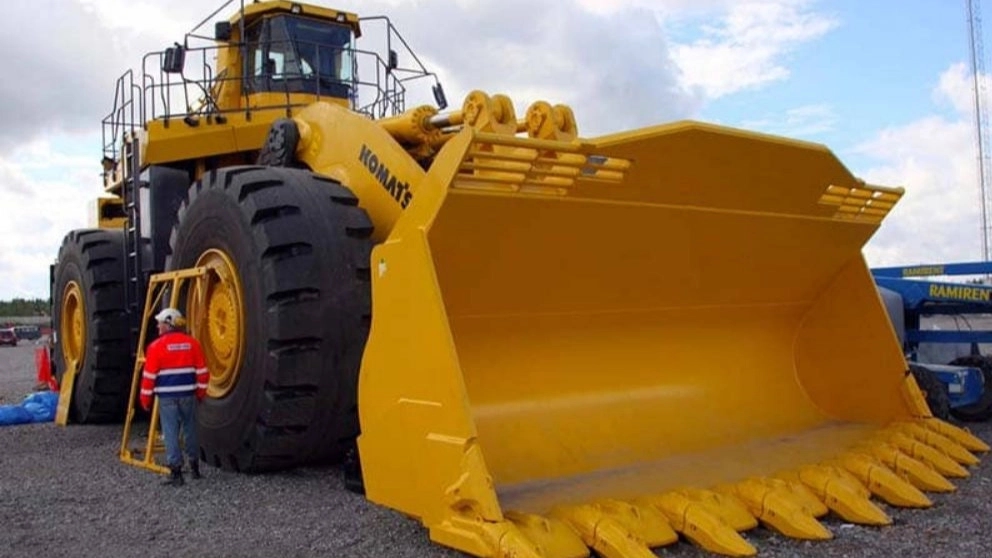
In principle, it can be said that loaders are included in one of the categories of giant road construction machines, which are widely used in construction works to carry mass of materials (such as soil and stone), loading trucks, digging, digging and Sometimes leveling (as a bulldozer) is used. Unlike scrapers, which are used simultaneously for loading and carrying, loaders must always be used in conjunction with transfer machines such as trucks.
Types of loader
Basically, there are two types of loaders installed on the tractor chassis:
Chain Loader
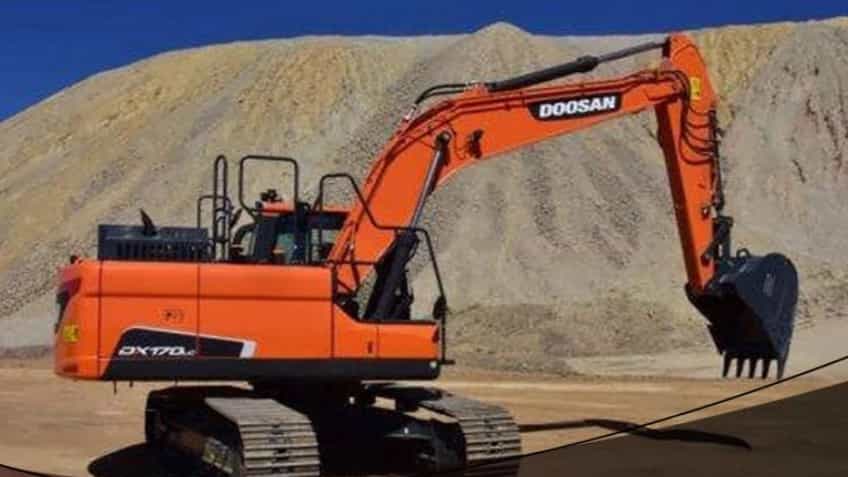
Chain loaders put a little pressure on the soil below them. do This type of machine, having advantages such as good buoyancy and suitable traction power, can perform well in soft and swampy lands where rubber wheel loaders do not work well. Also, the performance of these devices on stony ground is very suitable compared to the type of rubber wheel that can be severely damaged. Chain wheel loaders have a suitable design for maneuvering in limited environments. The transfer of these loaders between different projects requires a trolley.
Wheel Loader
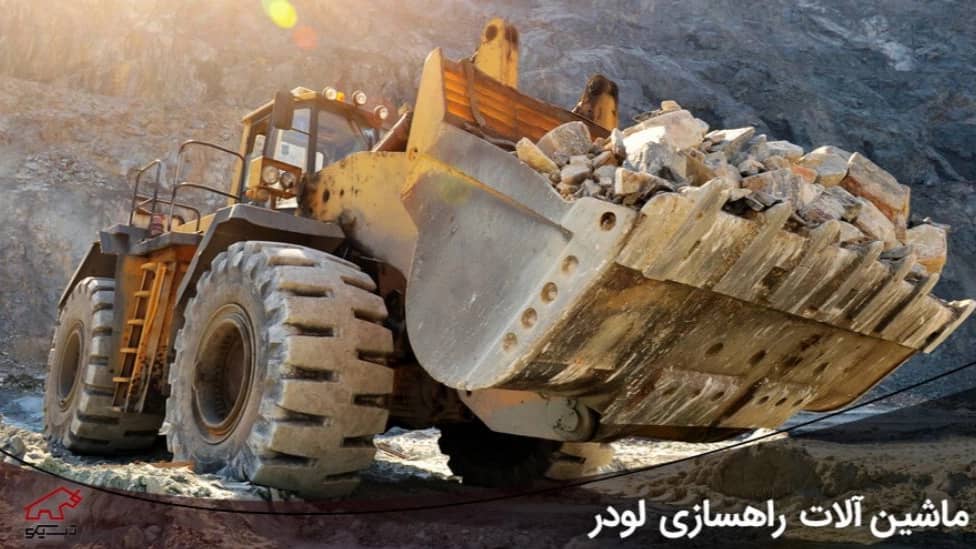
Wheel loaders have a higher speed than chain wheel loaders and perform much better than them on hard terrain. They can be moved on built roads and in relatively short distances without the need for a trailer.
They have a wider variety of sizes than chain wheel loaders and therefore can be chosen more compatible with the needs as well as the cost of maintenance. are less in wet lands and sandy soils that have abrasive properties for chain wheel loaders. The pressure exerted on the ground by tires can be changed by changing the amount of tire inflation, but in any case, working by these loaders in Wet and muddy lands are problematic due to high pressure, and their loading capacity will be less in swampy lands compared to the chain wheel type. Of course, there are special wire chains to protect tires that can be used to increase the friction of tires.
There is a possibility of tire damage in stony terrains with sharp corner stones, although a new type of tires with very thick treads have been produced that allow working in stony areas. Rubber wheel loaders have less pulling power than chain wheel loaders of the same weight, and as a result, their useful power is limited in digging soil and going up or down slopes. they can have good controllability characteristics in a small place. The back-breaking nature of the loader allows an angle of up to 35 degrees in the horizontal plane of the machine axis between the two main parts of the machine.
The main parts of the loader
Loaders generally include the following parts:
Engine
The engine is one of the parts of the loader that creates the necessary force for movement. Today, most chain wheel loaders are made in such a way that their engine is placed behind the driver. This can be due to two reasons, firstly, the weight of the engine is a moderating factor of the anchor resulting from the weight of the cup filled with materials. Secondly, the loader operator is closer to his work space and it becomes easier for him to control the machine.
The engine in rubber wheel loaders can be placed in the front or rear of the machine depending on the following:
1- Small loaders with front rotating axle have an engine They are in front of the car.
2- The loaders that have a cup in the front and a shovel in the back (backhoe loaders) have their engine in the front due to the driver's vision being more open.
3- Because of the resulting neutralizing force Due to the weight of the filled cup and also to create a more open view for the driver, large loaders usually have the engine at the back of the car.
Chassis
Loaders have tractor chassis. These chassis are integral for crawler loaders and can be articulated for wheel loaders.
Hydraulic system
The hydraulic system of the loader is used to transfer power from the engine to its cup. Today, with the optimization of hydraulic oils, the protection against erosion and corrosion in the hydraulic system has increased. Also, by using pressure valves, fault finding of hydraulic systems and its components has become easier.
Cup
Cups of loaders are designed so that they can perform the unloading process at a height of 5.2 to 5.4 meters from the foot of the loader. This feature allows loaders to easily unload trucks and transfer machines. The act of loading and unloading the loader is inevitably associated with a lot of maneuvering. Therefore, if the working space is limited, there will be a problem in the maneuvering power of the loader. The cup may be placed in different positions of the loader during operation.