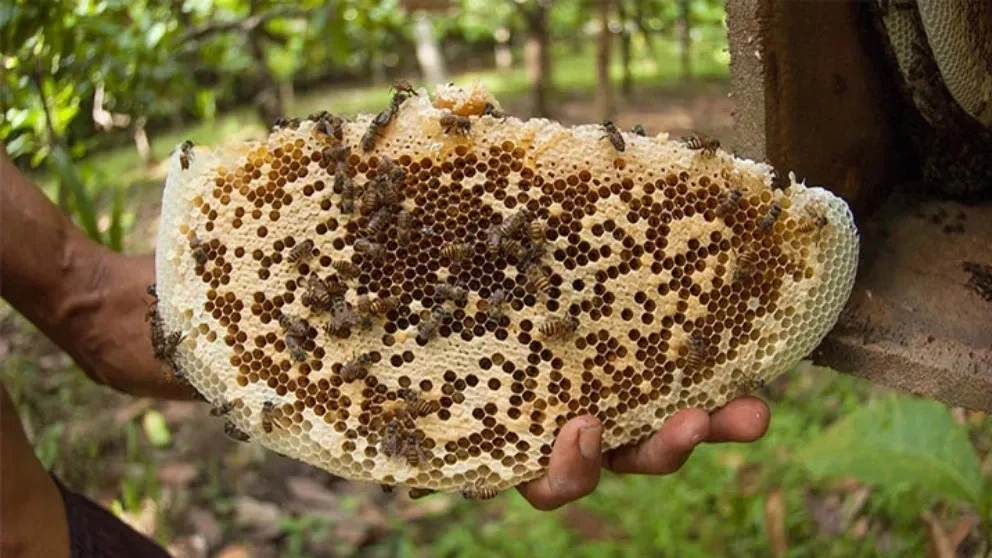
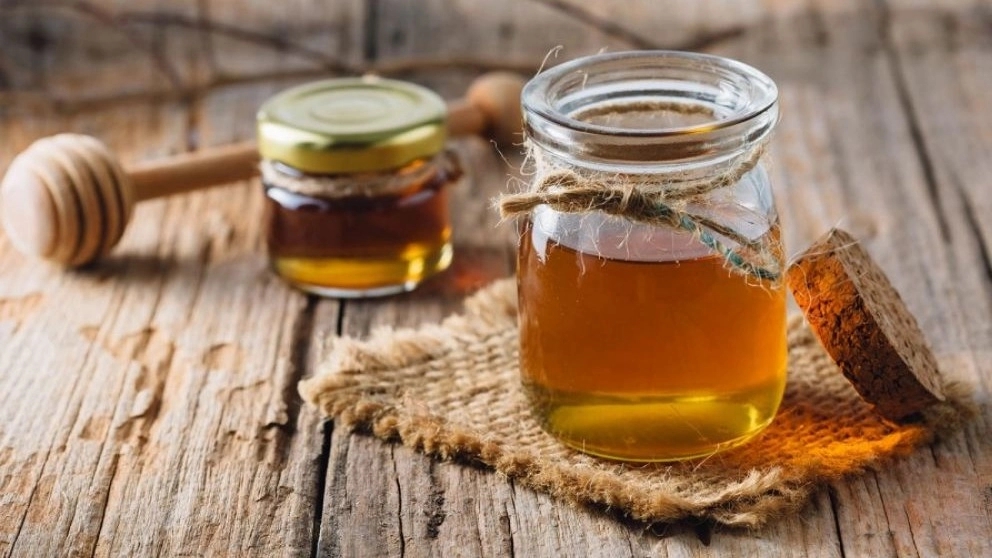


Bee feeding from organic plants
One of the main factors for the production of organic honey is that the bee does not use plants and flowers that are contaminated with various poisons. Unfortunately, in recent years, due to the excessive use of pesticides and poisons, a large part of the country's fields and even forests have been contaminated with poisons, and since the flight range of bees is up to 5 km, the location of hives should be at least 5 km from contaminated land. Industrial facilities and any place where there is a possibility of contamination should be far away. However, the fact that the hives are far from pollutants and sprayed fields is not the end of the story, and there are still other important things to ensure the organic nature of honey.
Hive structure and organic packaging
To produce an original organic honey, it is necessary for the structure of the hive to be free of chemicals and artificial substances. Meanwhile, many beekeepers use plastic hives because they are easier to carry.
Also, combs placed in the hive should be away from chemicals. Beekeepers usually buy and sell empty combs with wax to quickly load the hive, which are likely to be contaminated. In a study conducted in America, it was found that more than 98% of all empty shells are contaminated.
Packaging is another important issue that plays a role in whether honey is organic or not. Because of its acid properties, honey should not be packed in plastic containers but should be stored in appropriate glass containers.
Avoid chemical drugs
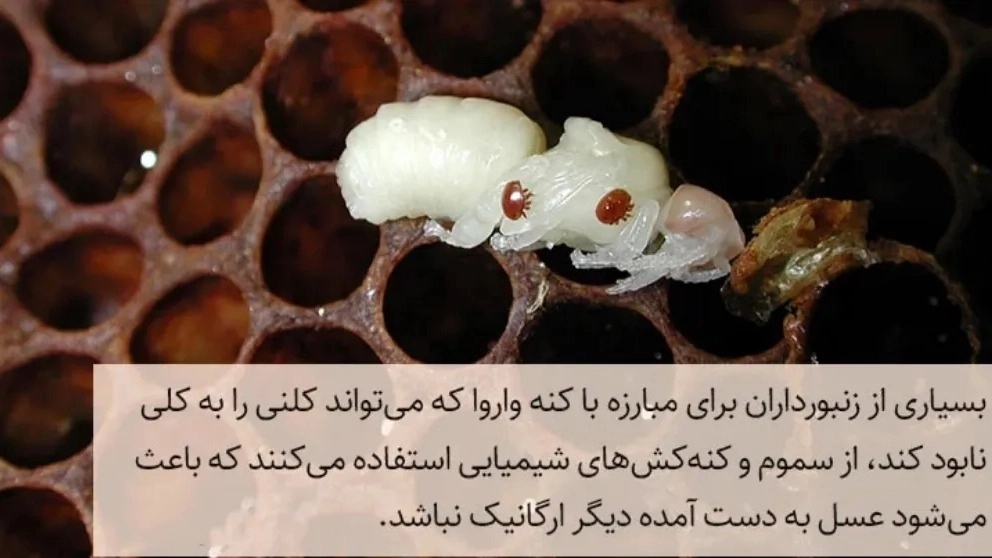
The next important factor is not to use chemical drugs and antibiotics to treat bee colony disease. For example, one of the common diseases among bees is the varva mite, which enters the hive by sticking to the bee's body and can destroy the entire hive quickly. Beekeepers usually use two types of acaricides called Apisan and Coumaphos is used for approximately 20 days. These materials can remain in the structure of the hive, especially in the wax, and as a result, the honey obtained in this way will not be organic.
Nutrition of bees
Beekeepers usually use sugar to feed them in cold seasons to provide food for the colony. While white sugar itself is not organic due to the chemical processes that you perform on it to whiten it. And the honey obtained in the following months will not be organic.
The difference between organic honey with natural and raw honey
Natural honey is called honey in which bees have used only the nectar of plants as food and all honey has been produced in the same way. With this definition, it can be said that any organic honey is definitely natural, but the opposite is not true. And natural honey can be organic or not.
Raw honey is also called honey that has not been heated. And right after picking from the hive, it reaches the customer without any processing. This type of honey becomes clay after some time and becomes sugary.
Raw honey is not a sign of whether the honey is natural or not, as well as whether it is organic or not, but it means that the honey has not been heated.
Is it possible to buy organic honey?
As you have seen, the criteria required for the production of organic honey are very strict, so that even wild honey cannot be considered organic with certainty.
This is the reason why a small amount of this honey is produced in the country and the same small amount cannot be definitely considered organic. This is because there is no specialized body or institution to measure the organic level, at least in our country.
Also, when buying honeys with organic honey labels and foreign certificates, remember that the whole process of measuring the quality of a honey must be done periodically and for each harvest, which is practically if not impossible in our country, at least very difficult.
On the other hand, in many cases, even the beekeepers are not aware of the presence of pollutants in the region, and the mere fact that the beehives are located in the mountains is not a proof that the honey is organic.
Although it is very difficult to produce organic honey, it is definitely not impossible and people may be able to produce it in some parts of the country. But the fact is that in the current situation, organic honey is more of a sweet illusion than a reality.