
How profitable can the artificial grass production machine be for you? Artificial grass has become an increasingly popular choice for landscaping, sports fields, and even children's playgrounds. But how exactly is this evergreen alternative produced? The answer lies in the fascinating world of artificial turf machines. These specialized machines direct the transformation of raw materials such as polypropylene and polyethylene into the massive green carpets that we see in different spaces.
selection of raw materials from nylon to polyethylene
In the past, nylon (PA) was used to produce artificial grass. Over time, it was replaced by polypropylene (PP) and today polyethylene (PE) is used as the main raw material.
The best polymer grade for the production of artificial grass thread is C4 However, advanced manufacturers use C8 grade, which, in addition to being cleaner, also has higher durability. Although this type may cost you more, it helps to produce threads with a longer lifespan.
Painting
The main color is added to the mixture at the beginning of the extrusion process. At this stage, threads with different colors can be produced. One batch of basic paint is usually enough to produce multiple lawns. Emerald, olive, lemon, and forest green are among the most popular green colors, and by combining them in a single texture, a more natural appearance is given to the artificial grass.
knot
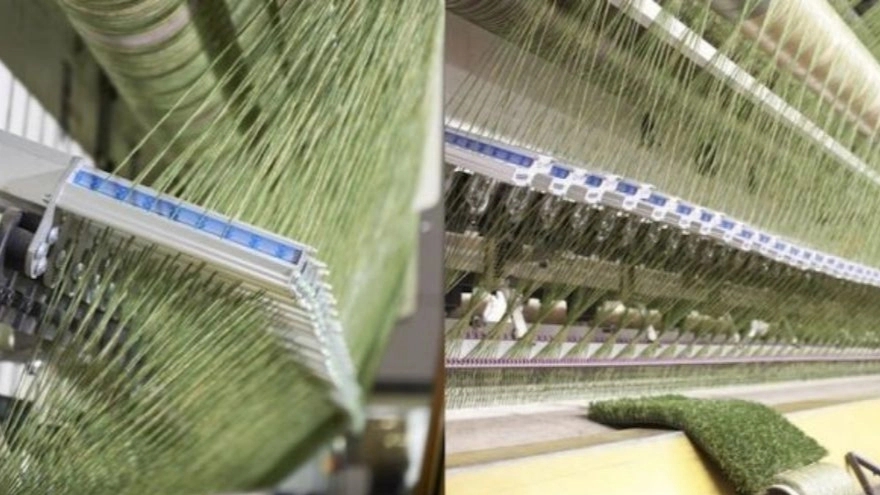
In the knotting stage, the pre-prepared threads of the main material are the scene of artificial grass production. These threads, which are made of polyethylene, are delicately tied by knitting needles to the weave of the lower layer of artificial grass. With a regular and precise movement, the needles sew the threads on this layer at certain intervals and by repeating this process, they place a pile of green threads on the artificial grass bed.
Bone Substation or Completion
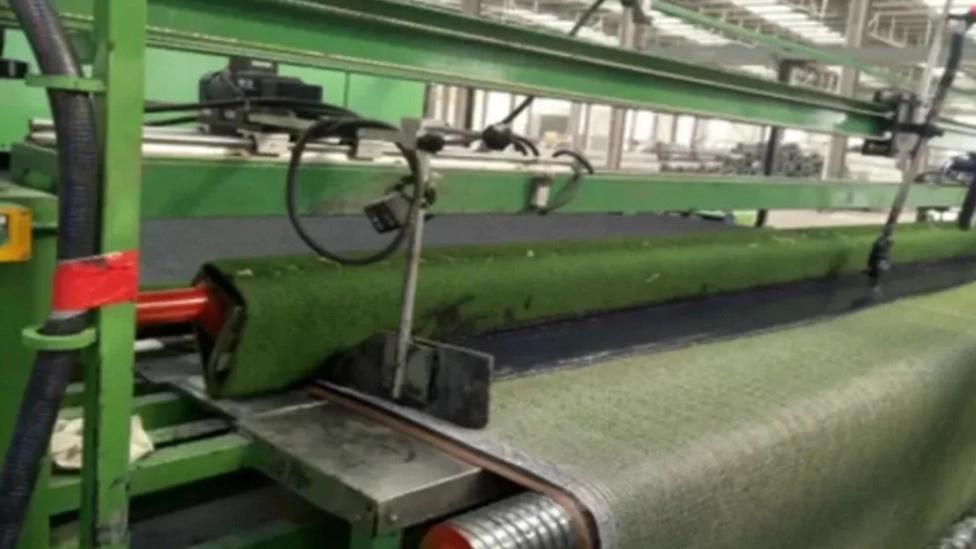
In the foundation stage, the skeleton and ossification of this product is formed. The bottom layer of artificial grass is responsible for bearing its weight and strength. This layer gives stability and stability to the knotted threads. After finishing the knotting stage, the lower layers are connected to this green thread and weft with a special glue.
Baking Layer
Finally, the artificial grass puzzle is completed by adding the backing layer. This dark layer, which is placed behind the artificial grass, gives it strength and elasticity.
Quality Control, Product Quality Assurance and Product Shelf
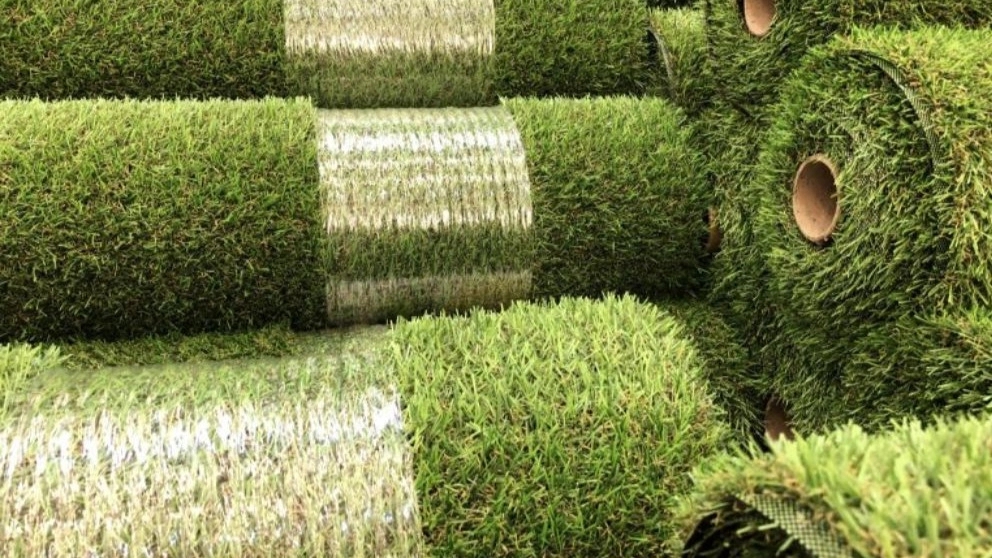
Production stages of artificial grass after tying, underlaying and adding a backing layer reach the precise quality control of the product. At this stage, experts make sure that there are no defects in it by carefully examining all the components of the artificial grass.