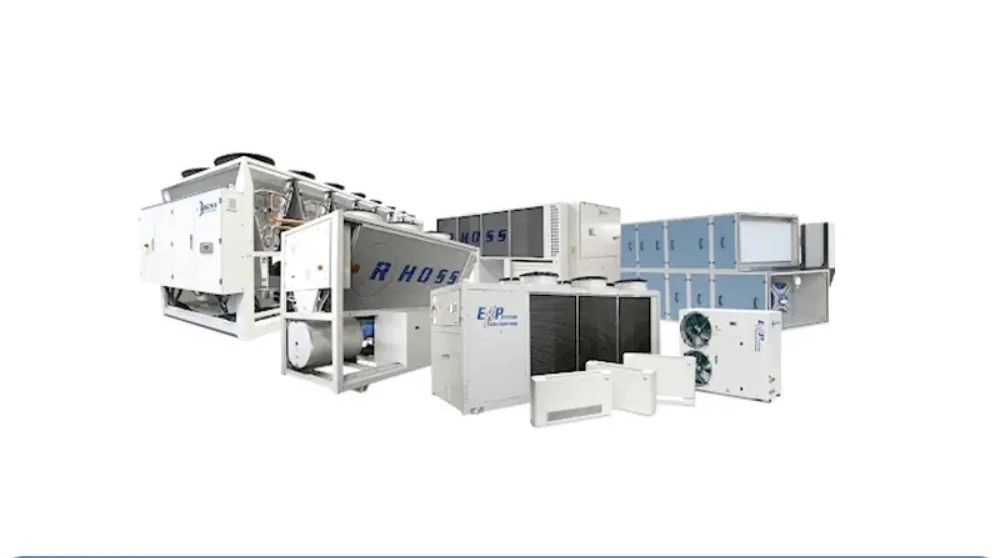
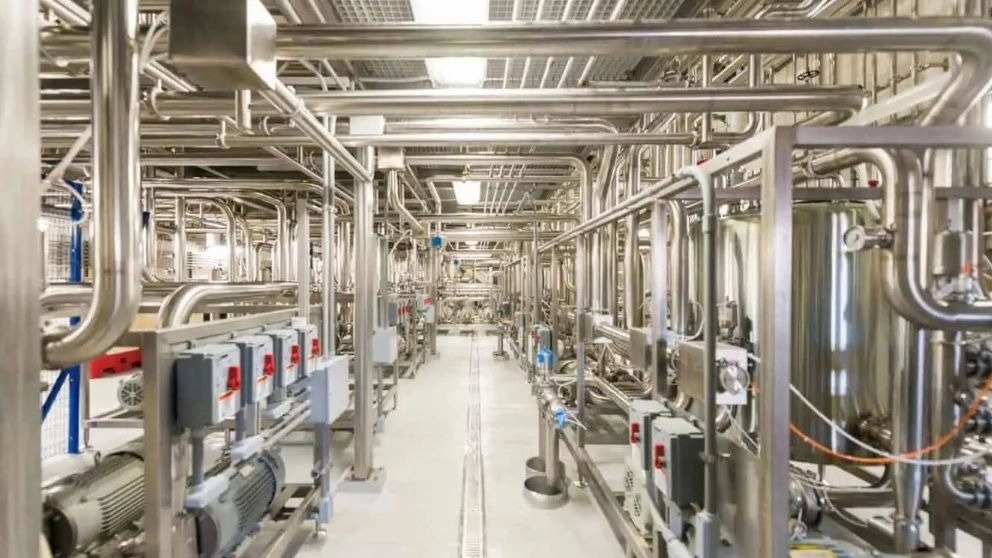
Cooling or cooling
Energy is not lost, it can only be transferred. So how do refrigeration devices produce cold? The exact answer is that no device produces cold, but only absorbs heat from the desired object and transfers it to another object. This work reduces the amount of heat of that object and as a result its temperature decreases.
Heat transfer from one object to another in nature is done only if the temperature of the two objects is not equal. In this case, the heat from the hot body is automatically transferred to the cold body until the two bodies are at the same temperature. Nature always seeks balance. For example, if some ice is placed in a glass of soft drink, because the soft drink is warmer, it gives its heat to the cold ice. In this way, the soft drink becomes colder and the ice becomes warmer.
With these interpretations, in order to be able to reduce the temperature of the environment or an object, we must place an object whose temperature is low in its vicinity so that heat transfer takes place. And after the two reach temperature equilibrium, the cooling body or heat absorber must be cooled again. This is what is done in refrigeration systems, they used ice as a coolant in the old days. Some ice was placed in a container next to the food to keep it cool. Whenever the ice melted, that is, it absorbed the heat, it was replaced by fresh ice. This work had its own problems, the unavailability of ice in all seasons was the biggest problem, so man was looking for a better way to operate the cold.
Evaporative refrigeration systems
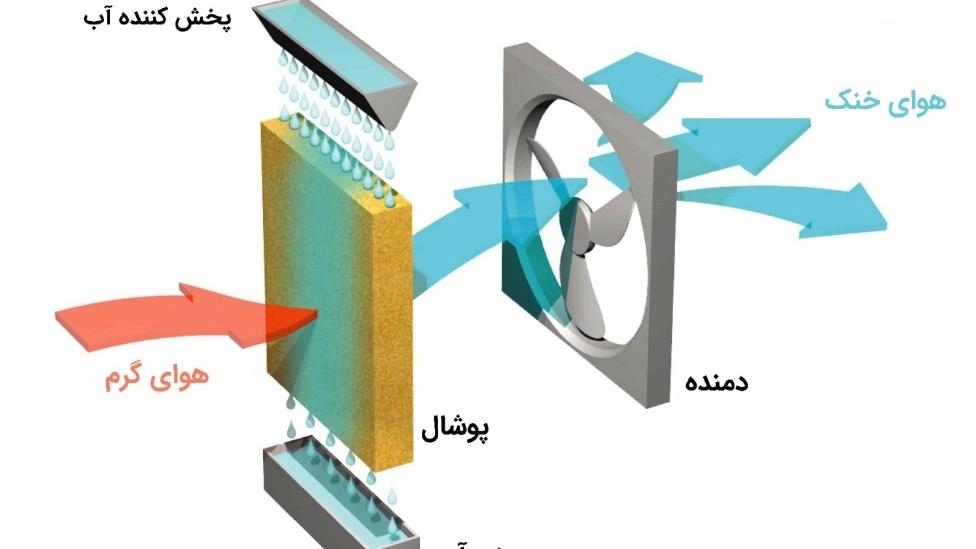
Any liquid needs heat to evaporate. So, if a condition is created where a liquid like water is splashed on the desired object, it will absorb heat to evaporate from that object. As a result, the body becomes cold. This is how the evaporation system works.
A water cooler is the most famous example of an evaporative system. Water is splashed on the cloths. A fan draws outside air in. As the air passes through the mesh, it transfers its heat to the water. In this way, the air is cooled and then it is directed to the room through the channels and cools the air in the room.
The evaporation system can be considered one of the oldest man-made refrigeration systems, the first versions of which were seen in Iran. Windbreaks in desert areas are a type of evaporation system. A tall structure plays the role of a channel to guide the wind. Below that are water pools, or reservoirs. As the wind passes over the water, its temperature decreases and then it enters the room. Badgir Bagh Daulatabad in Yazd province is a good example of this ancient refrigeration system.
Today, however, more advanced methods are used for this. Water cooler, air washer, econopack and Zent are examples of evaporative cooling system.
Evapor systems can be divided into two categories:
Direct evaporation system
Water cooler and air washer are of this category, in this type of evaporation system, water and air are in direct contact with each other. In this method, the air humidity increases a lot, which is not effective for areas with high air humidity, and the increase in humidity may be uncomfortable for the residents.
Indirect evaporative system
In this method, first some air is cooled according to the direct method. Then it cools the other air by a heat exchanger. The two never contact each other. With this method, the problem of increasing humidity will no longer occur. This method does not have the required efficiency, because its capacity is very low compared to the high price. Also, if the desired area has high humidity, the efficiency of the system will still be lower.
Developmental refrigeration systems
With the advancement of science, especially the science of thermodynamics, more efficient methods for refrigeration were developed. In 1805, American inventor Oliver Evans designed a device that could produce ice in a closed cycle. By applying energy to the ether, this device caused the ether to first absorb the heat of the water and the water turns into ice, then in the other part of the cycle, it rejects its heat to the outside environment. This device was never built.
But in 1834, Jacob Perkins, a British inventor, built the first condensation refrigeration system. He described his device as follows:
By using volatile substances, I have been able to cool and produce ice. While the same substance is distilled and used again after evaporation.
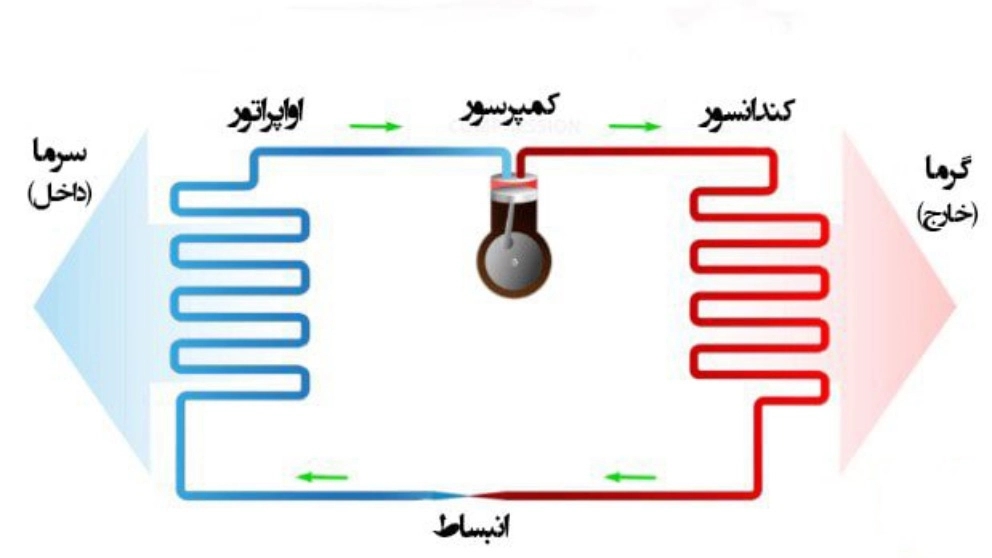
In this system, in short, a fluid absorbs and dissipates heat by evaporation and distillation. First, the fluid, which is called refrigerant or cooling gas, is increased in pressure by the compressor and enters the condenser. There, it liquefies with heat rejection and enters the expansion valve. There, with the pressure drop, it is ready to enter the evaporator and absorb heat and reach the starting point of the cycle.
The benefits of this system include:
Refrigerant fluid is never lost and is always used
Humidity does not increase
It can be used for different capacities
It has a very high yield
Rechargeable refrigeration systems
This type of refrigeration system was very popular in the early 20th century. But after the development of compression systems, it was less used due to their performance coefficient. The coefficient of absorption performance is 1.5 compression. Old oil refrigerators are one of the most famous absorption devices.
In absorption refrigeration systems, unlike compression refrigeration systems that use mechanical energy (compressor), heat sources are used as input energy to the system. Since this mechanical energy is supplied by electricity, in situations where there is no easy and low-cost access to electricity sources and instead there is thermal energy such as solar energy or waste heat in other thermal systems, the use of absorption refrigeration systems It is more affordable.
The working method of the absorption refrigeration system is as follows: by a generator, a solution of water and ammonia is heated at high pressure, and the two substances are separated from each other. This creates two solutions, on the one hand, a vapor with a high concentration of ammonia, which is called a concentrated solution, and on the other hand, a liquid solution with a low concentration of ammonia, which is called a dilute solution.
After passing through the condenser, the concentrated ammonia vapor is cooled and becomes liquid. A solution with a high concentration of ammonia enters the heat exchanger to reduce its pressure when entering the evaporator. Due to this created pressure difference, ammonia evaporates at a low temperature and absorbs heat, thus the refrigeration process is carried out.
The benefits of the absorption system include:
Low power consumption
High useful life
Ability to use solar energy
Ability to recover wasted thermal energy in other systems
Not using CFC gases