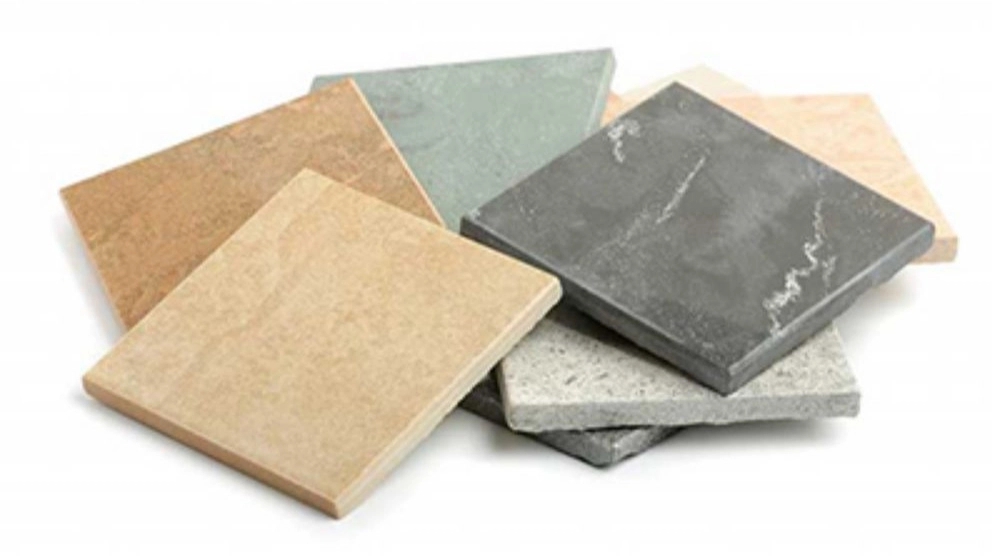
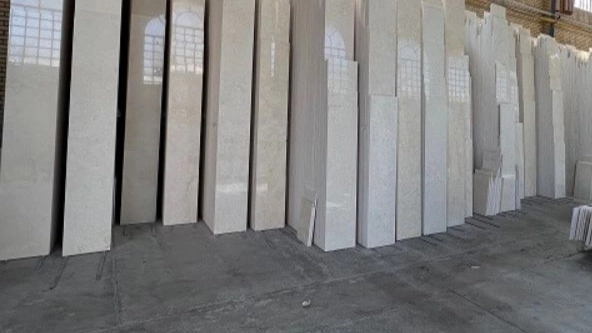


At the beginning of the plan, the desired application should be clear and other factors should be determined according to it. In general, the important factors in choosing the right building stone are: price, color, durability and technical specifications.
▪ Color:
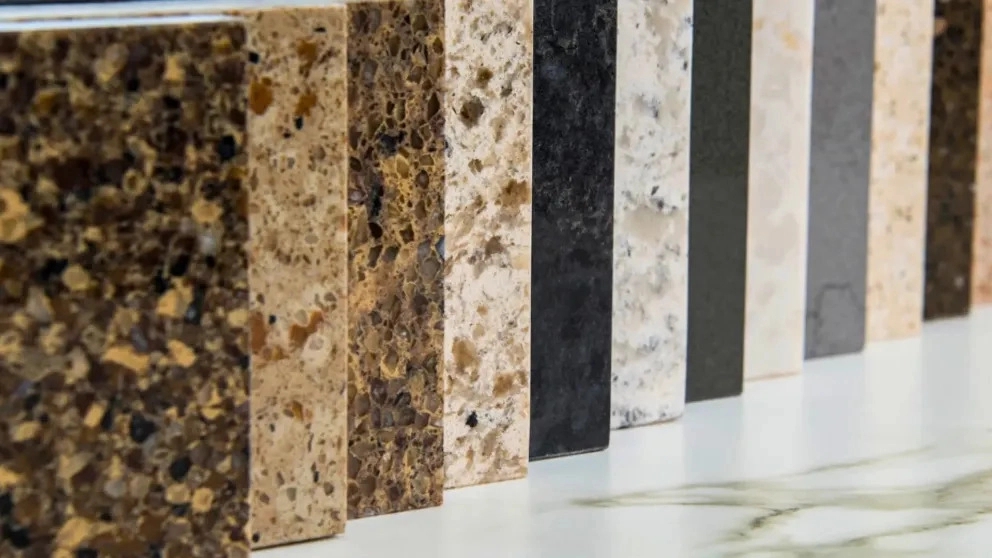
This factor is more important than the view of architects in building stone, although engineers must also have an opinion on the color of the stone. Usually, light colors are preferred over dark colors. This issue is especially important in limestone because most of the dark colors of limestone on the exterior of the building do not last due to sunlight and air pollution. The color of the stone is one of the characteristics that is also very important from the economic point of view. Stones with green, azure and red colors, which are rare, have more value. Sometimes the viewing distance is important in recognizing the color of the stone. A medium-grained granite with pink feldspars will not be seen at a distance with this feature. Also, a multi-colored piece of it will become monochromatic at a distance. Therefore, the single color or multi-colored stone should be placed at a distance of about 20 to 50 cm from the eye.
▪ Durability:
The durability of a building stone is its stability against chemical attacks and weathering factors. Unfortunately, the durability of the stone, which should be the most important factor in choosing a stone, is often not considered. There are many expensive buildings that did not consider this issue in their stone selection and suffered from this area. Among the natural factors that affect this issue, we can mention the construction, texture and composition of mineralogy. The location of the stone installation in the building and its use is another factor that affects the durability of the stone. In addition, weather conditions are also very important. In hot and humid weather, chemical weathering is more effective and in cold and dry weather, physical weathering is more effective.
▪ Construction:
Any weakness in the stone structure accelerates the attack of weathering factors. Therefore, the surfaces of seams, layering surfaces, fault surfaces or any type of gap caused by fault or folding (including shear cracks) all create the right conditions for the effects of weathering and freezing factors.
▪ Texture:
The stone may have grains of the same size, coarse or fine, or have a peripheral texture (uneven grains). Coarse-grained stones are broken earlier than fine-grained stones, they are especially sensitive to temperature changes. This type of rupture is at least partially related to the difference in the expansion coefficients of the minerals that make up the rock. Rocks may also be dense or porous. Dense rock disintegrates more slowly than porous rock. Dense rocks are almost impenetrable, so weathering agents cannot act quickly. On the other hand, rocks with open porosity and hair easily absorb water and crack due to frost.
▪ Combinology:
Since different minerals have different resistances against weathering agents, it is natural that rocks have different resistances to weathering due to their different constituent minerals, and those that have minerals with lower resistance are more resistant to weathering. They are damaged by various factors.
▪ Harmful minerals:
Some specific minerals (iron sulphides) can be considered as harmful minerals in all conditions, while some others, such as mica only in large amounts and in some rocks such as sandstones and marbles. are harmful One of the causes of color change in stones, which is less noticed, is the presence of unstable minerals that easily turn into another mineral, these minerals are often iron sulfides, oxidized in the vicinity of moisture and turn into hydroxide, which The result is the staining of the stone.