How to Open the CNC Device
The basis of the operation of the cnc machine is based on the processing of commands received from the operator of the machine. Any change that needs to be made on the desired surface is a combination of movement in different directions. For example, in order to penetrate the working tool in the desired level, the working tool must move down in the y axis; Or, for example, for horizontal cutting, the work tool must move to the left or right in the x axis. In general, by moving the work tool in three main axes, i.e. z, y, x, different movements can be made for the work tool. The number of axes that a cnc machine is capable of moving is a division criterion for these machines. For example, more advanced cnc machines are able to create rotational movement for the work tool or the table on which the desired surface is placed. The more axes the machine has, the more freedom the operator has to produce the final product. So, to work on the desired surface, it is enough to identify the movements that the work tool must have on the surface and convert them into the computer language of the CNC machine. Of course, another factor that must be determined by the operator is the speed of the work tool. For example, if we have an order to move the work tool in the y axis by 5 mm, the time period for which the work tool must travel this path must be given to the machine. The programming language of the CNC machine is called G-Code. The machine operator writes the commands in G-Code language and the computer of the machine converts these codes into an understandable language for the cnc machine and executes them one after the other, and in this way the necessary operations are performed on the desired surfaces. br>
Difference of NC and CNC
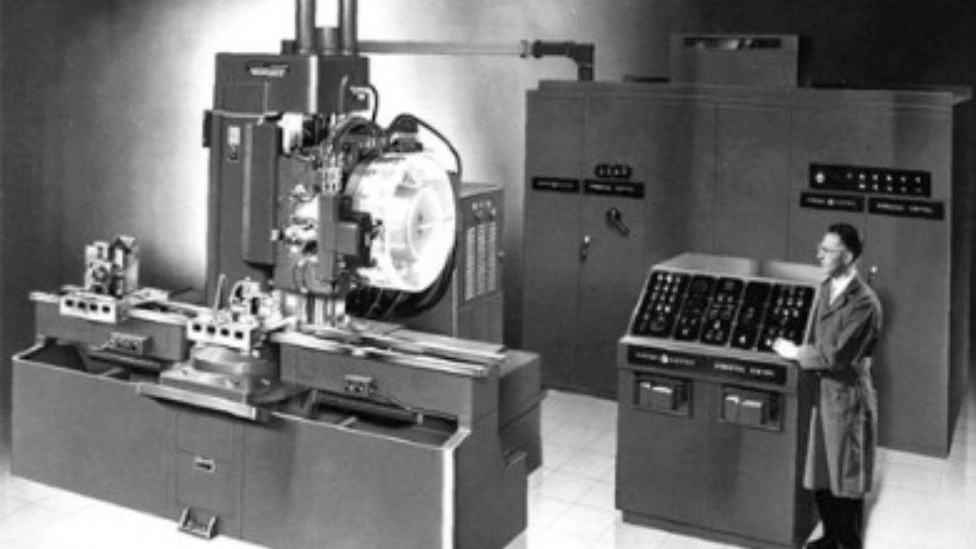
The NC machine was created before the CNC machine. CNC can be considered an evolved form of NC. With the advancement of technology, it became possible to use a computer in NC devices. One of the most important and sensitive stages of working with NC machines has been the numerical calculations related to the displacement of the axes. By using a computer, these calculations are done with higher accuracy and speed, and this is the big advantage of CNC machine compared to NC.
Creating input for CNC machine and converting this input to output requires CAD (Computer Aided Design) and CAM (Computer Aided Manufacturing) software. CAD software is used to design a structure, while CAM software is used to produce a structure from a design.
Types of CNC device
CNC machines have different types from different aspects. For example, according to different levels, they can be divided into cnc machines for wood and MDF, metals, plastics, glass, stone, etc. Or, for example, based on the type of function, they can be divided into cnc turning, milling, laser, waterjet cutting, wirecut, etc. In terms of size, they can be divided into small desktop cnc and large industrial cnc. For home use, you can buy a cnc kit and then assemble it.
CNC milling machine
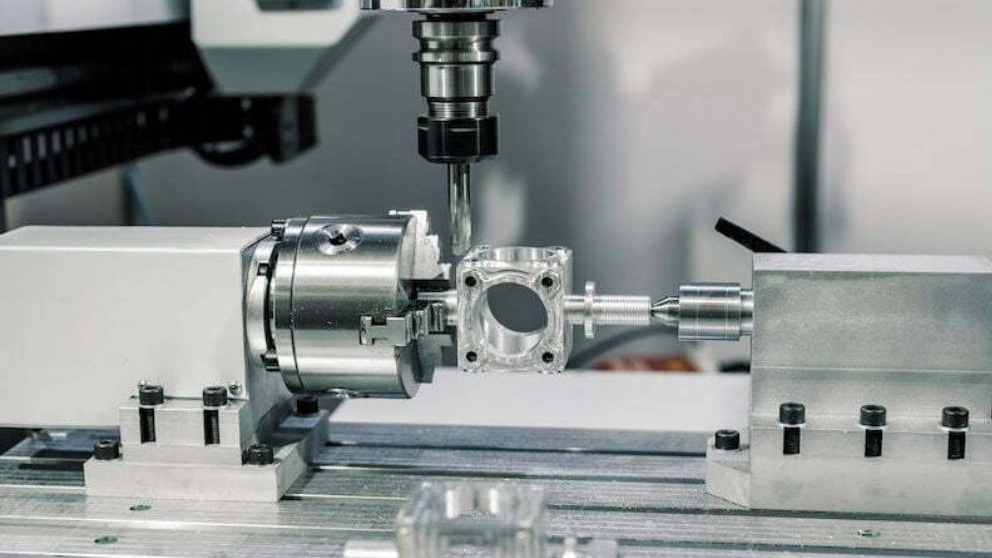
You may mistakenly consider the function of a milling machine and a lathe to be the same. The basis of the operation of milling and turning is different; In general, the definition of lathe is when the part is in motion or rotation and the tool is fixed, and the definition of milling is when the part is fixed and the tool is mobile. One of the main uses of CNC machines is milling.
CNC Loading machine
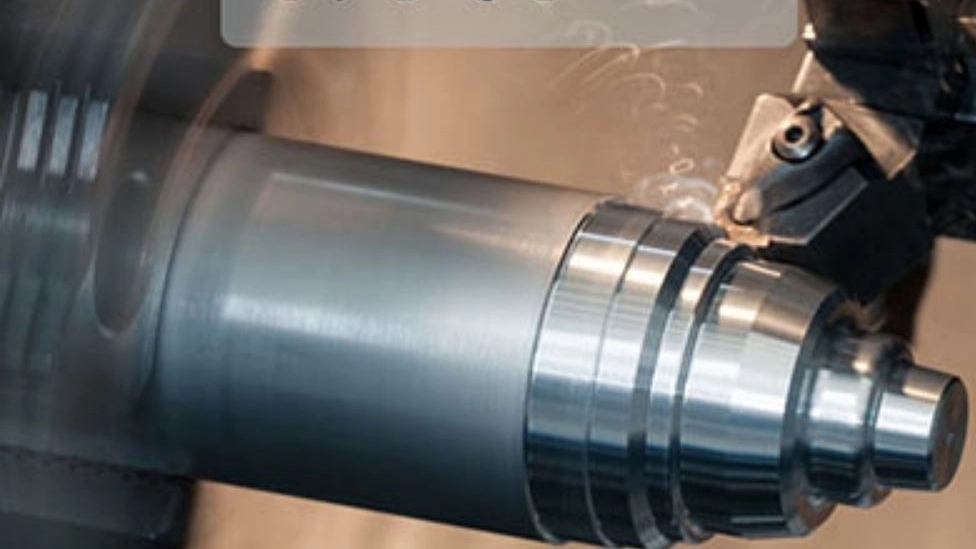
This machine is considered one of the most widely used CNC machines. In the cnc lathe machine, the desired surface rotates at a high speed and with the movement of the work tool on the surface, shaving is done with high speed and accuracy. cnc lathe usually moves in x and z axis.
CNC Laser Device
Laser cutting with the help of a CNC machine is a non-contact and heat-based manufacturing process that can be used for metal and non-metal surfaces. Using a cnc laser machine has advantages and disadvantages like any other method. One of the advantages of this cutting method is that it can be used to cut different types of surfaces such as ceramics, plastic, wood, glass and metal. Another thing is that, unlike manual and traditional methods where the output product was not very accurate, in this method the cutting accuracy is very high; For this reason, laser cutting can be used in industries that require precise cutting of parts. Also, in this method, there is no direct connection between the work surface and the nozzle; For this reason, the possibility of contamination of the work surface is reduced.
Waterjet Machine
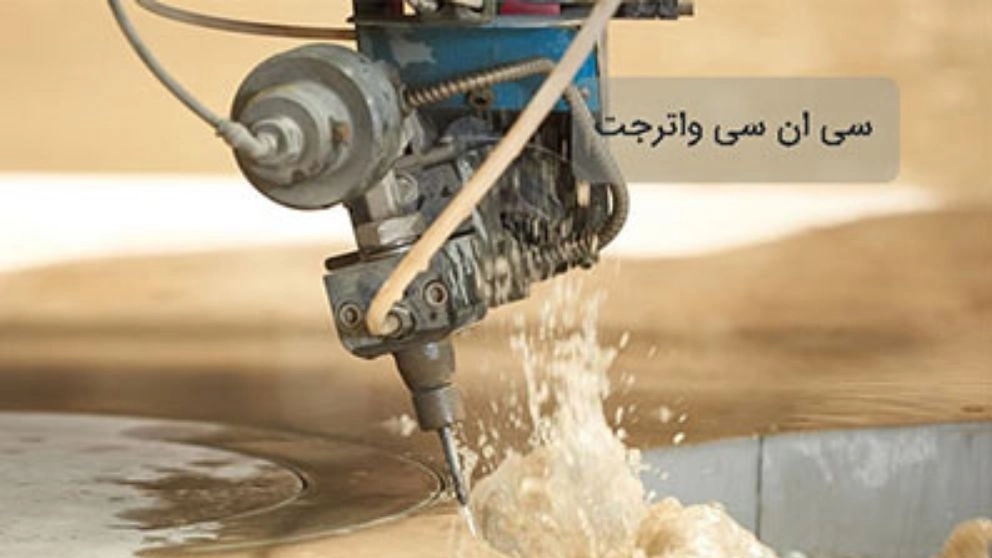
The waterjet device, as its name suggests, uses water to cut different surfaces. High pressure water has the ability to cut the hardest surfaces. A waterjet machine can be used to cut granite and metal surfaces.
One of the problems in cutting metals with a laser is that some metals are not able to withstand the high heat created in this method, and high heat causes the metal to melt and change shape. In these cases, the best way is to use a waterjet device. The smaller the diameter of the nozzle in the waterjet method, the higher the output water pressure will be, and as a result, the cutting accuracy will increase. In some cases, when the work surface has high resistance, materials such as pebbles are dissolved in water to increase the cutting power of water. The waterjet device is used in various industries such as aerospace, glass, wood, and automotive.
CNC Wirecat Device
cnc wirecut machine (in English: wirecut) is another surface cutting tool. In this device, the working surface is placed between two electrodes, and by discharging the electric current between the two electrodes, it is possible to shape the desired surface. By moving the electrodes closer and closer, the intensity of the electric field can be increased and decreased, thus providing the appropriate electric field for cutting any surface.
CNC Metal Device
Metals have higher resistance compared to surfaces such as wood, plastic, etc.; For this reason, cutting and shaping them manually is extra difficult. Nowadays, metal cnc machines are used for works such as engraving, cutting, turning, welding, etc.