
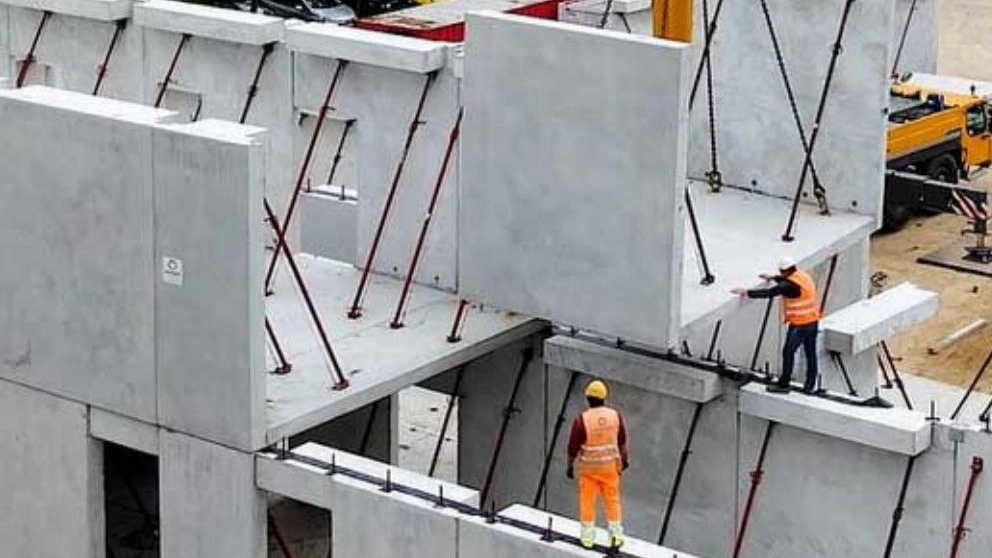
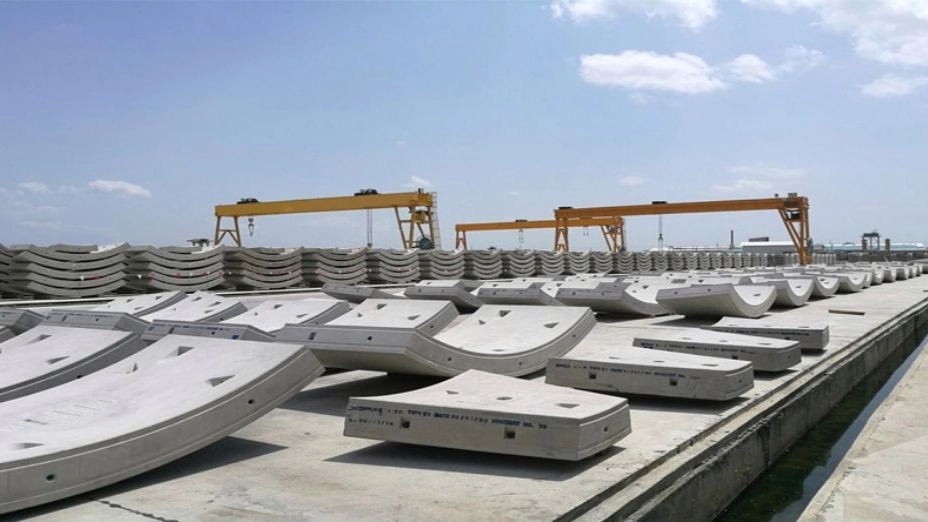
The production of these parts has different stages, inaccuracy in each stage causes all stages of concrete production for prefabricated concrete walls to be questioned. Among the works that must be taken into consideration for the production of each of the ready-made and prefabricated parts.
In the production of these parts, pre-tensioning operations are also performed if needed.
Pre-tensioning operations reduce the height. The arrows become; This operation is done before the concreting stage and it causes its standardization.
It can be said that the interlocking operation is a kind of quality control for the stages before concreting.
In general, the production of ready-made parts is done in several different ways, which include: Using chassis displacement or pallet displacement
Methods of executing prefabricated systems
Prefabricated system is done in two ways:
🔰Execution of the building by linear method
🔰Execution of the building by wall method
In the first method, the components of the building, including foundations, columns, and other equipment, are prefabricated, and the connection of its parts is of a lighter type. buildings are installed; Then the pieces are placed in the distance between the two pieces using concrete.
In the second method, the components of the building include the foundation, wall panels, and the roof are prefabricated. Connections in this type are made by means of screws and nuts, and sometimes in the form of screws. It is planned and implemented in the factory.
In this production system, all the mentioned items are done inside the wall mold and before concreting.
Prefabricated wall price
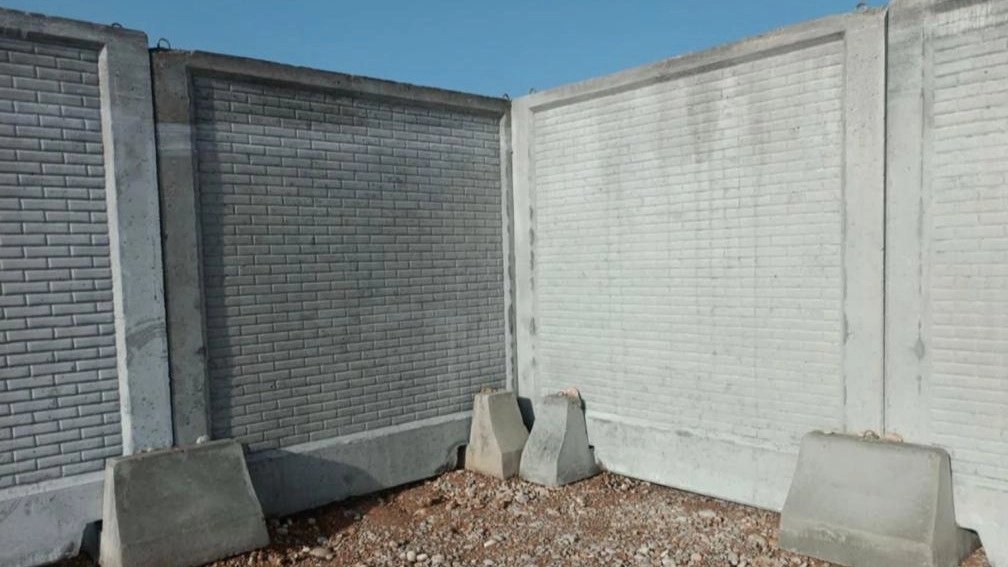
Benefits of Prefabricated Wall
Using prefabricated walls allows you to save a lot of time in the construction process of your building. Because these walls are produced as ready-made modules that can be quickly and easily installed at the building site. This method allows architects and builders to finish their project in a shorter time and also have significant economic benefits.
2. Flexibility in design
Another advantage of prefabricated walls is their flexibility in design. Using this technology, you can choose different designs and patterns for your walls and take advantage of their high diversity. 3. Improved thermal performance
Prefabricated walls are usually made of materials with excellent thermal properties. These features make buildings that use prefabricated walls more resistant to temperature changes and less energy is consumed in hot and cold seasons. 4. Reduced side costs
Prefabricated walls usually have proper insulation systems that can help deal with water loss. These features make buildings equipped with this type of walls more resistant to leaks and damage caused by moisture.