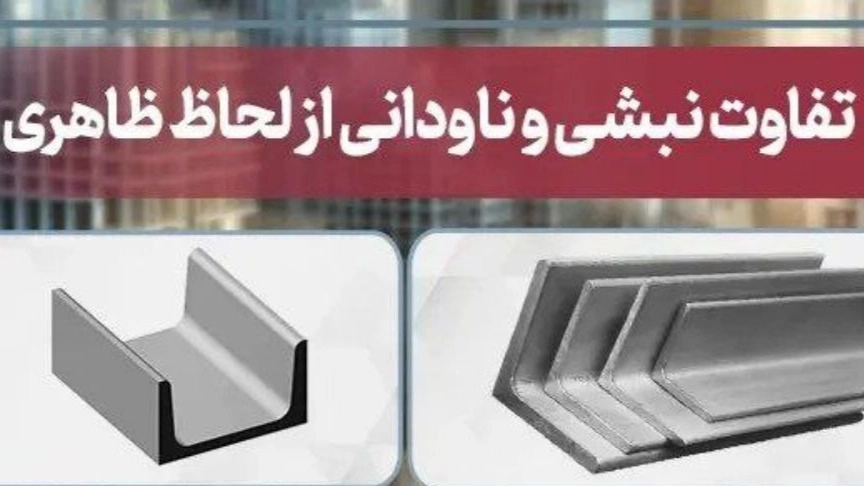

You probably have this question, what are the differences between corner and stud despite their similarities? Angles and studs are two of the most important products that are produced and used in the construction industry. As a result, knowing the difference between corner and stud is an important issue that active people in the field of construction industry should be well aware of. In this article, we are going to talk about the difference between these two and the use of corners and studs. But in the first step, in order to better understand the difference between corner and stud, you need to have complete information about each of them.
What is a corner?
A corner is one of the metal profiles used in construction and engineering industries. This profile is in the shape of the letter "L" and consists of two wings that are connected at an angle of 90 degrees. These parts are used as a structural element for strengthening and support.
In general, corner is used in the construction of metal frames, steel structures, building skeletons, stairs and other structural parts. Due to their shape and strength, they can withstand compressive and tensile loads well, and for this reason, they are of special importance in many structures and construction projects.
What is a stud?
Stud is one of the metal profiles used in the construction and engineering industry. This profile is in the shape of the letter "U" and consists of one horizontal section and two vertical sections.
These parts are used in various types of construction and engineering projects. The most important application of studs includes the construction and strengthening of metal structures, door and window frames, the skeleton of buildings, bridges, towers and industrial equipment. Due to its special shape and high strength, these profiles can withstand compressive and tensile loads well. Also, in the construction of sheds, industrial halls and warehouses, they are used as structural elements to create strength and stability.