

- Features : It does not have any additional coating and it is produced in a simple way. Application: Due to its simplicity and reasonable price, it is used in many construction projects. li>
What is the thermal rebar?
Thermal rebar is a group of steel sections that are used in concrete structures to prevent the effect of temperature changes. This product is placed vertically in the structure; so that its final shape will be similar to the letter T. Normally, temperature changes can cause the expansion and contraction of concrete and rebars. But by using thermal rebar, this is prevented. The result is that the concrete does not crack and the stability and strength of the building is maintained. The use of these products, like any other new member in construction, has many pros and cons.
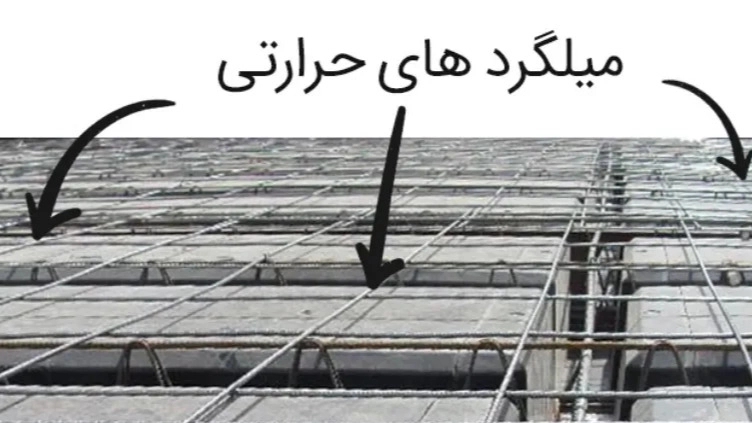
some people consider its use as necessary and its presence improves the performance of concrete in certain conditions. If many others consider the use of thermal rebar a waste of time and money. Like other rebars, size is also effective in the price per kilo of heat. For this reason, we suggest you to check the website or channel of the current price of Isfahan iron for accurate information on the prices.
During the construction of the roofs, a certain number of thermal rebars of the block beam roof with a certain distance, In the upper third of the concrete slab, they are placed on the left and right and perpendicular to the beams (the concrete slab is a part of the structure whose task is to bear vertical loads).
The production process of this product is It is the case that during the cement hydration reaction, which is basically the reaction resulting from the combination of water and cement, the thermal rebar engages with the concrete and prevents excessive expansion and contraction of the concrete. This issue prevents the occurrence of deep cracks in the roof.
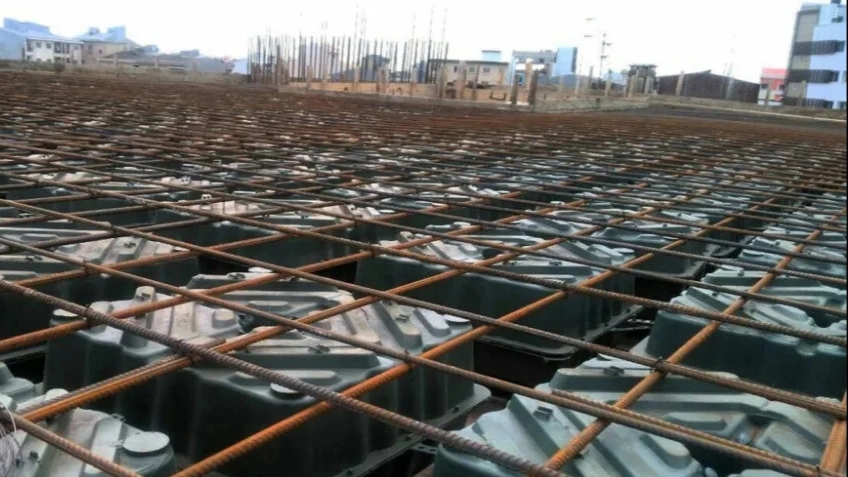
The important thing in this field is the pressure on these rebars. Since the diameter of the rebar used is usually small, the thermal rebar has little resistance to pressure. Therefore, after installation, care should be taken that the movement of building contractors does not cause bending in it. Because in case of bending, the rebars do not show proper performance when the concrete hardens.
Types of thermal rebar + weight
The thermal rebar, as one of the important elements in the construction of concrete structures, plays a significant role in increasing the strength and stability of the structures. This type of rebar is used in different parts of structures due to its ability to absorb and dissipate heat and prevent concrete from cracking.
Different types of thermal rebars are:
Simple thermal rebar
Ribbed thermal rebar
- Features: It has a ribbed coating on the outer surface, which increases adhesion with concrete and resistance to tensile forces. Application: in areas with high humidity and corrosion potential. is used because of its greater resistance to corrosion.
abrasive thermal rebar
- Features: It has a coating of wear material that increases its resistance to wear and corrosion.
- Application: in areas where the possibility of wear and friction is high, such as the floors of buildings or tunnels, is used.
Springs heat rebar
Features: It has a solid surface that is designed as a spring. This design increases the contact surface with concrete and thus increases adhesion and resistance. Application: It is used in structures that require very high resistance, such as bridges and tall buildings.
Two -layer thermal rebar
- Features: It has two layers of coating, which increases the resistance to corrosion and improves the performance of the structure. Application: in corrosive environments and harsh weather conditions, in order to increase the service life. structure is used.
Important note: Choosing the right type of thermal rebar depends on various factors such as the type of structure, environmental conditions, load level and project budget. Therefore, it is better to consult the supervising engineer of the project before choosing and using this type of rebar.