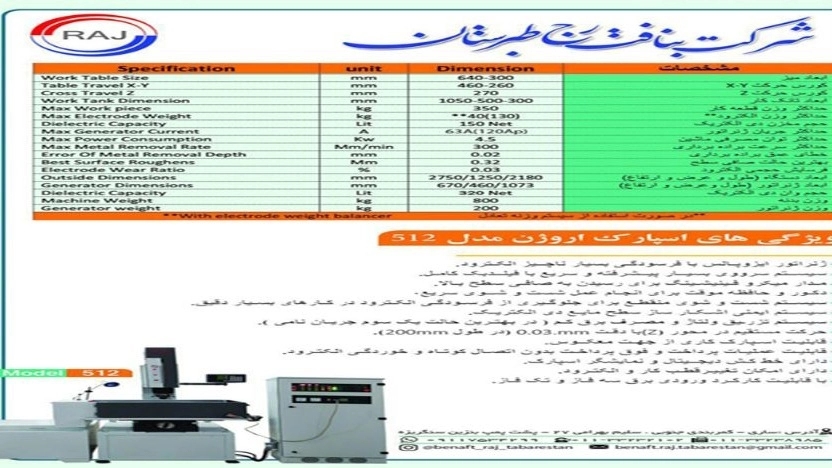
What is Spark and what is it?
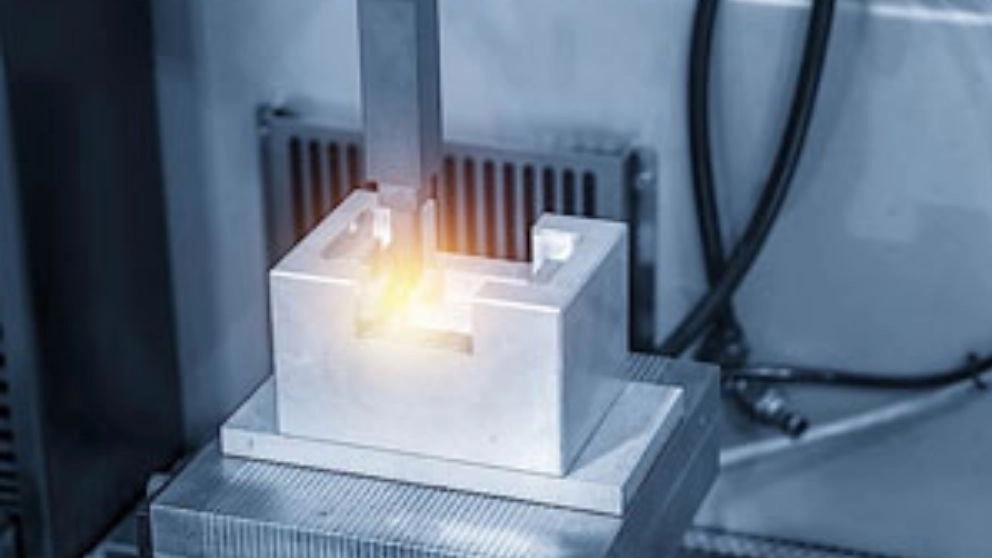
Spark, also called electric discharge, is a method in which the tool and the part are placed at a distance from each other. Then a gas flows between them and creates a spark.
This spark performs the cutting action. What caused the emergence of this method was the high strength of metals and their resistance to heat, which prompted engineers to find the need for special types of machining.
What is Spark?
Electrical Discharge Machining or EDM, also known as spark machining, is one of the newest methods added to various industrial molding methods. Spark machining is a method in which steel or other metals can be chipped by electric discharge. By striking a spark between two electrical connections, some material is removed from each of the connections. It was for this reason that efforts were made to harness and control spark energy in order to use it for useful purposes such as metal machining. Experts found that in order to achieve effective machining, short-duration, high-frequency sparks are needed.
They also realized that if the electric discharge was carried out in a dielectric, the energy could be concentrated in a small area. By striking a spark from one side and advancing the tool towards the workpiece from the other side, over time, the shape of the tool is chipped in the workpiece.
Each spark produces a temperature between 8000 and 12000 degrees Celsius. The size of the hole that each spark takes from the workpiece depends on the amount of spark energy, which is the most important influencing factor on the source of current supply. The depth of the created hole varies from several microns to 1 mm.
Spark Working Method
The workpiece is immersed in a dielectric solution (usually oil) on a plate. The tank is installed on the base of the machine, and the electrode, which is perfectly suited to the cavity, is installed on the throat of the machine, and the throat is also connected to a pinion system of the shoulder wheel. A servo motor (Servomotor) stimulates the shoulder by a pinion and the tool moves vertically with respect to the workpiece.
Both the accessory and the tool are connected to an electrical source. The electrode is the negative pole and the workpiece is the positive pole. The shoulder of the machine moves down to a certain distance between the tool and the workpiece by the servo motor. At this point, the dielectric between the electrode and the workpiece is cut off and the operation of the electrical discharge machine begins. This operation separates the particles from the workpiece.
At the same time, corrosion on the electrode occurs at a lower rate. A nozzle sprays the dielectric through a hose onto the workpiece, and the corroded particles are washed off the workpiece. The electrode goes down again, but this time due to corrosion, the rate of lowering is higher than the previous course.
Again, the electric discharge machine operates at a greater depth and other particles are removed from the work piece. The operation continues and the tool rises and the corroded particles are washed away. The tool is lowered and the operation of the electric discharge machine is carried out with a minimum spark radius.
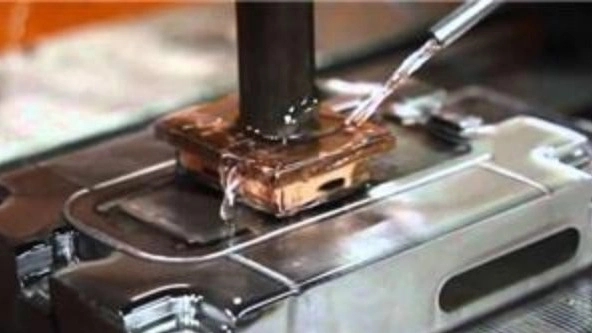
Corrosion occurs not only in the workpiece but also in the electrode, as a result, several electrodes are needed for great depths. Usually, the first, second and third electrodes perform the roughing operation. The last electrode is used for the final operation and the final shape is created by the final electrode at the maximum depth.
The dielectric liquid is continuously rotated. The liquid that is contaminated with particles returns to the main tank and passes through the filters and then is pumped to the tank by a hose.
Types of Spark Machine
There are three different types of electric discharge machines:
1. Wire Cutting EDM: Wire Cutting EDM:
In this method, thin wires are used to cut objects. Here wire is used as electrode. It is a precise and cost-effective method for metal cutting.
Especially in cases where it is necessary to cut the metal piece without pressure and stress, due to the nature of this method in which no contact or force is applied to the piece, wirecut is used for cutting.
2. Sinker EDM Electric Discharge Machines:
The traditional method is the electric discharge machine drill, also known as Ram EDM. Complex shapes can be created using this method. This method requires an electrode (usually made of graphite or copper) that is already made in the desired shape, and then the electrode is placed inside the material.
3. Hole Drilling Edm: Hole Drilling Edm:
This method is used for drilling. This type of electric discharge machine is able to create a small and deep hole compared to conventional drilling methods. In this method, the electrodes are tube-like and the dielectric liquid is fed from these electrodes.
Advantages of this method
- The machining rate is not dependent on the hardness of the work piece and is proportional to the melting point of the work piece, and therefore, materials that have little machinability, such as cemented carbides and electroplated tool steels, can be machined, and this machining is without pleats.
- Parts with complex shapes can often be machined.
- Due to the fact that there is no contact between the workpiece and the electrode, it is possible to create thin walls and delicate shapes.
- Creating depressions or asymmetric protrusions that are not possible with common chipping tools is possible with the presence of an electric discharge machine.
- Machining on metals is often difficult and impossible, but with an electric discharge machine, this possibility is provided.
Spark Application:
They use the electric unloading machine to perform different activities in different places.
Among its uses, the following can be mentioned:
- Its use in power plants, petrochemical and iron smelting
- Using it for drilling, engraving and cutting and turning large metal parts. Final word, although the metals were hard and resistant to heat, but with spark machining, most of the needs for metal shavings are solved.