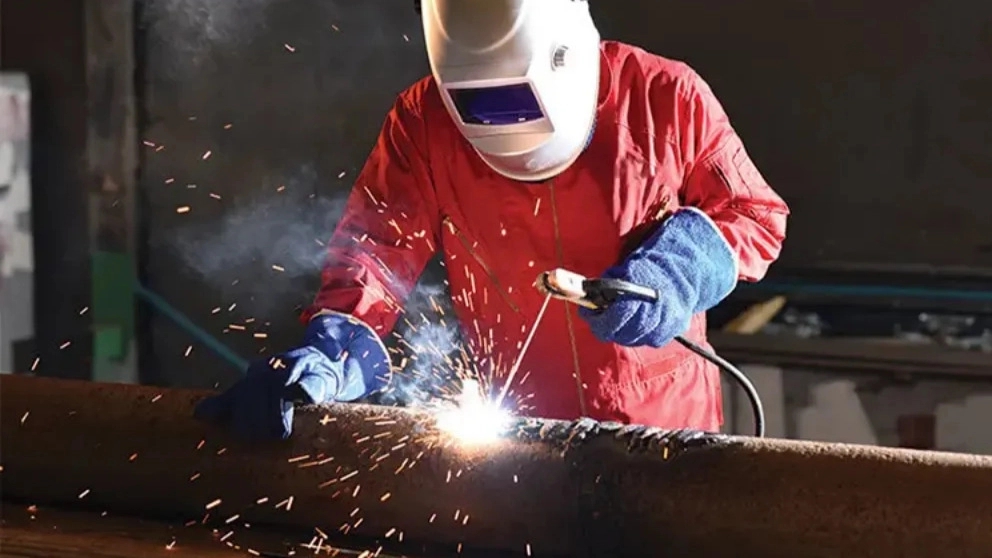
The difference between argon welding and normal welding is due to the difference in the welding method. Conventional welding or electric arc welding is much cheaper than argon welding and its accessibility is also very convenient. With manual electrode welding, places with limited access can be easily connected.
In manual electrode welding, a lot of smoke is produced due to the burning of the electrode cover, which is harmful to the health of the welder. Also, this method cannot be used in bad weather conditions. On the other hand, after each welding pass, the welding mud or slag must be removed from the welding line so that the part is ready for the next welding pass.
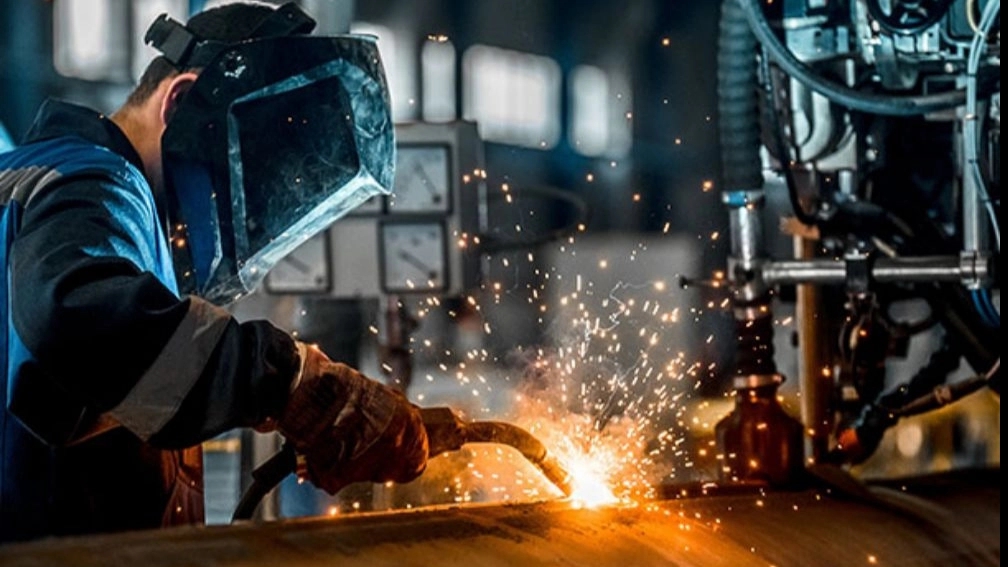
In argon welding, we will witness a very high quality of the welded section. One of the important differences between argon welding and conventional welding is that in the TIG method, a connection can be made even without using a welding wire or filler metal and only by melting two adjacent metals. In the TIG method, a wide range of alloys can be connected to each other.
With CO2 welding, welding can be done in all situations. This method has very little slag and in some materials it does not have slag, which is one of the differences between normal welding and CO2 welding. It is also possible to continuously feed the welding wire and there is no time to change the electrode in this method.
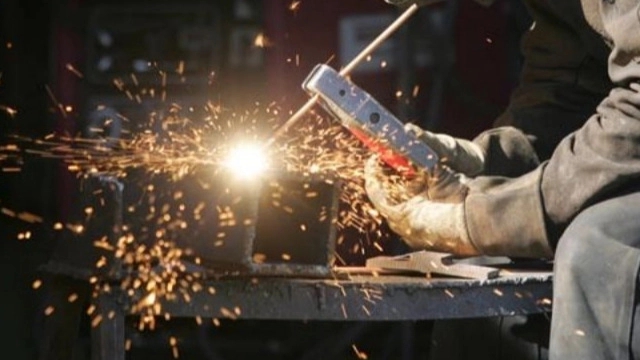
The difference between argon and CO2
Weld line strength: Argon welding strength is higher than CO2 welding ratio. The reason for this is the creation of a narrower and more concentrated arc in the argon welding method. Welding speed: From this point of view, argon welding is slower than CO2 welding. In CO2 welding, due to the fact that the heat caused by welding is transferred faster due to the wider molten pool, welding can be done at a higher speed. The method is found, in the argon welding method, argon gas is used, and in the CO2 welding method, carbon dioxide gas is used as a protective gas. In argon welding, due to the possibility of tungsten electrode reacting with oxygen and carbon dioxide, argon gas is used, which is neutral and does not react with tungsten.
Appearance features: Because the molten spray is less in the argon welding method, the area around the weld is cleaner and therefore has a more beautiful appearance.
Operational difficulty: < CO2 welding is much easier to perform than argon welding. One of the reasons for this is that in argon welding (TIG) filler metal is added manually to the molten pool. Also, the amperage of the process in this type of welding is adjusted using a pedal, which can make the process more difficult for the operator.
Price: The use of argon gas is one of the reasons The cost of argon welding can be higher than that of CO2 welding. In addition, due to the fact that argon welding is a more difficult process and requires an expert force, it is natural that its price is higher than other welding methods.
The difference between electrical weld (arc) and CO2
Quality: In the electric welding method, due to less slag in the welding line and also less molten spraying, the welding quality is better than the CO2 method. Also, in the GMAW method, less hydrogen deposits are produced and the risk of hydrogen cracking is reduced. But CO2 welding has a greater depth of penetration than electric welding.
Automation ability: Electric welding has more automation than CO2 welding, although CO2 welding can also be done with suitable equipment and parameters. automatically.
Price: Since the cost of welding in these two methods depends on different variables and both do not depend on the same parameters, such as the cost of the electrode, the cost of protective gas, welding speed, The operator's experience and... are among the influencing factors in the final cost of these two processes. Therefore, the sum of these factors should be considered for comparison.