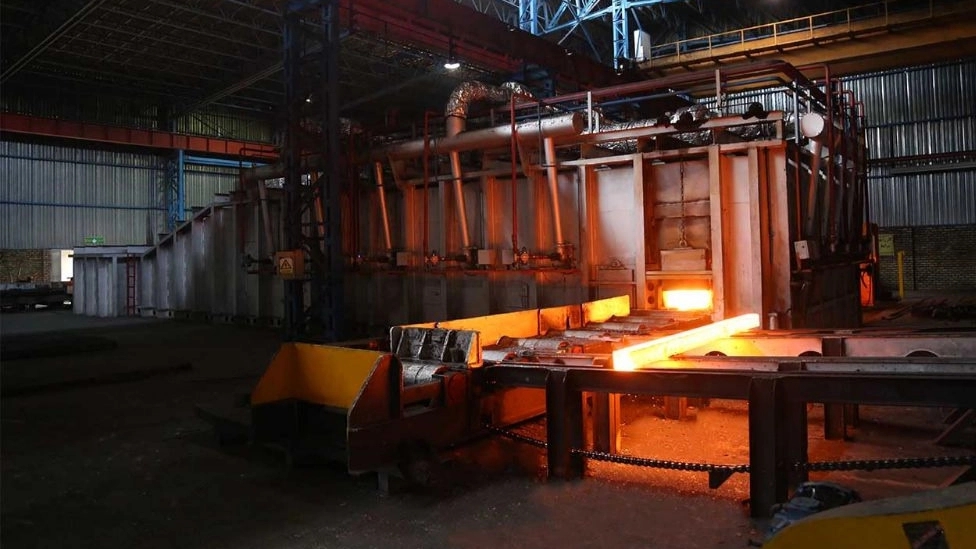
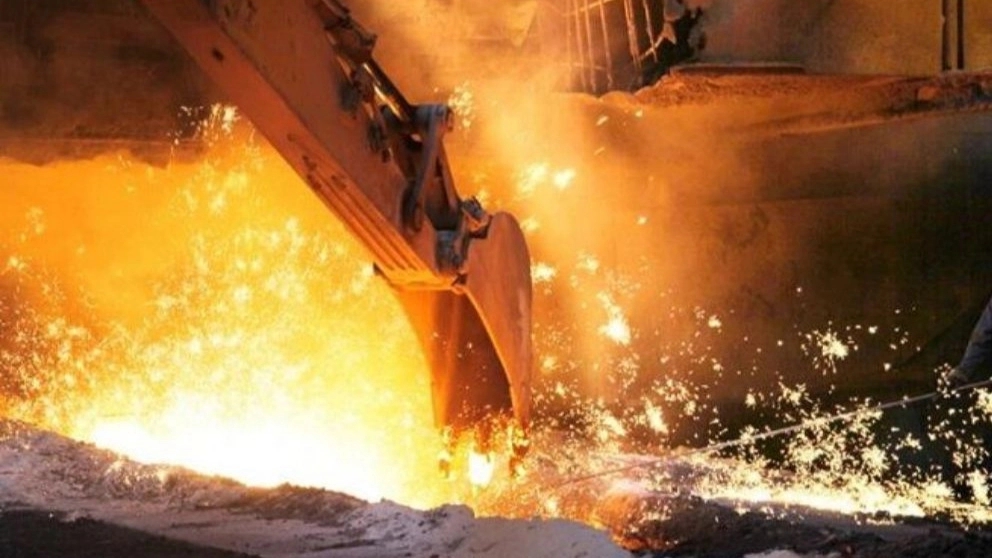
Hot rolling is a metalworking process in which metal is heated above its recrystallization temperature to plastically deform in a working or rolling operation. This process is used to create shapes with desired geometric dimensions and material properties while maintaining the same volume of metal. In metalworking, rolling is a metal shaping process in which ingots, blooms, billets, etc. are passed through one or more pairs of rollers to reduce the thickness and make the thickness uniform. Most steel mills have rolling departments that turn semi-finished castings into finished products.
First, ingots, blooms, slabs or other sections inside the furnace are preheated to reach a temperature of about 1150 to 1250 degrees Celsius. Then, it is guided out of the furnace by the pusher device and guided to the rolling racks on the rolling table. The rolling process includes the following three stages:
1- Primary rolling (Roughing)
2- Intermediate rolling
3- final rolling (Finishing)
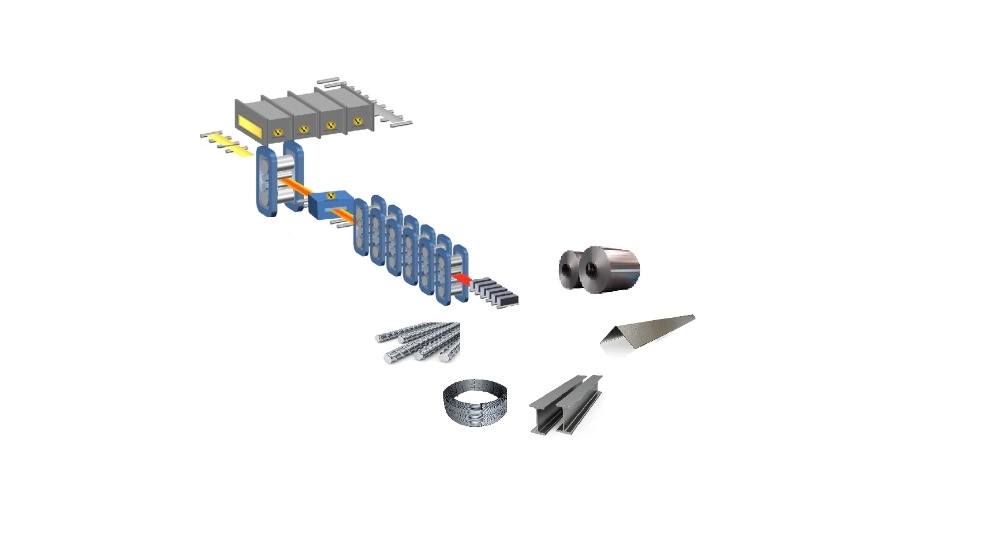
rolling components:
1- Primary rolling equipment
2- Intermediate rolling equipment
3- Final rolling equipment
4- Transverse and longitudinal transfer tables
5- Types of pinch rollers
6- Types of loopers
7- Cooling system
8- Winding system
9- Packing and weighing system
10- Secondary and auxiliary equipment