
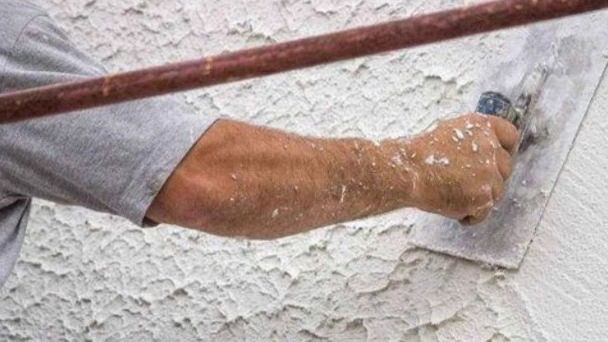
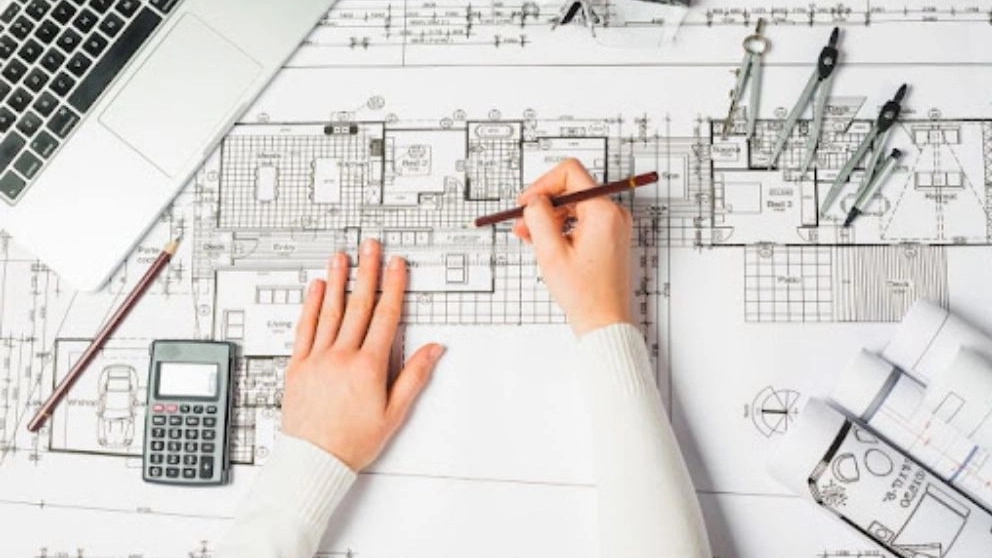



One of the main parts of the interior design of the building is joinery. If you do not do the joinery well, you cannot expect the interior design of your building to be done according to your wishes. After the stiffening, in which we ensure the overall strength and resistance of the building, it is time for joinery. In fact, all the works that are carried out in order to protect the building and beautify it and make it livable are called carpentry. In the following, after the general definition of joinery and stating the differences between joinery and stiffening, we will describe its different stages and introduce you more to this stage of the construction operation.
Definition of joinery
The placement of the final coating on the underlying structure and the rigidity of the building, and actually the last work done inside the building that is placed in front of the eyes of every viewer, is called joinery. The materials used in carpentry are the materials that cover the walls, ceilings and floors.
Fine work is a stage that is done after the construction of the building and is related to the appearance of the building. This stage includes steps such as insulation, stone work, any coating and painting. In some sources, walling is considered as part of joinery, while it is better to consider this step as part of stiffening.
The difference between joinery and stiffness
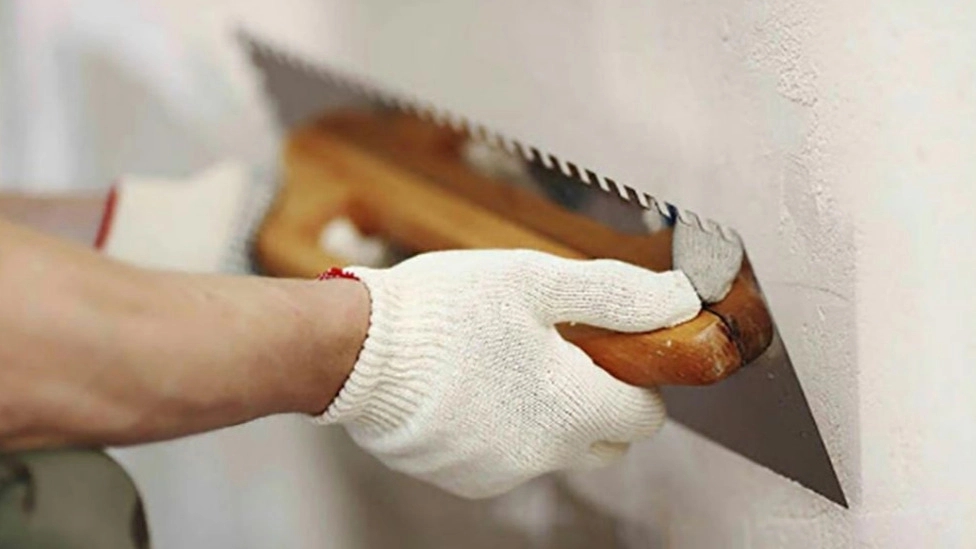
Building operations can be divided into two parts: stiffening and joinery. Stiffening includes building the main frame of the building and some non-structural components such as foundations, columns, partition walls, beams, etc. While joinery is an operation that is carried out in order to cover the mentioned components in the hardening stage. Some of the activities performed in carpentry are: painting walls, insulation, floor ceramics, installation of switches and sockets, stonework, electrical work, installation of doors and windows, and connection of facilities. In some sources, the installation and implementation of building facilities is considered as a separate stage of stiffening and carpentry, but here we have considered it as a part of carpentry. Working in the rooms is slightly different from the steps of doing this work in the services and the kitchen, here we will deal with each one separately and describe its different steps.
The execution of the joinery in the rooms
First, we describe the different stages of doing carpentry in the rooms, and then we deal with carpentry in the service and kitchen. In the following, we will explain these steps in order.
Bitumen and sack on the floor (foam isogam)
This action is carried out on the ground floor in order to prevent the penetration of ground moisture into the floor joinery. If the surrounding soil has moisture, it is applied in three layers on the cement floor, bitumen and sack. If the soil has natural moisture, one layer will be enough. In doing this stage of carpentry, we must pay attention that no holes remain on the floor.
Squad
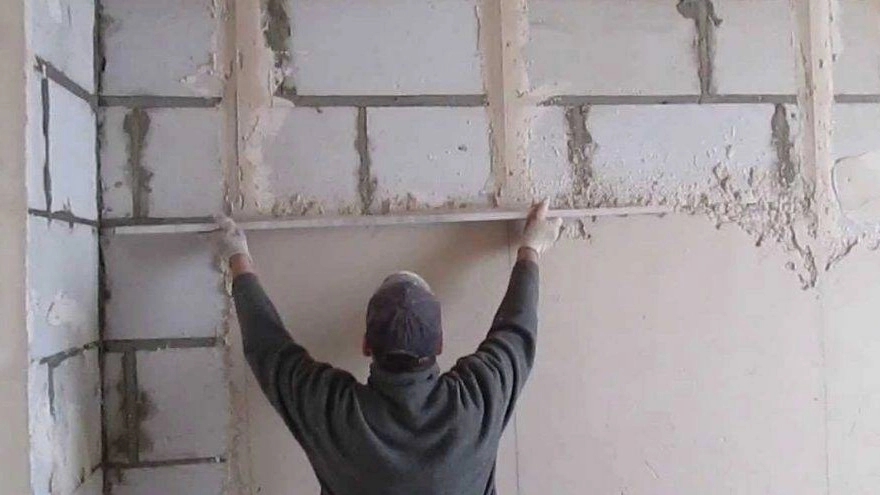
One of the most important parts of carpentry is the ingot stage, which is done on the walls. The reason for doing ingots is that the walls should be leveled and there should not be any distortion, swelling or unevenness in them.
In order to do this step, we consider a point on top of a corner of each part of the building. . Then we create a smooth spot in that part of the building using plaster and trowel. After that, we connect the said point to the bottom of the wall using a plumb line. Then we consider another corner of the wall and select a point in it. After that, we create a smooth spot in it once again using plaster and soil. After doing this, we draw a string between these two points and then, at intervals of one meter or even less than one meter, we create flat points under the string using plaster and cement. In the next step, using a plumb line, we transfer the mentioned points to the lower part of the wall. In the final part of this part, by using a flat bar, we fill the back of the two points of the same level with sand and cement or plaster and soil.
Implementation of plaster mortar
We know that in wall plastering, only the top layer of the wall should be white, because the external effect and beauty of the wall is only related to the outer layer; Therefore, instead of using pure plaster in the lower layers of the wall, we can use a combination of plaster and soil in these parts. By doing this, not only the cost spent on the wall will be less, but the mortar used in it will also last longer. Therefore, before getting the mortar, we will have enough time to cover the walls.
To make the mortar used in this part, we need clay. After sifting the clay, we mix it with plaster at a ratio of 50:50. After doing this, we add water to them and make the required mortar.
Whitening
In performing this step, we use a different mortar than the previous step. The mortar of this stage is made of pure gypsum. To make this mortar, after sifting the plaster, water should be sprinkled on it so that the water does not reach the plaster and cause lumps to form in it. Considering that pure plaster is much faster than the combination of plaster and soil, the mortar required for this step is applied quickly and without interruption on the wall after mixing with a small amount of water. After applying this mortar on the previous layer, the surface of the wall is smoothed using a trowel.
Kill
It is possible that before the surface is fully polished, the plaster mortar hardens and we cannot smooth the surface as we want. For complete polishing, a plaster layer is used that does not harden even after drying; This layer is known as "dead". The dead layer is also made of pure plaster and it is the last layer of plaster. Plastering and painting are done on this layer.