
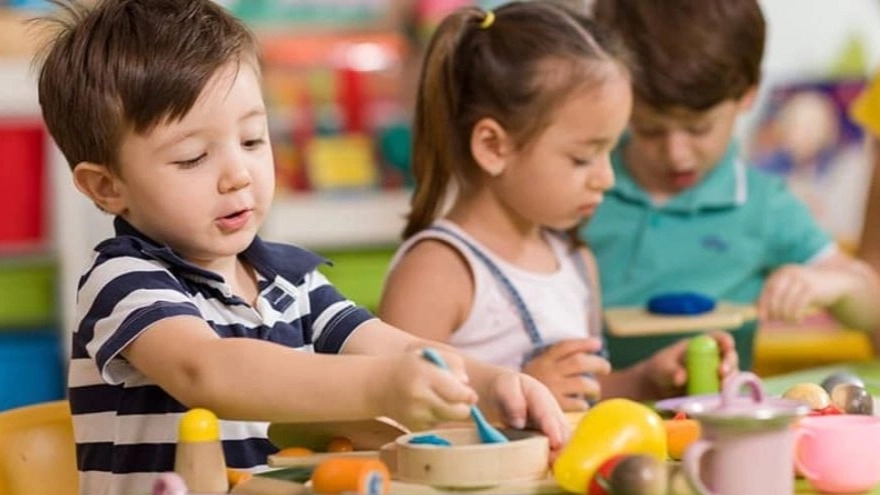
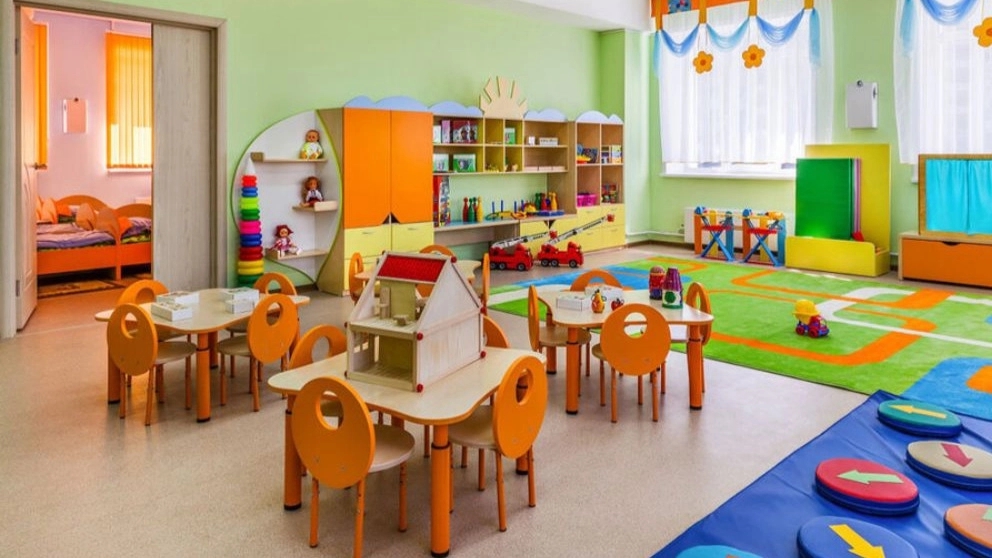



Targeted games for preschool children can play an important role in their personality and academic development. These games are designed to be engaging and interactive and encourage children to learn through play. Since preschool children have more opportunities to interact with different games, they can improve their social and academic skills. These targeted games can help develop important skills such as hand-eye coordination, problem solving, and critical thinking. In addition, purposeful games can provide opportunities for children to learn about different subjects such as math, science, and language.
Introducing a few targeted game samples for preschool children
Parachute game:
In this game, children gather around each other in a circle and hold a large cloth in the air as a group. One of the children should throw the ball on the cloth and the other children should throw it up and down using the cloth. In this game, the goal is for children to move in coordination and prevent the ball from falling to the ground. In the following, several balls can be used simultaneously to increase the complexity of the game. In addition to improving social interaction and increasing children's concentration, this game also helps to increase the coordination between their eyes and muscles. It is one of the favorite games of children, which is an excellent example for teaching strategic thinking to children. In this game, children have to sit in a circle and one of the children starts walking outside the circle around the children and taps each child's head in turn and says "duck". But he chooses one of his choice as "goose" by tapping on his head and saying the word "goose". That child should get up and go after the child who hit him on the head. The first child must run around the circle once and take the child's place and sit before the "goose" catches him. If he fails, the "goose" returns to his seat and the original player continues around the circle.
When children play this game, they think about how a "goose" (such as someone who does not) choose to give them a better chance of returning to their seats. Duck, Duck, Goose teaches children to plan ahead and gives them instant feedback on the quality of their decisions.
Art Games:
Games and Activities Like painting and coloring, in addition to increasing children's creativity, it can have educational aspects. The teacher or parents can introduce them to different concepts such as colors, objects, animals, jobs and many other concepts by preparing coloring books.
The Role of Targeted Games in Preschool Professional Development
Enhancing Children's Creativity and Imagination
Purposeful play in preschool can provide opportunities for children to explore and experiment with different ideas, situations, and outcomes. By engaging in these activities, preschool children can develop their creative skills in various ways. Imaginative play is an important part of a child's development, and purposeful play can facilitate this type of play. Games that include pretend play, storytelling, or creating imaginary worlds can help develop children's imagination and creativity.
Increasing children's attention and concentration
Games Targeting in preschool can be a useful tool to improve children's attention and concentration. By enhancing interaction, developing self-regulation skills, developing cognitive flexibility, and enhancing memory, these games can help children focus more effectively and efficiently on their tasks.
Strengthening social and interactive skills. Children
Purposeful games in preschool can be an effective way to strengthen children's social and interactive skills. These types of games can help children learn important social-emotional skills such as cooperation, communication, empathy, and emotional regulation. When children engage in purposeful play that requires them to work together to achieve a common goal, they learn how to cooperate and interact with others. This type of teamwork can help children develop key social skills such as negotiation, compromise, and conflict resolution.
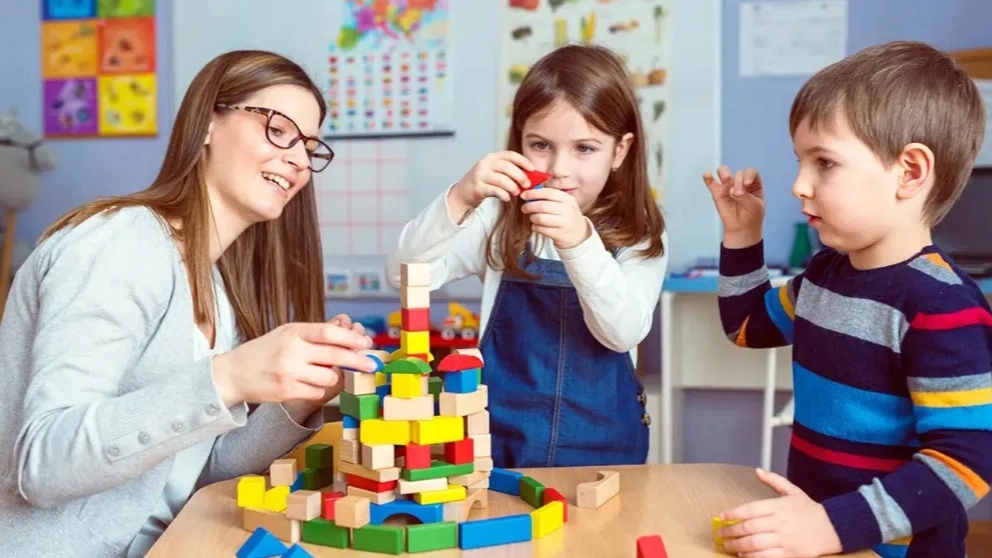
Important points in choosing target games for preschool children
Attention to children's age, ability and interest
Different children have different levels of development and interests, and parents and educators should choose games that are suitable and attractive for each child. For example, if a game is too easy for a child, then it will not be challenging enough for him and he will lose motivation to continue playing, while a game that is too difficult can be frustrating and discouraging. Similarly, a game that is not aligned with a child's interests may not hold their attention or motivate them to learn. Considering children's age, abilities and interests, parents and educators can choose targeted games that are both fun and educational.
Selecting games with appropriate educational content< br>
The goal of these games is to provide an engaging and interactive learning experience, so you should choose games that are both fun and educational. Parents and educators should look for games that align with the educational goals they want to achieve. For example, if the goal is to teach counting skills, games that involve counting objects or recognizing numbers would be appropriate. Additionally, games that introduce new vocabulary, explore different cultures, or improve fine motor skills can also be valuable.
Variety in Purposeful Play< br>
Children come from different backgrounds and have different experiences, cultures and identities. By including diversity in purposeful play, parents and educators can help children learn and appreciate the differences that make us unique.
For example, games that include different cultures, traditions, and languages. check, it makes children feel empathy and understanding towards people who are different from them.