
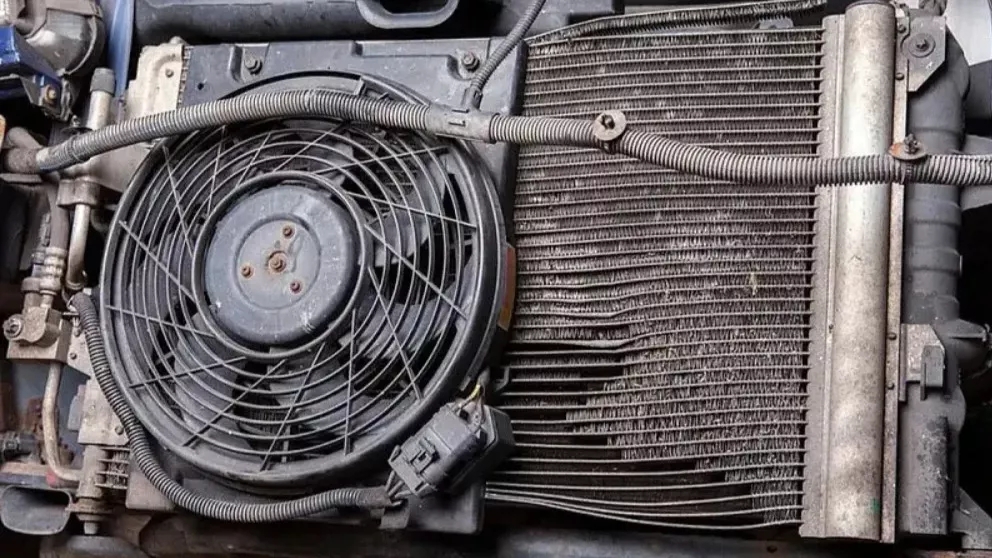
The car radiator is used to reduce the heat of the parts used in the engine. In addition to water, antifreeze and antifreeze are also used inside the car radiator. When you start, the water pump will suck the coolant into the engine and the parts necessary for cooling, and this liquid will collect behind the thermostat until its temperature reaches the desired temperature of the car manufacturer. After that, the thermostat will be opened so that the water moves to the radiator tank due to the pressure of the water pump. The temperature of the water will decrease as a result of hitting the radiator fins and also hitting the cool air in front of the car to re-enter the required parts. With these interpretations, the engine temperature will remain within a standard range
Cause
High water pressure inside the radiator: If the water pressure inside the radiator is too high, it can lead to a hole in it.
Unbalanced heat cycle:
Scratch and impact: Impact or scratches enters the radiator and can lead to a hole in it.
Lack of water in the engine: If the engine does not have water, the heat affects the radiator more and the radiator may increase due to this increase.
Chemical agents: Chemicals in the water can gradually accumulate on the radiator and cause it to puncture.
Usage Using municipal water instead of purified water: Using municipal water instead of purified water may cause corrosion and holes in the radiator.