

Copper Wiring
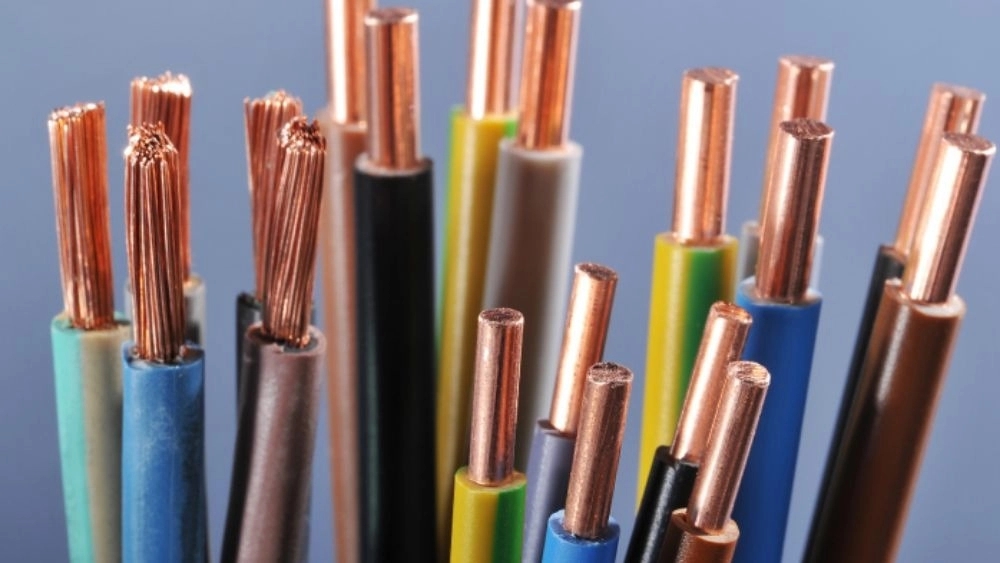
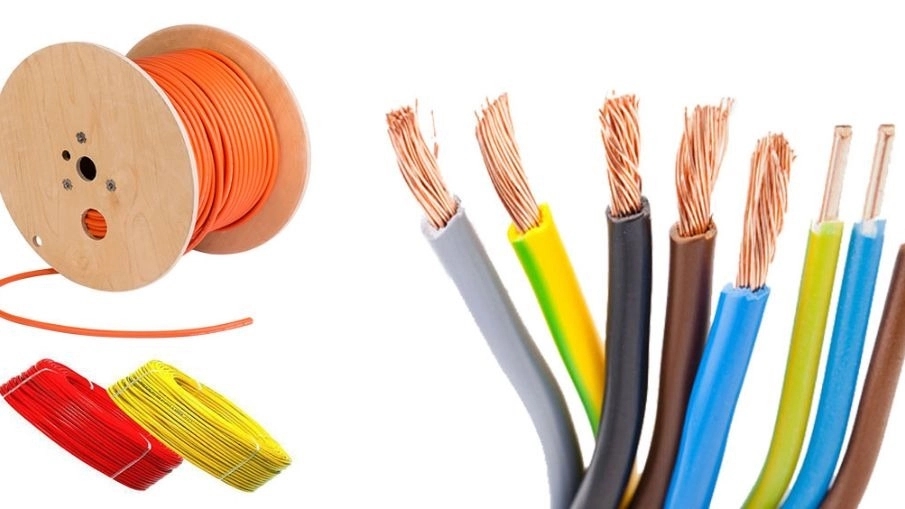
For more than half a century, copper wiring has been used in residential and commercial electrical systems. In fact, it is often preferred over aluminum wiring due to its high tensile strength. The tensile strength of copper is approximately 40% higher than that of aluminum. With higher tensile strength, copper wiring is less likely to break than aluminum wiring. It is important to note that since electrical wiring is often installed by pulling it through ports and feeders, if the wiring is weak or fragile, it may break during installation. Copper wiring has high tensile strength to protect against breakage as well as other physical damage.
Copper wiring also has a lower coefficient of thermal expansion than its aluminum counterpart. In other words, it doesn't expand as much as aluminum wiring when exposed to heat. The temperature of the electrical wiring increases when the electric current passes through it. Aluminum wiring has higher thermal expansion than copper wires. If the wiring is overextended, it may break the parts where the wiring is connected.
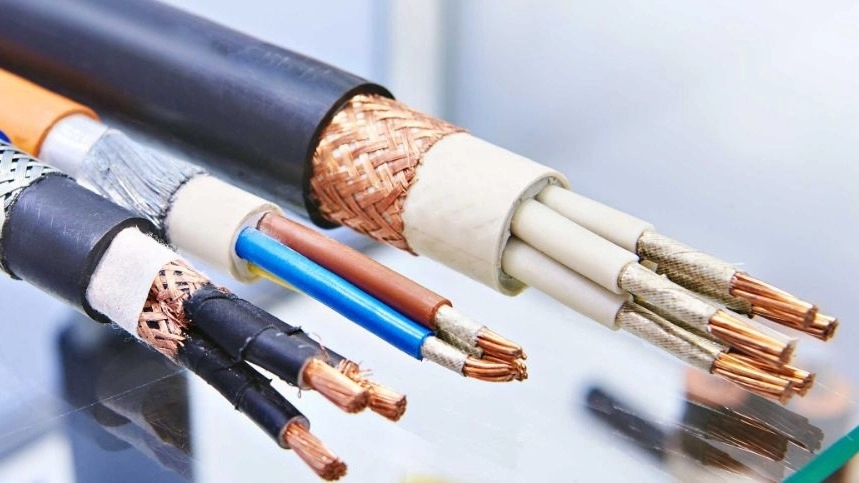
aluminum wiring
Like copper, aluminum is conductive, so it has become a common material used to make electrical wiring. Unfortunately, aluminum wiring is not as strong as copper wiring and also has a higher coefficient of thermal expansion.
Aluminum wiring almost always costs less than copper wiring. The cost of aluminum wiring is only half the price of copper wiring. Although the price of aluminum wiring is lower, it is somewhat easier and stronger to work with copper wiring, so it is less likely to break and fail. It is also important to mention that aluminum wiring is more flexible and makes it easy to work with it in small spaces.
use of wire wires
Office and Home Equipment
Wire also applies to the following:
General engineering
painting
Sculpture
welding
rope
Tools
heat therapy
Machining
bearing
Jewelry and cosmetics
Office and home equipment
Steel wire is mainly used to produce metal containers. The size, chemical composition and properties vary depending on the end use of the products.
Low carbon wire is used in coils for wire drawing, as well as for the production of metallic copper and metal containers. The key requirements for this product are the absence of any wiring breaks and surface defects, as well as uniform geometry and mechanical properties.
High carbon wire is used to produce rope, springs, etc. Such products should have a uniform fine pearlite structure (achieved by special cooling after rolling), without surface and internal defects that lead to high breakage, as well as minimal inconsistencies in chemical composition and mechanical properties.
Welding wire is used as raw material to produce welded wire and electrode. The key requirements are high ductility (achieved by slow cooling in rolling), constant quality and minimum content of harmful impurities, for such products low carbon and low alloy steels are used. High quality wire is used to produce metal containers by cold method. Rolled steel should be free of any surface damage.
use of power cord
Afshan cable consists of a set of small gauge wires that are insulated and compressed with non-conductive materials. This type of cabling is usually used in situations where the wire must be routed to tight spaces. It is also used in areas where there is significant bending or vibration. For example, we can refer to speaker wire, headphone cable, and home appliance cables.
Since the jumper wires are insulated, they are more flexible, more complex and more delicate. They are best suited for indoor use on circuit boards, speaker wires, electronic devices, etc., where bending and twisting is necessary to connect electronic components. For example, an ideal application is a wire stripper in a car door where frequent bending occurs.
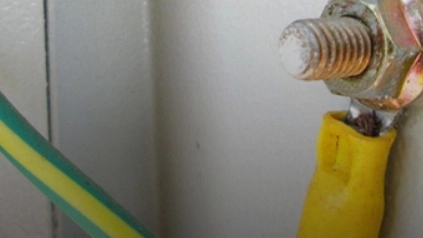
Because the wire is made of copper, the ground wire provides a low-resistance path to ground. In the event of a fault, the large live current that passes through the earth wire, instead of passing through a person, takes this path to the ground, and the fuse makes the device safe.
In each circuit, an earth wire is connected to the ground, whose main function is to protect electrical devices from sudden damage from sudden increase in voltage or current leakage. If by chance there is a current leakage, the earth wire helps to transfer the current leakage to the ground. When the ground wire is connected to a metal body, it provides a low-conductivity path for current. Therefore, the earth wire maintains the leakage current potential to earth. Therefore, the user of the metal electrical part may not suffer a shock due to the current leakage.
Nylon wire application
If you are looking for a high strength wire, nylon wire is a great option. Nylon is the strongest and most common wire fiber, significantly stronger than polypropylene, polyethylene or organic fibers and barely beating polyester. Nylon has a high modulus of elasticity and provides a certain level of elasticity that is useful for certain applications. Nylon wire stretches about 15 to 28 percent at break, which means it's roughly twice the stretch of a polyester fiber at the top. Nylon wire is excellent for shock absorbing applications and dynamic loads due to its elasticity, making it an obvious choice for mooring and towing activities and special mooring applications.
Nylon wire, probably one of the most versatile wires, is commonly used for winch or winch systems because of its high abrasion resistance and shock absorption. The shock absorption properties of nylon wire make it an excellent rope for tasks such as towing, where the rope needs to absorb a dynamic load.
Another great benefit of nylon wire is its resistance to abrasion, UV rays, mold, rot, and chemical exposure.
The high abrasion resistance of nylon cord means it will last longer than most standard fibers (with the exception of polyester) and therefore maintain the integrity of the jacket for longer, resulting in longer service life.
The nylon material resists UV rays, which can damage the rope. Due to its high strength, nylon does not degrade when exposed to most chemicals and organic solvents, and is resistant to rotting, mold, and other moisture-related effects.
Nylon wire is usually either braided or twisted. Having both options makes nylon cord very versatile. For times when you need high resistance, use braided nylon wire. The tightly woven construction provides a strong and stable wire. However, twisted wire gives you a more balanced rope that hangs straight and doesn't sag.
use of Lucky Wire
Types of Power Cable
Different types of cables are used everywhere for different applications. All cables are not the same. The performance of the cable depends on the type of cable. Power cables are made of aluminum or copper wires protected by an insulating coating, which can be made of synthetic polymers.
Ribbon Power Cable
It consists of several insulated wires running in parallel and is used to transmit multiple data simultaneously. For example, these cables are used to connect the CPU to the motherboard and are generally used to connect network devices.
protective cables
These cables consist of 1 or 2 insulated wires covered by a woven shield or mylar aluminum foil for better signal transmission and elimination of power frequency irregularities and external radio interference. These cables transmit high voltage electric current and are protected by an insulator.
twisted pair cables
It has two or more insulated copper wires twisted together and color coded. These types of wires are usually used in telephone cables, and the resistance to external interference can be measured by the number of wires.
coaxial cables
These cables consist of solid copper or copper-clad steel conductors wrapped in tape Metal enclosed. The cable is completely covered with an insulated outer protective jacket. These types of cables are used for computer networks and audio and video networks.
Optical fiber cable
These types of cables transmit optical data signals from a light source connected to the receiving device.