
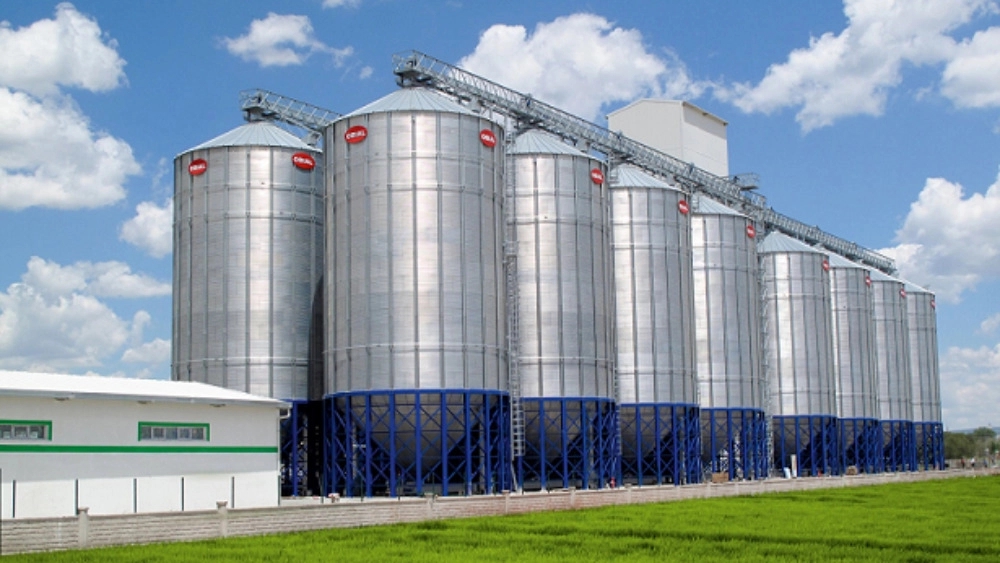
is the silo?
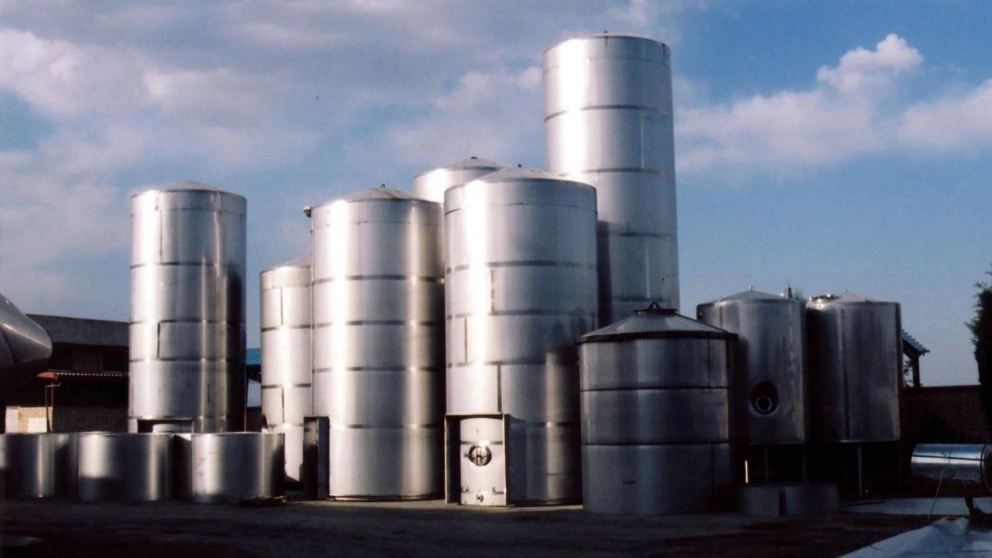
Silos are actually standing, cylindrical or circular warehouses that are used to store all kinds of food. The silos are made in different sizes and volumes depending on the needs. (Silos with low height are called "bunkers") silos are built both in groups and individually, which actually group silos have more advantages and better utilization. Silos are classified according to the type of materials and materials that can be stored, and in this article we want to talk about metal silos and how to design them.
types of silos
Types of silos based on the type of use
- Flour storage silo
- Transit silo that is built on the wharf and used for export and import.
- Silo for the storage of raw materials of industries such as iron, stone, cement, plaster, coal, etc.
- Silo for the storage of grains such as wheat, rice and barley
- Silo for the storage of coke, clinker and minerals
Types of silos based on the type of design and foundation
- Silo with integrated foundation
- Silo with strip foundation
- Silo with increased thickness and flat bottom
- Silo with increased thickness and flat bottom and integrated foundation that has multiple openings.
Types of silos based on shape and materials
-Horizontal silos with metal roofs< - Unroofed horizontal silos
- Metal (steel) silos with a cylindrical shell
- Concrete silos with a circular or spherical shell
- Vertical silos with circular or cylindrical and square sections
< /p>
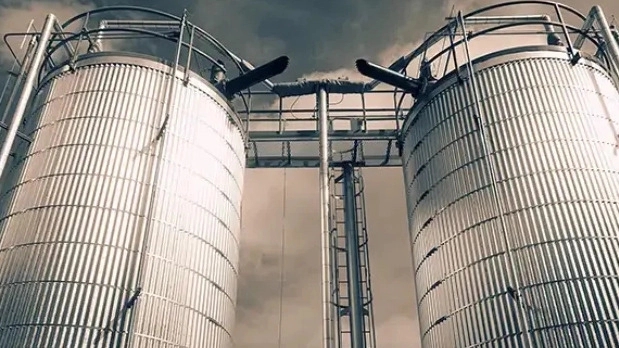
Important Tips on Plain of Metal Silo
One of the most important parts of designing a metal silo is the implementation of its foundation, which requires a lot of precision and expertise. Two important goals are considered for the implementation of the silo foundation:
The first goal: creating a strong, symmetrical and resistant foundation for the silo body that will maintain these features for a long time and from the asymmetric settlements of the structure that lead to Failure and creating unfortunate consequences and irreparable damages can be prevented. The second goal: creating a smooth, level and standard surface for installing bases and stiffeners or silo strengthening columns. br> First point: In the implementation of the cylindrical foundation, the diameter of the inner and outer circle must be accurate, similar and with a maximum difference of three millimeters. The body of the silo is placed symmetrically on this foundation and the coordination of the peripheral circle or the same body with the base of the silo is maintained. If this coordination between the foundation and the body does not take place, it will cause an unbalanced distribution of stresses and the pressure on different parts of the body will lead to the failure of the silo. The implementation has already been done. Anchorbolts are usually planted in the reinforcement of the silo foundation in the form of a hook. If the anchor bolts are not hooked to the reinforcement during the foundation, they can be planted in the concrete using concrete glue. Anchorbolts are galvanized and stainless, and their resistance to pressure is about 900 MPa. Anchor bolts are placed in the silo foundation to deal with tensile forces, and their purpose is to transfer the silo forces on the foundations to the foundation and finally to the ground. Third point: All parts of the bed Silo or foundation must be compacted uniformly. This symmetrical compaction increases the elastic resistance and strength of the silo.
Point four: The soil in which the silo is to be built must first be tested in the laboratory. . Fine or coarse soil grains and their moisture content are very important. Also, the entire land should be investigated and researched regarding the presence or absence of underground water tables. If you neglect to do any of the points mentioned about the design of the silo foundation, it will not be far from waiting for the silo to settle or tilt.