
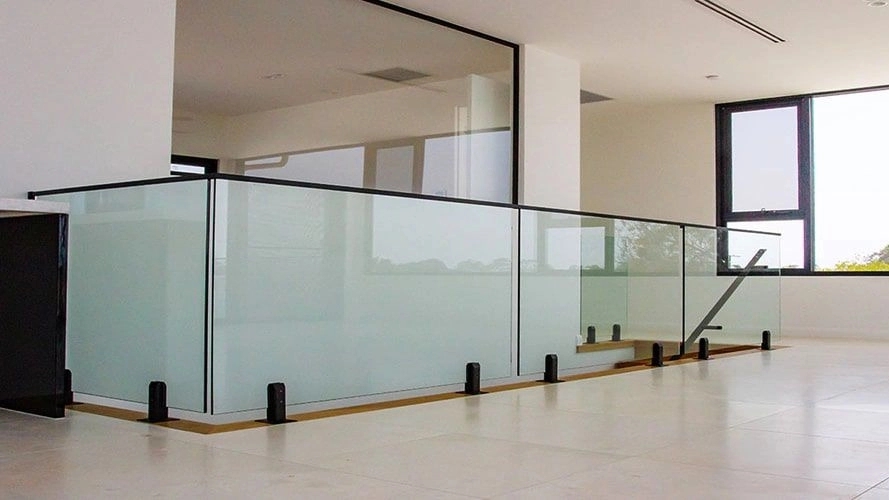


🔸 High safety and beauty
🔸 Durability and durability
🔸 Modern and unique view
🔸 Creating an unobstructed view
🔸 Quick and easy installation
🔸 Washing and cleaning Comfortable
High diversity in choosing the color of glass and fittings
How to Install Glass Handriel
Installing a glass handrail is a meticulous and professional process that includes the following steps:
Precise measurement: First of all, you must Determine the exact location of the handrail installation and the dimensions of the glass.
Preparation and cutting of glass: Tempered or laminated glass is cut according to exact dimensions.
Installation of connections and fasteners: These fasteners are usually made of stainless steel and are installed on the floor or wall.
Installing the glass: The glass is placed in place and secured with fasteners.
Final check: The strength and alignment of the handrail is checked.
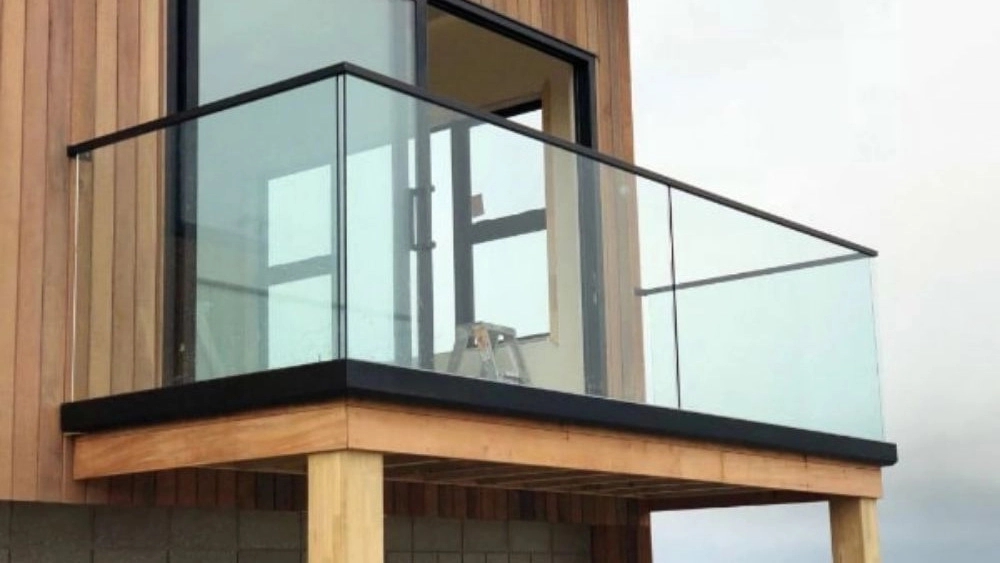
Glass Handriel Types
Fixpoint glass handrail: Fixpoint fence or Eth point connection system is one of the most modern methods of installing glass fence. In this type of fence, the glasses are drilled in the connection points to the body, and the glass holding parts are connected to the side body in the connection points.
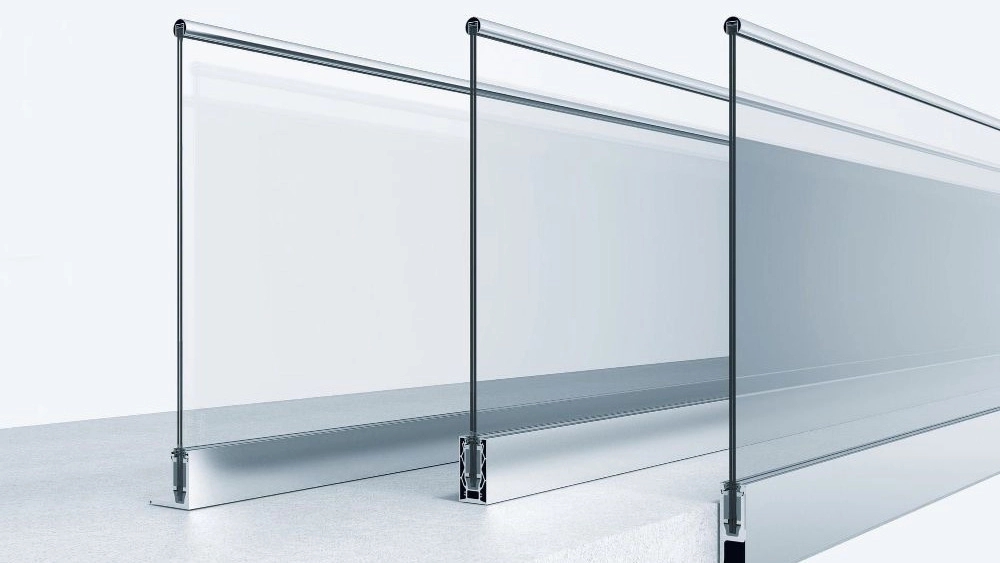
Exposed glass handrail: This fence model is known as Expose or Henril Rocar. This fence is installed in a uniform glass form inside a U-shaped aluminum profile. These profiles are often designed in two ways, surface and built-in models, which are built-in glass handrails. Burial glass handrails: This model of glass protection is very similar It is exposed or exposed to the fence, with the difference that the base of the glass handrail is buried in the ground, that is why it is called buried or built-in. The important point in using this model is that before finishing the flooring, the profiles must be placed inside the ground and then finish the flooring work.
Hanza glass handrail: Hanza glass handrails are installed as vertical elements. Due to the type and high strength of the support bases of this product, all the force applied by the glass is transferred to the bases and is transferred to the floor through suitable connections.