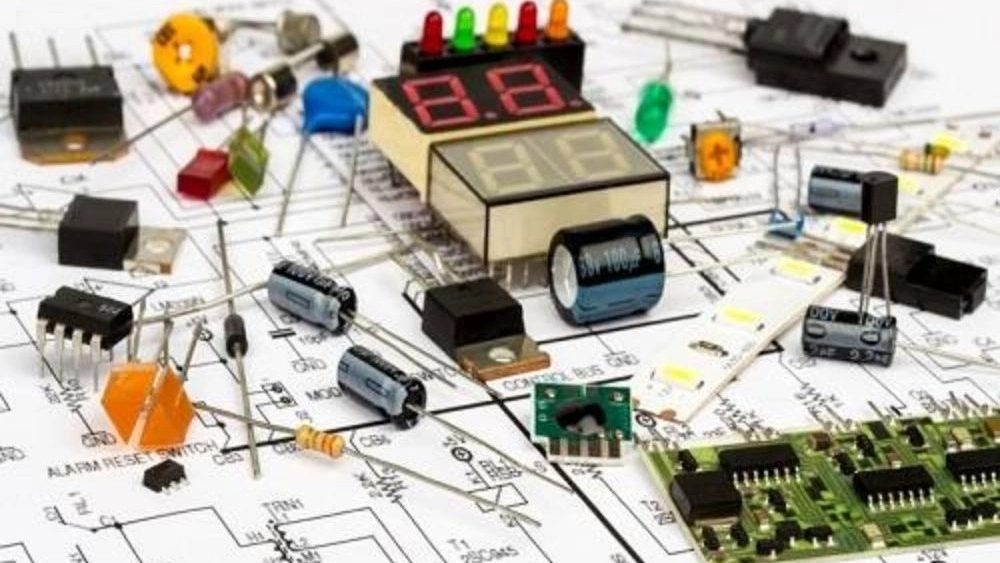
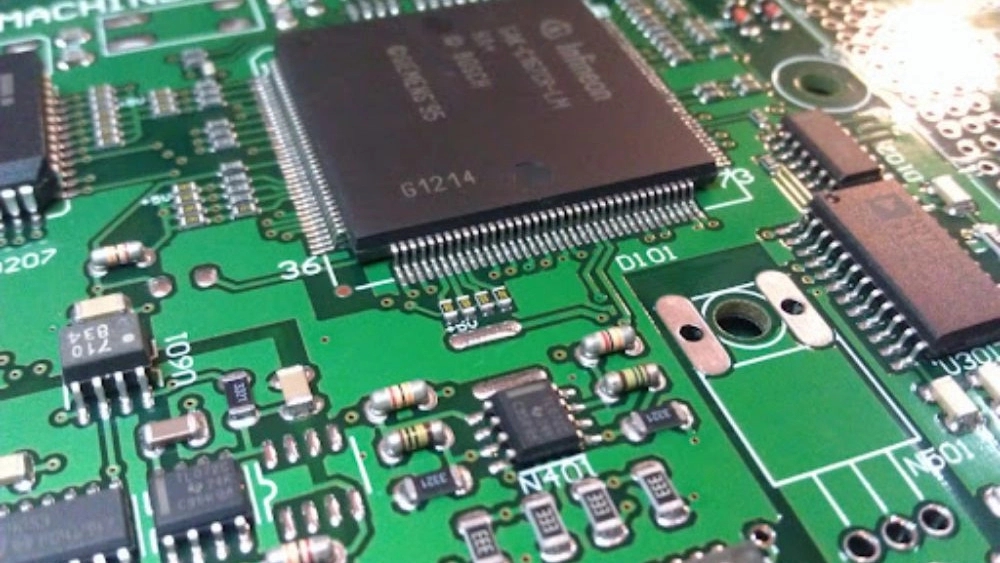
What is an electronic component?
An electronic component represents any elementary and separate device of a computer system that operates on electrons or their magnetic flux. It forms the elements of the circuit that guarantees its correct operation. Most electronic components have a number of electrical terminals. These terminals are connected to other devices to establish an electrical connection.
Classification of electronic components
Active electronic components
They are devices capable of amplifying electrical signals and generating energy. An active component acts as an AC circuit in devices and helps them to increase power and voltage. It can perform its operations; Because it is powered by a power source. All active components require a power supply, which usually comes from a DC circuit. A typical active component would consist of an oscillator, transistor, or integrated circuit. All kinds of active electronic parts can be viewed and ordered on the site.
Disabled electronic components
These devices cannot enter energy into the circuit. Likewise, they are not dependent on a power source, other than that provided by the (AC) circuit to which they are connected. So they cannot amplify the strength of a signal, although they can step up voltage or current like a transformer. Passive components include two-terminal elements such as resistors, capacitors, inductors and transformers, which can be ordered and purchased through the site.
Electromechanical components
These parts use an electrical signal to make a mechanical change, such as turning a motor. Typically, they use an electric current to create a magnetic field that causes physical movement. All types of relays and switches are included in this category.
Electronic components; The most used models and their performance
Capacitor
Capacitors are used to create different types of electronic circuits. A two-terminal passive electronic component capable of storing energy in an electric field electrostatically. Simply put, it acts like a small rechargeable battery that stores electricity. However, unlike a battery, it can be charged and discharged in a fraction of a second.
By applying a voltage to the two plates or by connecting them to a source, an electric field is created across the insulator. In fact, this results in the accumulation of a positive charge on one plane and a negative charge on the other. The capacitor still maintains its charge capacity even when it is disconnected from the source. By connecting it to a load, the stored energy flows from the capacitor to the load. The capacity of the capacitor is the amount of energy stored in the capacitor. The higher it is, the more energy the capacitor can store. To increase the capacity, just move the pages closer to each other or increase their size.
Resistance
A resistor is a passive electrical device with two terminals that resists the flow of current. Among the components of an electronic circuit, this part is probably the most fundamental. On the other hand, it is considered one of the most common electronic blocks, because most electronic circuits are equipped with resistors. It is usually color coded.
Resistance may seem insignificant. You think it does nothing but use energy. However, it plays a vital role in controlling the voltage and current in the circuit. In fact, when an electric current starts passing through a wire, all the electrons move in the same direction. It is like water flowing through a pipe. When there is less space for it to move, its value decreases. Similarly, if current flows through a thin conductor across a resistor, it becomes more difficult for electrons to pass through it. In short, as the length and fineness of the wire increases, the number of electrons that pass through a resistor decreases.
Diode
A diode is characterized by a two-terminal device that allows electric current to flow in only one direction. Therefore, it forms the electronic equivalent of control valves. It is usually used to convert alternating current (AC) to direct current (DC). In most cases, diodes are made of semiconductor materials such as silicon.
When the cathode is heated by a filament, an invisible cloud of electrons, called space charge, forms in the vacuum. Although electrons are emitted from the cathode, the negative space charge repels them. Since they cannot reach the anode, no current flows in the circuit. However, as the anode becomes positive, the space charge disappears. Therefore, the current starts from the cathode to the anode.
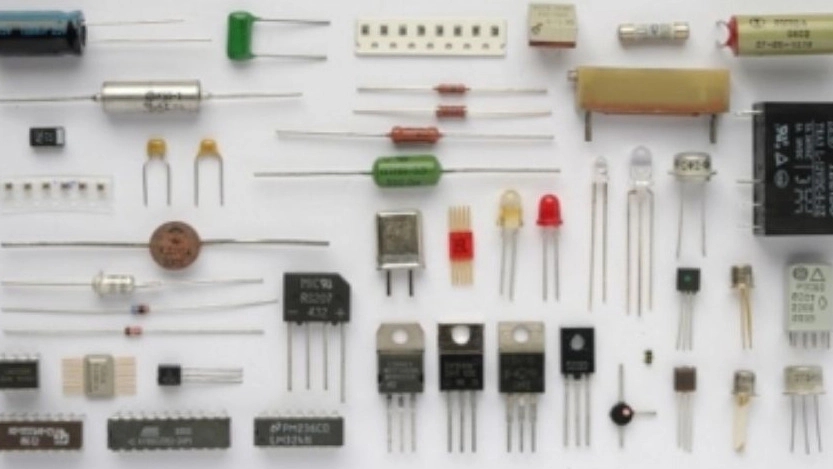
PN connection diode
A p-n junction diode consists of p-type and n-type silicon semiconductors. The p-type semiconductor is usually doped with boron, which creates holes (positive charge) in it. On the other hand, n-type contains antimony, which adds some extra electrons (negative charge). Therefore, electric current can flow in two semiconductors. In contrast, by juxtaposing p-type and n-type blocks, additional n-type electrons combine with p-type holes. Thus they create a depletion region without any free electrons or holes. In short, current can no longer flow through the diode.
Transistor
The NPN transistor has a p-type silicon wafer that is placed between two n-type layers. The transmitter is on one of the n-type pads and the receiver is on the other. The additional part of p-type silicon acts as a barrier and blocks the flow of current. By applying a positive voltage to the base and a negative charge to the emitter, the electrons start moving towards the collector. The order and number of p and n blocks are reversed in a PNP transistor.
Induction
An inductor, also known as an inductor, is the passive component of a two-terminal circuit. It stores energy in its magnetic field and returns it to the circuit when needed. When two inductors are placed side by side without contact, the magnetic field created by the first inductor affects the second one. This important discovery led to the invention of the first transformer.
Whenever a current passes through the wire, a magnetic field is created. However, the unique shape of the inductor creates a much stronger magnetic field. This strong magnetic field resists alternating current, but allows direct current to pass.
Relay
Relay refers to an electromagnetic switch that can open and close electrical circuits. It requires relatively low current to operate. It is usually used to regulate low currents in the control circuit. However, relays are sometimes used to control high electrical currents. In this case, it forms the electrical equivalent of a lever. It can be controlled with a small voltage to activate another circuit using a strong current. Relays can be electromechanical systems or solid state systems.
Whether it is an electromechanical relay or a solid state relay, it operates as a normally closed (NC) or normally open (NO) device. In the case of the NC relay, the contacts remain closed when there is no power supply. On the other hand, for a NO module, the contacts remain open when there is no power supply. In short, when current passes through a relay, the contacts open or close.
In an EMR relay, the power supply energizes the relay coil and creates a magnetic field. The magnetic coil attracts the metal plate mounted on the core. When the flow stops, the plate returns to its rest position under the influence of the spring. An EMR may also have one or more contacts within a compartment. If a circuit uses only one contact, it is a single break (SB) circuit.
Quartz
Quartz offers various solutions in the electronics industry. However, they primarily act as resonators in electronic circuits. Quartz occurs naturally in the form of silicon. In addition, it is now a synthetic product to meet the growing demand. Quartz has a piezoelectric effect.
By applying alternating voltage to the crystal, it causes mechanical vibrations. The shape and size of the quartz crystal determines the resonance frequency of these vibrations or oscillations. So it produces a constant signal. Crystal oscillators are cheap and easily fabricated. They range from a few kHz to a few MHz. Crystal oscillators are remarkably stable over time and temperature thanks to their higher quality factor or Q factor.
Fuse
Fuse is an electrical safety device that was used in electrical engineering from the beginning. This device protects the circuit from overload. Also referred to as "sacrificial device" in circuit. The main working basis of this device is the heating effect in the electric current.
These devices are always connected in series in the circuit. This connection allows current to pass through them. Whenever there is an overload in the circuit, this unbalanced current melts the fuse element and prevents circuit damage by cutting off the power.
We must always follow a design procedure when choosing this device. A factor of 75% is recommended by suppliers, which means that the circuit current should be only 75% of the total current. This effect compensates the ambient temperature because the breaking point of this device decreases at high temperature.