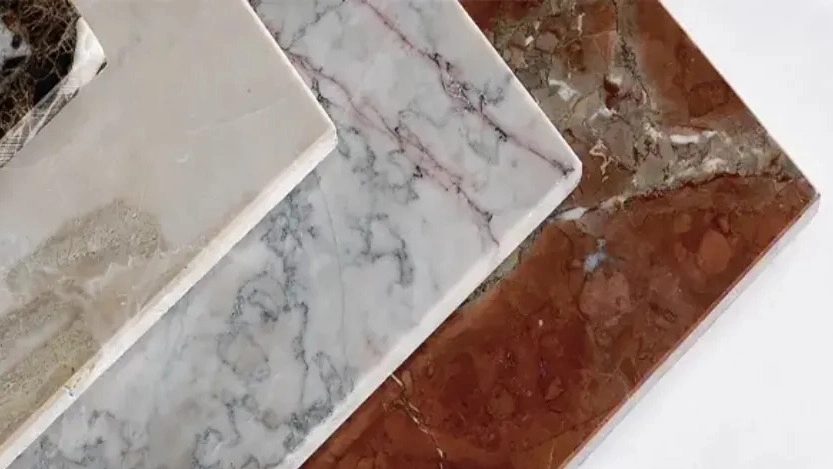
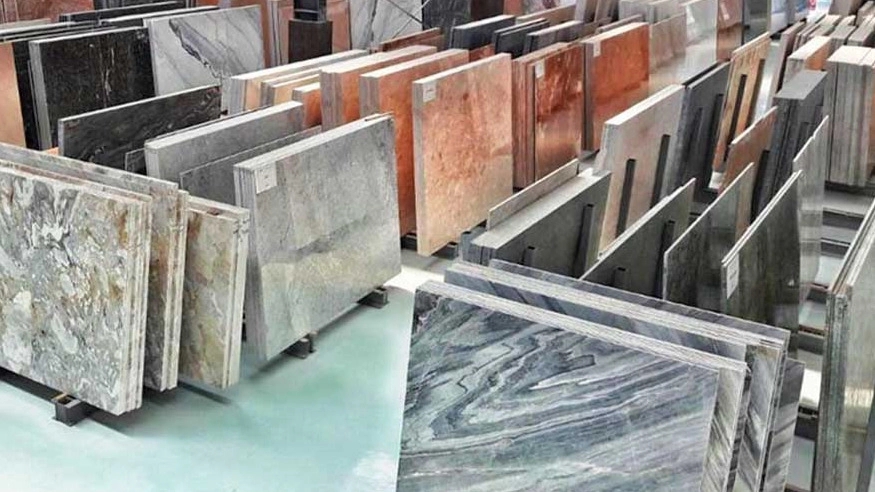
The physical characteristics of decorative stones
Types of decorative stones are known according to their physical characteristics. These characteristics are mainly:
Hard
The range of hardness of decorative stones and building stones is very large. This range ranges from the lowest degree of hardness (talc) to the highest degree of hardness (granite, which is even harder than steel). The degree of hardness is effective in the final price of the stone. In general, the harder the stone, the more time and money it will take to extract, cut and polish its parts.
Color
Colors each give a special beauty and effect to objects, and humans certainly pay special attention to the appearance of things in addition to their strength, properties and ease of use. The buildings add to the beauty of the city due to their exterior color. In this regard, light colors are usually superior to dark and dull colors. It goes without saying that the exterior color of buildings, which is caused by the type of materials used (stone or non-stone), is affected by atmospheric factors. Rainwater can chemically affect the existing minerals of the stone and change its color.
The porosity
Porosity increases as a result of rain water infiltration into the stone cavities (these cavities themselves are often formed under the chemical effect of natural solutions on some minerals in the stone) and its freezing. In the zero degree weather of winter, the water that penetrates into the pores of the stone (or sometimes behind the facade), freezes and causes major cracks to form in the stone. These cracks have become more and more until it causes all or part of the facade to fall.
Resistance
The resistance of building stones changes constantly under the influence of various factors such as weathering, cold, heat and fire. Also, the weathering factors are sometimes chemical. These factors can be gases such as SO2, O2 and CO2. In cities where the presence of such gases is abundant in the air, the stones of the facade of buildings lose their resistance under their influence. Some factors of weathering (such as freezing and melting of water inside the stone cavities, discoloration and heat effect of sunlight) physically affect the stone. It is necessary to explain that chemical and physical weathering factors work together and often cause color change, breaking and separation of stone from the building. It is added that limestone is not very suitable for the exterior of buildings in areas where there is a lot of rain and carbon dioxide in the atmosphere (especially types of travertine).
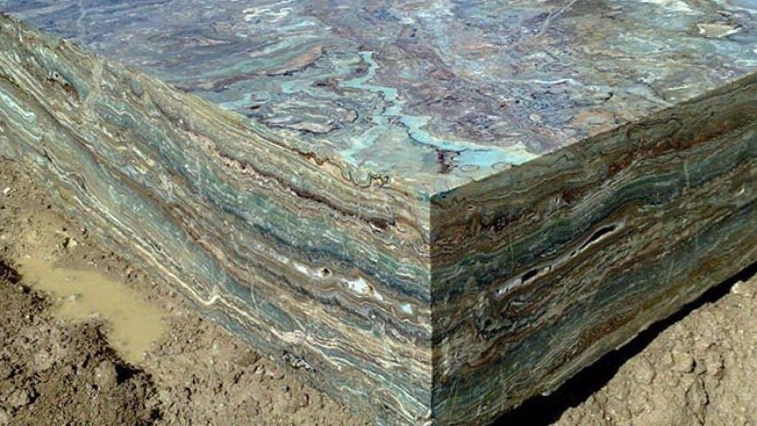
Scientific classification of all kinds of ornamental stones
Suitable stones for the production of facade and decorative stones are classified under the following general headings:
A ـ ـ Sembrede stones
Conglomerates and Sandstones
Conglomerates, if they are thick layers and completely cemented, can be used as very interesting decorative stones. be used If the elements of the conglomerates are limestone pieces and their cement background is also limestone and there is a good contrast between the color of the pieces and the background cement, such conglomerates will be more ideal. If the main elements of the said stones have different qualities and properties (for example, some elements are siliceous and some are limestone, or the constituent elements are siliceous and the ground or cement is limestone), the cutting process will face problems.
Sandstones too. If they are thick layered and their elements are limestone or they are completely cemented together by lime cement, they can probably be used as a building stone. These kinds of stones are especially used as mallen.
Limestones or Dolomite
Limestones are the main building and decorative stones. In short, their prominent characteristics are: suitable hardness, high cutting ability, variety of colors, good resistance, easy extraction.
Travertine (Travertine)
Travertines are the product of old limestone springs. Among them, white travertines that have colored streaks and uniform voids are of higher quality. The cream-colored travertines, which are caused by the presence of dispersed iron oxide pigments in the texture of the stone, are of lower quality. Colored travertines, which can be seen in red, walnut, lemon, etc. according to the percentage of iron oxide contamination, and have patterns that are caused by the difference in the amount of iron oxide contamination in different layers of travertine, have a very beautiful and attractive appearance. In general, in the world markets, colored travertines have a suitable price and market in the current conditions. Travertine is due to its acceptable resistance, ideal cutability and polishability, ideal extraction conditions, beautiful appearance, and the presence of porosity for adhesion. Complete with mortar and especially being cheap compared to other stones, it is considered as one of the most used building stones.
Marble (Marble)
Like travertine, marbles are created as a result of lime-forming spa springs. Marble is usually seen as layers between layers of travertine. In the process of operation of hot springs, if the water temperature drop is slow, aragonite is formed, and if the temperature drop is rapid, travertine is formed. In Iran, the stone obtained from aragonite is called marble, whose brand name is Enyx. Marble contains green, lemon, yellow, etc. colors, which after wear appear as a luxurious decorative stone.
* The main areas of marble use are wall coverings for luxury services, interior decoration of buildings, and sculptures. and stone tables.
In Iran, Esfand and Telengweh mines in Sirjan, De Rostam in Kerman, Ab Barik, Zarshahr, Abbas Abad Jolfa and some other mines are among the potential mines in the country. At present, Durak or Buraq and Sefidkouh in Yazd province and Mote mine are actively exploited.
B-
Granites
Granites are one of the igneous rocks that have emerged in the world markets as a luxurious and expensive decorative stone in recent decades.< These types of stones are important in terms of high hardness, transparency and stunning beauty. Granites that have no signs of alteration and are not affected by tectonic and especially microtectonic phenomena, and also have the necessary attractiveness in terms of color, are considered as decorative and facade stones.
It is necessary to explain that cutting And the wearing of granites is much more difficult and expensive compared to limestones, so that only discs and special stones are able to cut and wear them.
Light, red and pink granites are They are very valuable because of their color. The red granites of Khoy region in West Azerbaijan are a clear example of this type of granites. Gray granites have variable quality depending on the degree of darkness and lightness and the size of grains (minerals). Shirkoh granites in Yazd and Alvand in Hamadan have a wide variety of granites, with different colors and textures.
-Rhyolites
If the rhyolites have a relatively lower percentage of quartz and pink potassic feldspars are seen in them, they will be more desirable and have a beautiful pink appearance. In general, non-altered rhyolites are less common.
- Special igneous rocks
Special igneous rocks can be syenites, diorites, gabbros. and their equivalent output rocks, i.e. trachytes, andesites, and basalts, as well as other rocks such as nepheline, syenites, peridotites, pyroxenites, amphibolites, and other igneous rocks of this type. If the stones are completely fresh and unaltered and at the same time show beautiful colors in the polished section, they can be considered as special decorative stones.
C.
Marbles and gneisses are two types of metamorphic stones that are suitable for use as a decorative stone.
Marmarites< br>
The marbles are white, gray and colored metamorphic stones, with recrystallization, they have a special luster and transparency. These types of stones, which are obtained from the metamorphism of primary limestones, depending on the degree of metamorphism and the growth of crystals, may form different decorative stones with different names and fine and coarse textures. , white or light gray to cream is called "porcelain stone". Tang Hana porcelain mines (Niriz-Fars province), Najaf Abad, Aligudarz crystal and porcelain, Lai Bid and Godar Sorekh in Mote district are famous porcelain stone mines in Iran. Deh Baal mine in Yazd is one of the famous fine crystal marble mines of Iran, where the degree of crystallization, whiteness and uniformity of color are among the quality factors of this stone.
Gneisses
Gneisses, like granites, if they have ideal colors and coarse elements and do not have traces of alteration, because of the beautiful mesh texture that in sections Polishing of some of them can be seen, they can form exceptional decorative stones.
Among the available stones, ore was mostly used as a cover and interior facade and floor of some buildings, especially mosques and holy places. . But in the following years, in addition to marble, the use of travertine and marble and finally igneous stones such as granite and syenite have become common in the exterior of buildings. , increases the strength and durability of buildings, increases the life of buildings and contributes to the health of the environment of building residents.