
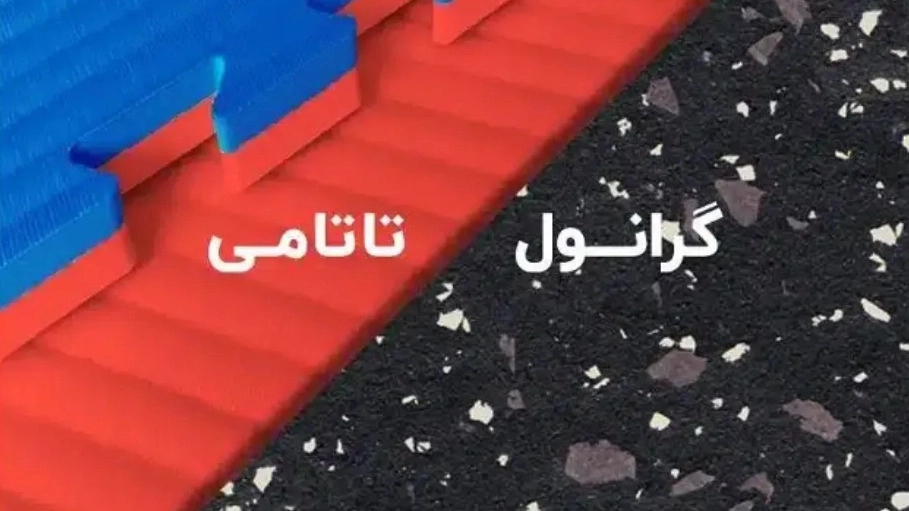


Deco Flooring, Comparison of Granular Flooring and Tatami
In this article about deco flooring, our intention is not to declare the superiority of one granular or tatami flooring over the other. Our goal is to examine each of these two according to their specific characteristics. Getting to know the technical specifications of each of these two products will help you, dear buyers, to make a safer purchase to ensure your satisfaction. So, we will consider the common features and similarities of granular flooring and tatami flooring.
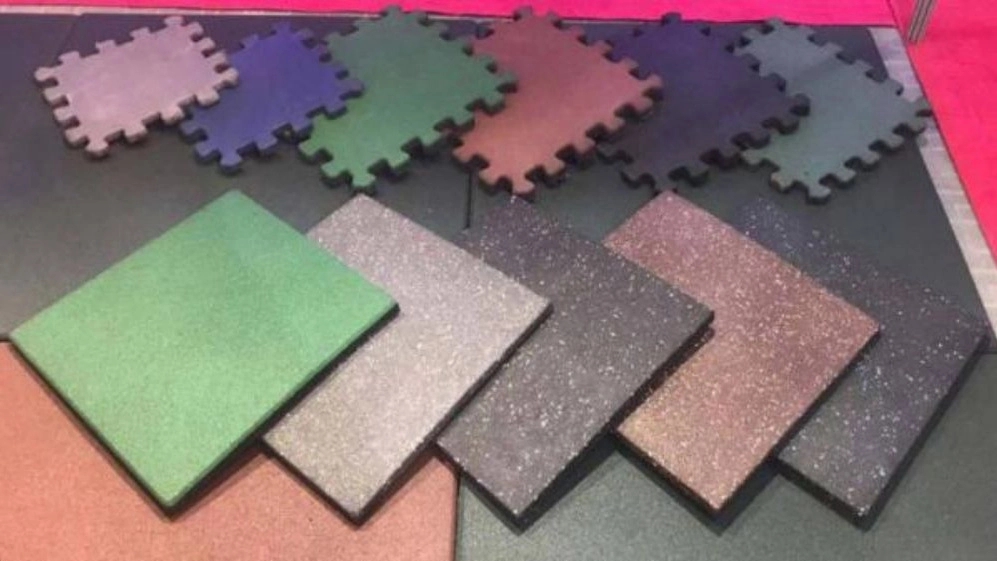
These floorings are generally produced in thicknesses of at least 20 mm and the dimensions of both of these products are one meter by one meter. Both granule and tatami flooring are produced and implemented in a puzzle-like manner. A very important point regarding the distinctive features of these two floorings is that wherever the flooring's shock-absorbing feature is prominent, tatami flooring and granular flooring are the names that are heard abundantly.
✅ Price
From the point of view of the cost of buying and implementing flooring, granular flooring is a little cheaper than tatami flooring. Of course, if we use the granular flooring with higher quality models like Glino, we will face much higher prices. Also, in-situ granular floors are much more expensive; But among the granular floorings, there are lower quality tile models that have a lower price compared to the tatami flooring.
✅ User diversity
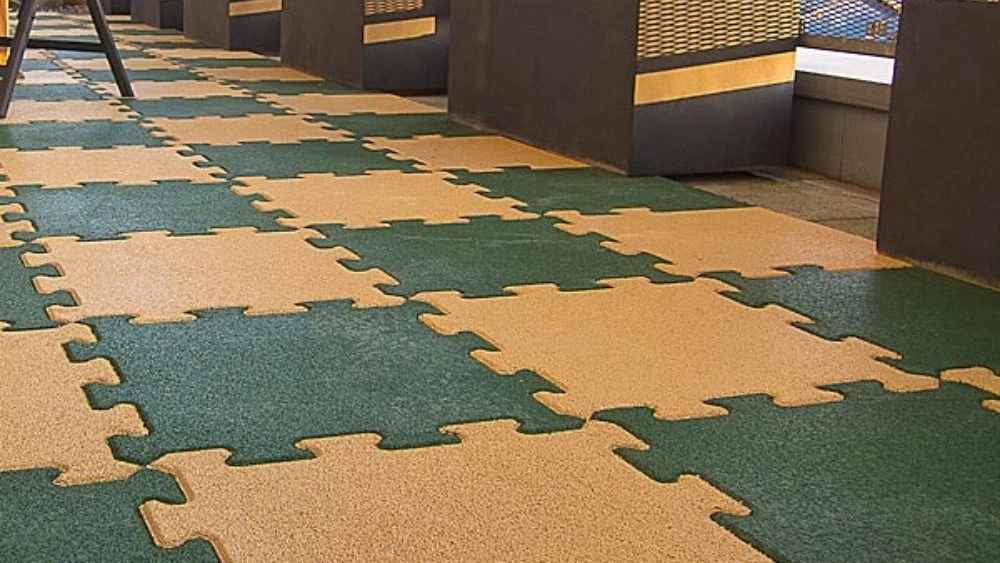
From the point of view of variety of usage and spaces for flooring, we must say that granular flooring has more variety. The main reason for this is that we can use granular flooring in open spaces. At the same time, tatami flooring does not have such an application in open spaces. For this reason, they do not use tatami flooring in spaces such as parks, schoolyards, kindergartens, and playgrounds that are exposed to various weather factors such as sunlight, humidity, rain, and snow. Of course, it has been observed that tatami flooring has been used in such spaces. But the bad news is that the use of this flooring in such spaces causes the flooring to lose its quality and durability quickly and we have to replace it. It gives a certain flexibility of use is that due to the weight of tatami flooring, we can also use it on the wall, and in kindergartens, for example, they use tatami flooring as a wall covering for the safety of children.
✅ Color diversity
In terms of color variety, both of these floorings are considered to be those floorings that provide the user with a wide choice. But when the discussion is about the floor of open spaces, this variety of color is reduced for granular flooring; Because exposure to sunlight requires a floor whose color is mineral colors; Therefore, in such spaces, ochre, jade, gray or gray and black colors of granular flooring are used. But if the space you are looking for is an indoor space, you can benefit from a greater variety of granular products. However, in general, the color variety of tatami flooring is slightly higher and if you want to use more variety in your environment, you can use this option.
✅ Stock standards
Compared to granular flooring, tatami flooring has more impact strength, with more favorable standards. But in general, since in our user spaces, in addition to impact resistance, our flooring must also cover a good point pressure, and in this respect, granular flooring becomes a little more prominent. For example, suppose in the gym, heavy machines are placed on the floor or weights are thrown on it. So, the desired point pressure will be provided by granular flooring. However, for example, in spaces such as kindergartens where the safety of the child is important, the impact of the flooring is a more prominent factor, and for this reason, tatami flooring can be more effective in these environments.