
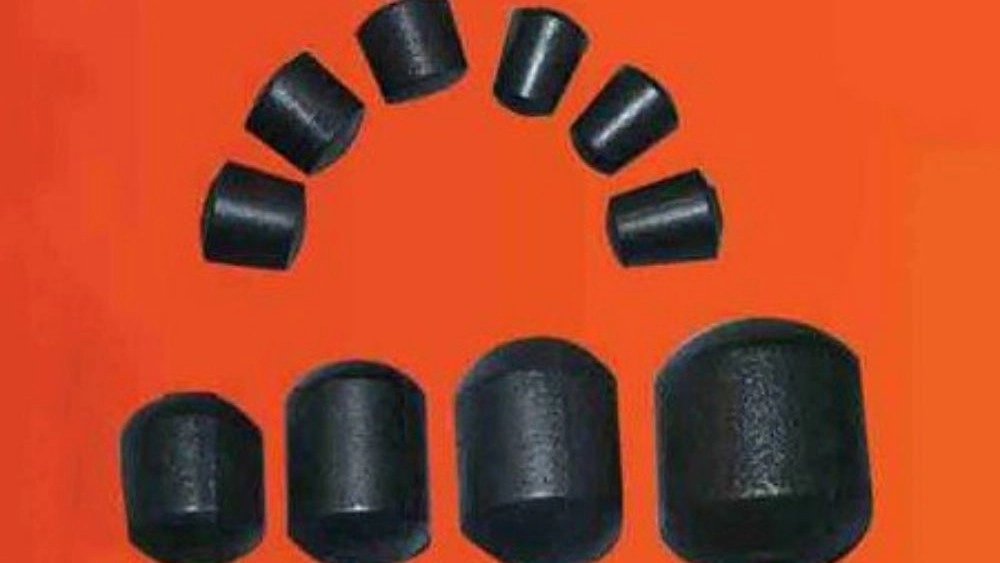

In mineral processing, the choice of pellet type for ball mill plays an important role in the quality and efficiency of crushing. In this context, special types of bullets such as silbaps, polybaps, cylindrical and round are used, each with different characteristics. In the following, I will give a complete explanation of these types:
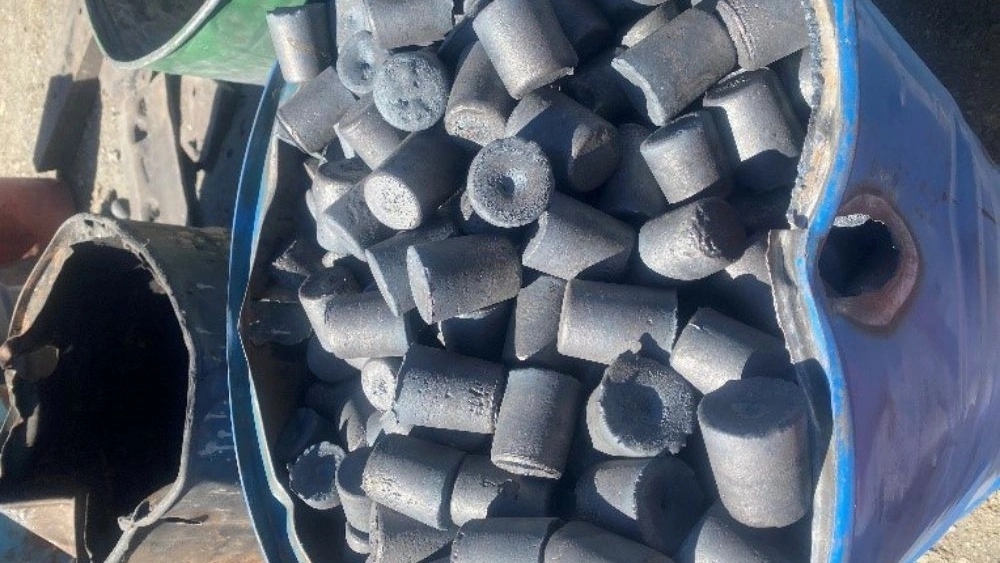
1. Cylpebs bullets
• Characteristics: Syllabops are similar to small cylinders with rounded corners, and because of their special shape, they have more contact surface with the material.
• Applications: These balls are very suitable for grinding hard and abrasive minerals and are usually used in ball mills with heavy load and high speed. It also increases energy efficiency.
• Disadvantages: In some materials, they may suffer more wear due to their sharper and narrower shape.
2. Bullpebs bullets
• Features: These types of balls are elliptical in shape and have a special design that reduces friction.
• Applications: Bullpebs are usually used to process minerals with medium and low hardness. They are also suitable for applications that are sensitive to the level of contamination.
• Advantages: due to their oval shape, Bullpebs reduce the sticking of materials between the pellets and have more uniform crushing. Also, the possibility of damage to the mill body is less.
• Disadvantages: they are not very efficient in crushing very hard materials and require the use of ball mills with a lower speed.
3. Cylindrical balls (Cylinder)
• Features: Cylindrical balls are produced in the form of short cylinders with a relatively similar diameter and height. Cylindrical design helps to distribute energy evenly throughout the process.
• Disadvantages: Due to the larger contact area, the wear rate of the balls and the mill housing increases and maintenance costs may increase.
4. Spherical bullets
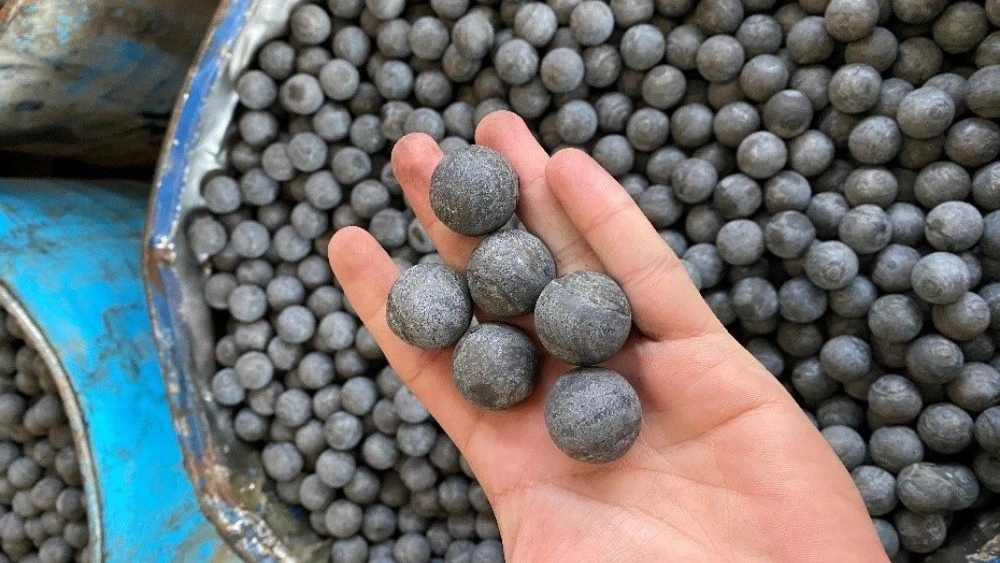
• Features: These types of bullets are spherical in shape and are among the oldest and most common types of bullets. They are usually made of steel, alumina, or wear-resistant materials.
• Applications: Round balls are suitable for all kinds of mineral processing, including processing soft and hard materials.
• Advantages: Round balls cause less friction due to their spherical shape and thus have a longer useful life. Also, they are uniformly distributed in the grinding chamber.
• Disadvantages: In some applications, the crushing rate may be slightly lower than other pellets due to the smaller contact surface.
Choosing the right pellet for mineral processing
• Type of mineral substance: hardness, degree of abrasion and sensitivity to contamination of mineral substance determines the type of bullet. They are suitable for hard materials, silabps and cylindrical pellets; While for more sensitive materials, you can use polybaps or round balls.
• Type of process: depending on whether the ball mill is used for initial (coarse) or final (fine) grinding, the choice of pellet type will be different.
• Maintenance and depreciation costs: Some bullets, such as cylindrical and Silbeps, may have higher maintenance costs; while round balls usually have a longer life.
Manufacturing method:
Roll forged balls and cast balls are two of the most widely used types of balls for ball mills in various industries, especially in mineral processing. Each of these bullets is made of different materials and production processes, which has a direct impact on their quality, resistance and efficiency. In the following, we will compare the types and characteristics of these two types of bullets.
Roll Forged Balls
• Material: Roll forged balls are usually made of steel with a high percentage of manganese and chromium. This combination increases hardness and wear resistance.
• Production process: Roll forged pellets are produced through the process of rolling and forging. In this process, the steel ingots are heated and then using special machinery they are turned into a spherical shape with a smooth and hard surface. Then these pellets are cooled and reach their final hardness.
Features:
• High hardness: Due to the use of quality steel and the forging process, these bullets have high hardness and wear resistance.
• Longer life: Due to the precise production process, these balls have a uniform surface without cracks, which increases their useful life in ball mills.
• Resistance to breakage: Roll forged balls are more resistant to breakage and cracking due to the compression and deformation process.
2. Cast Balls
• Material: cast balls are made of cast iron and steel alloys with a percentage of manganese and chromium.
• Production process: In the casting process, molten materials are poured into molds and after cooling, they take on a spherical shape. These pellets are then usually heat treated to achieve the final hardness and strength.
Features:
• Lower cost: The casting production process is usually less expensive than roll forging, making these pellets more cost-effective for projects that require a large volume of pellets.
• Less wear resistance: Due to the presence of microcracks and pores that may be created in the casting process, these balls have less wear resistance compared to roll forge.
• More likely to fail: cast bullets are usually more fragile against impacts and heavy stresses.
General comparison
• Hardness and Longevity: Due to the higher hardness and intensive manufacturing process, roll forged balls have a longer life and are more resistant to wear and failure.
• Cost: Cast balls are cheaper than roll forged balls and are suitable for projects with high volume and limited budget.
• Applications: Roll forged balls are suitable for hard and heavy applications in mineral processing and high-pressure mills, while casting balls are used for lighter processes and materials that do not require high hardness and strength. To order products and know the price, contact the experts of the gold industry.
09123653281