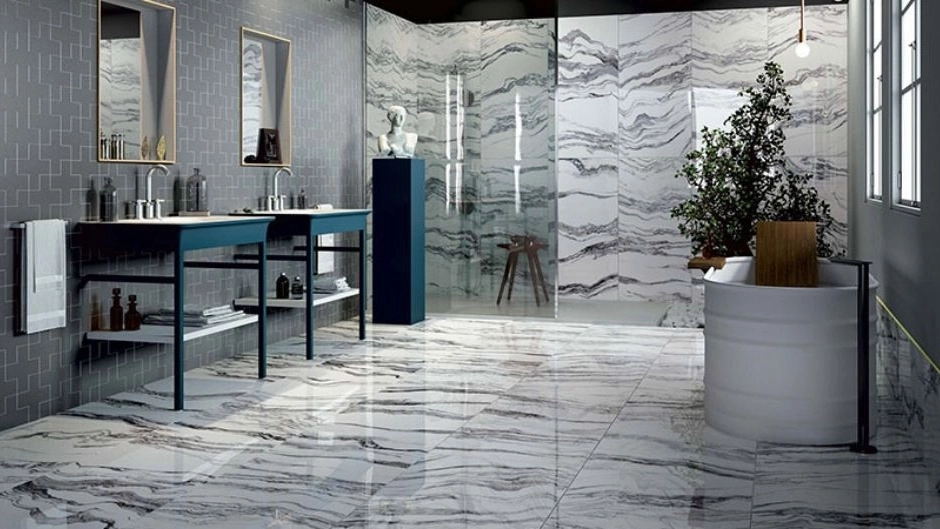
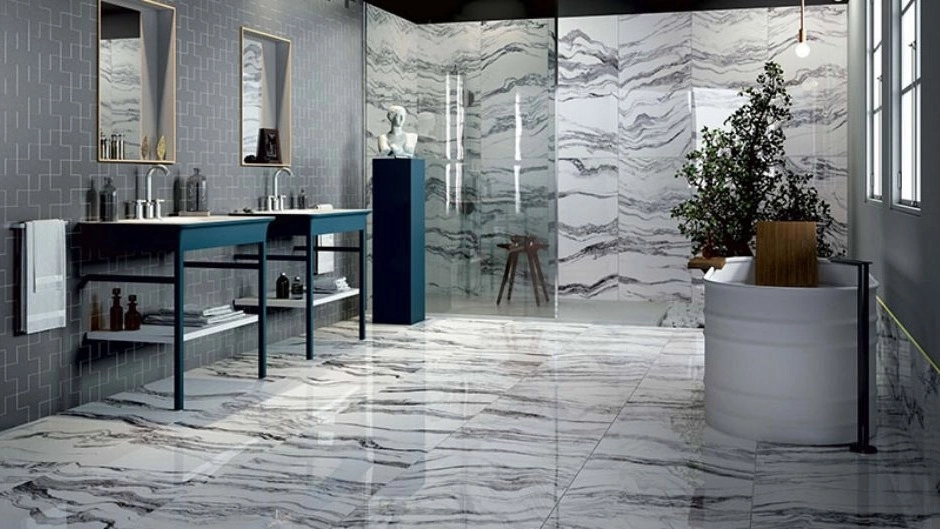

Constituent material
Choosing between stone and ceramic for floor and wall coverings can be challenging, as each has its own advantages and disadvantages. The difference between stone and ceramic lies in their ingredients.
Appearance and diversity
Stone and ceramic are both common and popular materials for floor and wall covering, and the difference between stone and ceramic in appearance and color variety is one of the most important factors in choosing between these two materials.
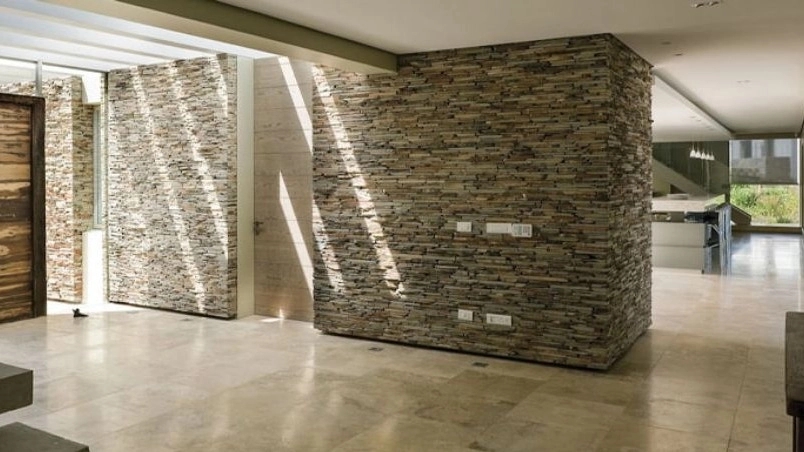
Stone:
Unique: Each piece of stone is unique and has its own beauty due to its natural veins and designs. This feature makes stone an ideal choice for those who are looking for a space with a natural and original look.
Limited color variation: Compared to ceramics, the color variation of stone is more limited. Common stone colors include white, cream, gray, black, and brown. However, this color limitation is partially compensated by the presence of natural streaks and designs.
A sense of warmth and naturalness: the stone instills a sense of warmth and naturalness into the space and can be used to create a pleasant and intimate atmosphere.
Ceramic:
Resistance and durability:
Resistance and durability is another difference between stone and ceramic that should be considered. In the following, we will investigate and compare the difference between stone and ceramic against various factors such as scratches, impact, wear, heat, chemicals and water.
Natural stones generally have high resistance and durability against various factors such as scratches, impact, abrasion, chemicals and heat. Due to their high density and natural structure, these stones rarely crack or break and can be used for many years.
However, as a synthetic material, ceramic also has acceptable resistance and durability. High-quality ceramics, especially porcelains, are resistant to scratches, wear and chemicals and can be used in high-traffic areas.
Choosing between stone and ceramic for a particular project depends on your needs and budget. If you are looking for high resistance and durability, natural stones such as granite or marble are a good choice. But if you are looking for an option with a more reasonable price, high-quality ceramics can be a suitable alternative.
Maintenance and care
Choosing the right material for flooring and walls, in addition to beauty and durability, also depends on other factors such as ease of maintenance and care.
Ceramic generally requires less maintenance and care than stone. Ceramic is waterproof and stain resistant and is easy to clean with mild detergents.
The most important difference between stone and ceramics is resistance to chemicals, ceramics are usually less resistant.
Stone is more durable than ceramic and is less likely to scratch or crack.
Polished stones like marble become cloudy over time and need to be polished periodically.