
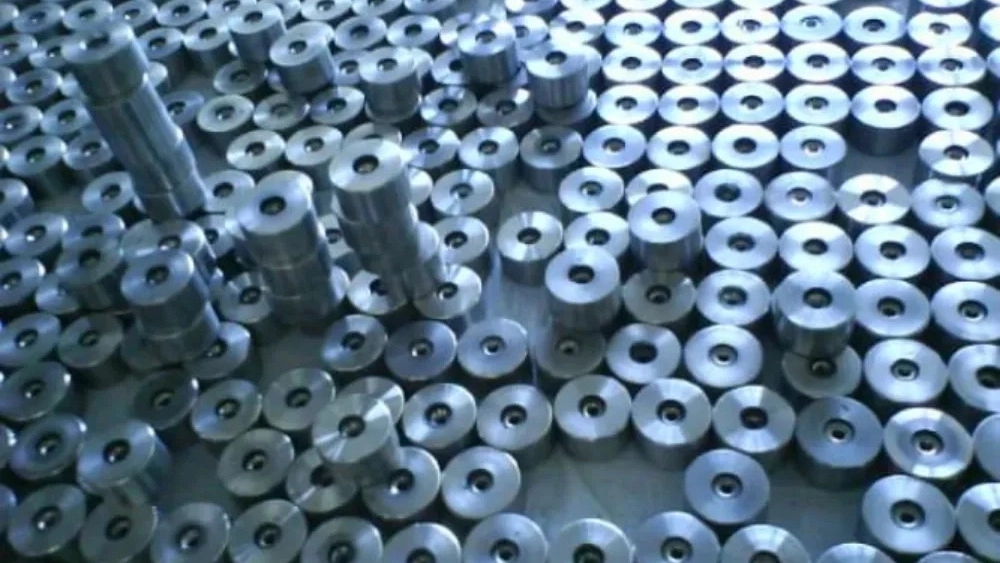


The drawing die, also known as the drawing die, is a vital element in the production process of wire with different diameters. This tool delicately and accurately brings the wire to the desired thickness by passing through a hole with a smaller diameter. A tool for creating tension and tension in different materials, usually used in the construction and production industry.
But what exactly does the stretch do?
The draw dose process involves passing the wire through holes of smaller and smaller diameters. At each stage, the wire is stretched and narrowed until it reaches the desired diameter. This process increases the tension and tensile strength of the wire.
Benefits of Wire stretching:
Wire production with high precision: Wire tensioning is a precise method to produce wire with uniform diameter and dimensions.
Improvement of mechanical properties: The stretching process increases the strength and toughness of the wire.
Reduction of waste: Compared to other methods of wire production, wire drawing dose produces less waste.
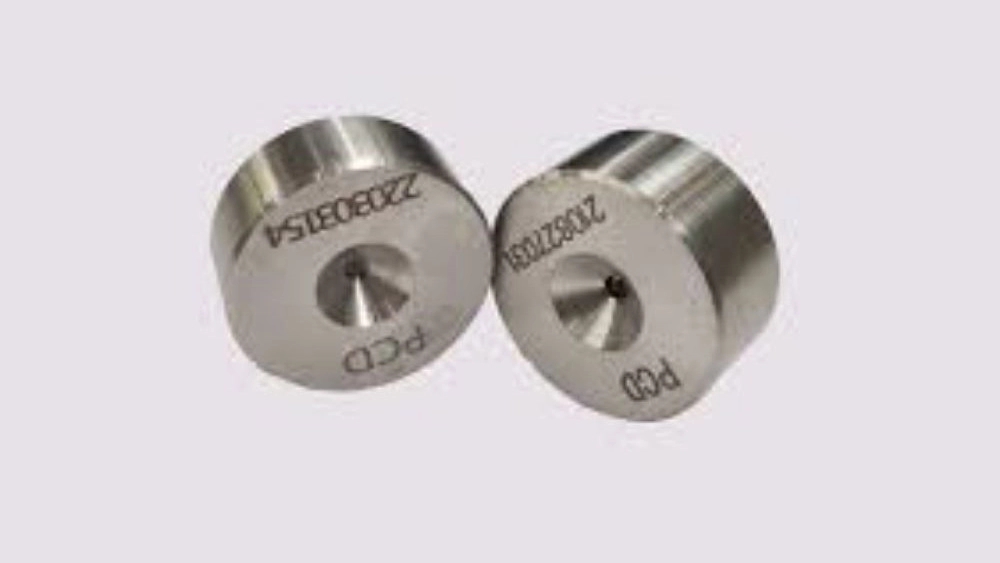
Sex and structure
Tension capsules are made of different materials, each of which has its own advantages and disadvantages:
Steel: The most common type is made of steel. Due to their high strength and resistance, these types of cartridges are suitable for the production of high-thickness wire. These types of dozes are used to produce wire with low thicknesses as well as wires made of hard materials such as stainless steel.
Diamond: Diamond dozes, the hardest type of tension doze. and are used to produce very thin and precise wires.
Tension molds are produced in various shapes and sizes. The diameter of the dozer hole is the most important factor that determines the final thickness of the wire. Doses can also have one or more holes.
How to operate
The process of pulling the wire is done as follows:
✅ The wire with the initial diameter is directed to the doze through a pulley.
✅ The wire is passed through the doze hole whose diameter is smaller than the initial diameter It is a wire, it passes. The passing of the wire through the doze causes its cross-sectional area to decrease and its diameter to reach the diameter of the hole of the tension doze. The wire with the new diameter exits the doze and goes to the next reel It is guided.
During the passage of the wire through the doze, the friction between the wire and the walls of the doze hole causes heat generation. To prevent damage to the wire, substances such as water or oil are used as coolants, and to reduce the friction between the wire and the tensioner, tension powder is used.