

What is a centrifugal pump?
Centrifugal pump is known as centrifugal pump. The centrifugal pump is one of the most common types of water pumps for transferring water and liquids. These types of pumps pump liquids by converting mechanical power into fluid flow pressure energy. This mechanical power is usually provided by an engine or an electric motor, and the centrifugal pump uses centrifugal force to pump liquids.
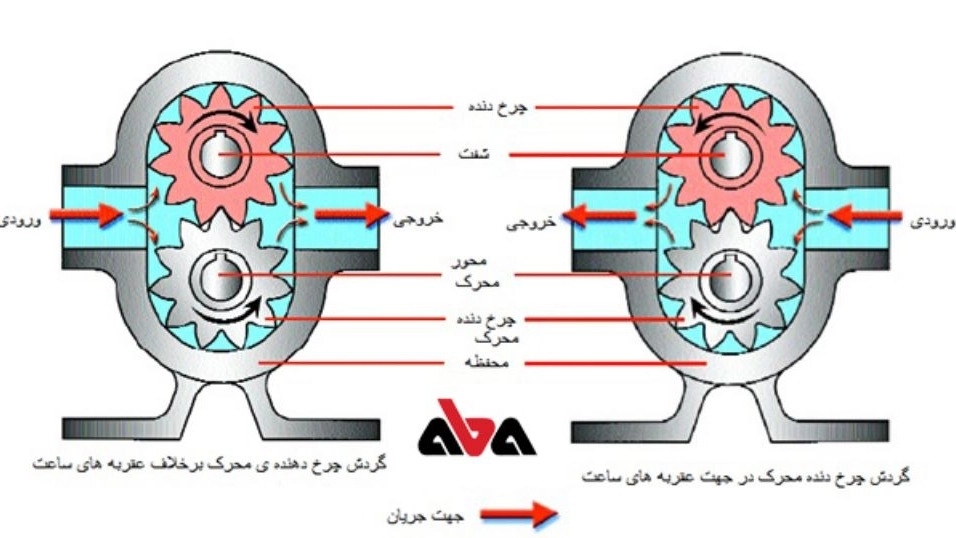
Centrifugal pumps are widely used all over the world and industries prefer them to positive displacement pumps. These types of pumps do not have any loss of power due to high friction, they have a simple design, and their control It is very simple and does not have the problem of heat transfer. These pumps are made based on a simple principle, so that the liquid is directed to the impeller chamber and moves towards the edge of the impellers using centrifugal force. >
Application of centrifuge pumps
This type of dynamic pumps are mostly used in food and chemical industries for efficient pumping of viscous liquids. These pumps are cheaper than positive displacement pumps. Simply put, this is a brilliant pump that can work effectively in different applications. Centrifugal pumps are very common in all industries of the world. The main reason for their popularity is that these pumps do not lose power due to friction. This dynamic pump has a simple design and is very easy to control. They do not have the problem of leakage and heat transfer, and this is the reason why they are preferred over positive displacement pumps.
Components of centrifuge pump
Shaft
Abrasion rim (propeller and shell)
Sealing system
Bearings
system (flushing)
Coupling
cyclone
filter and (strainer)
impeller
Shell
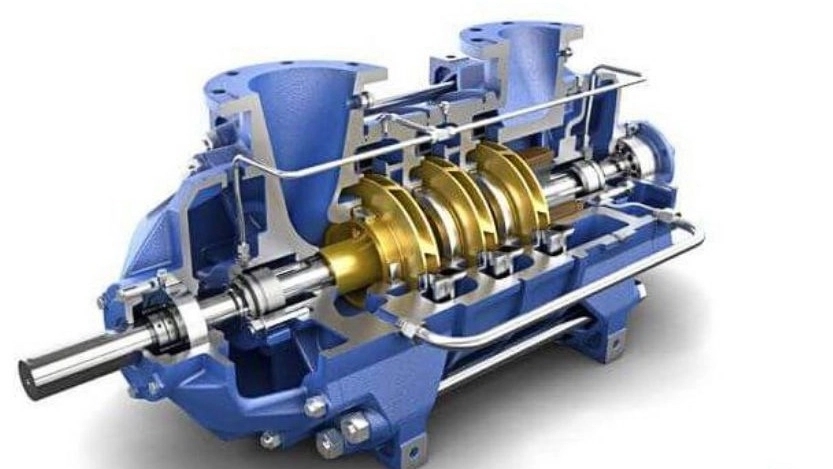
Centrifuge pump power
Centrifugal pump power can produce output power or hydraulic power after losing some energy due to volumetric and mechanical hydraulic losses. Hydraulic power is the product of the pressure multiplied by the pump flow rate.
Hydraulic power
It depends on the output power of the pump, which causes the fluid to move. To calculate this power, just multiply the pump pressure by the flow rate.
Pump output power
The output power of the pump is the same as the hydraulic power of the pump.
Pump input power
The input power is the power that is given to the pump shaft to create the output power. Calculating this power is also simple.
A absorption power
The pump must absorb to create output power. The suction power is the same as the input power of the pump.
Workplace power
point power is the absorption power or input power of the pump. In fact, the pump consumes power at the working point, which is the same power as the working point.