


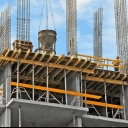


Formwork is not used to hold concrete forms in normal buildings because the settlement of the form is not so important due to concrete pouring. While in the construction of bridges, formwork is implemented in order to prevent settlement or movement of the assembled formwork.
Formwork and scaffolding are temporary structures that are arranged for specific purposes. But their use in the construction industry is very different. To effectively complete a construction project, one must be able to distinguish their specific uses. In the rest of this article, the difference between formwork and scaffolding is given.
What is Kefraj?
Formwork is a type of temporary structural molding that is used as a mold when pouring concrete. This formwork is a vertical or horizontal arrangement that holds the concrete in position until it hardens and takes the desired shape. Formwork is offered for structures such as columns, walls and concrete slabs.
They can be made of wood, plywood, steel, wood and steel combination, reinforced concrete and plain concrete. Formwork in construction requires a lot of money and is a time-consuming step. In addition, its costs increase in the construction project of a huge structure such as a dam, reservoir and bridge.
What are the characteristics of quality infrastructure?
✅ be strong enough to withstand various loads such as concrete dead load and live load during and after concrete casting,
✅ be anti-leakage and waterproof,
✅ to It should be stiff enough to prevent its deviation,
✅it should be as light as possible,
✅the materials used to make it should be resistant to warping, bulking, and weather
✅and The materials used to make it must be easily available, cheap and reusable.
The loads on the formwork include the following:
✅ Dead weight of green concrete (2300-2400 kg/m³)
✅ Hydrostatic pressure of green concrete
✅ Live load due to work (400 kg per square meter)
✅ Impact effect during concrete pouring
✅ Compaction of concrete by mechanical equipment (vibrator, needle vibrator, plate vibrator, etc.)
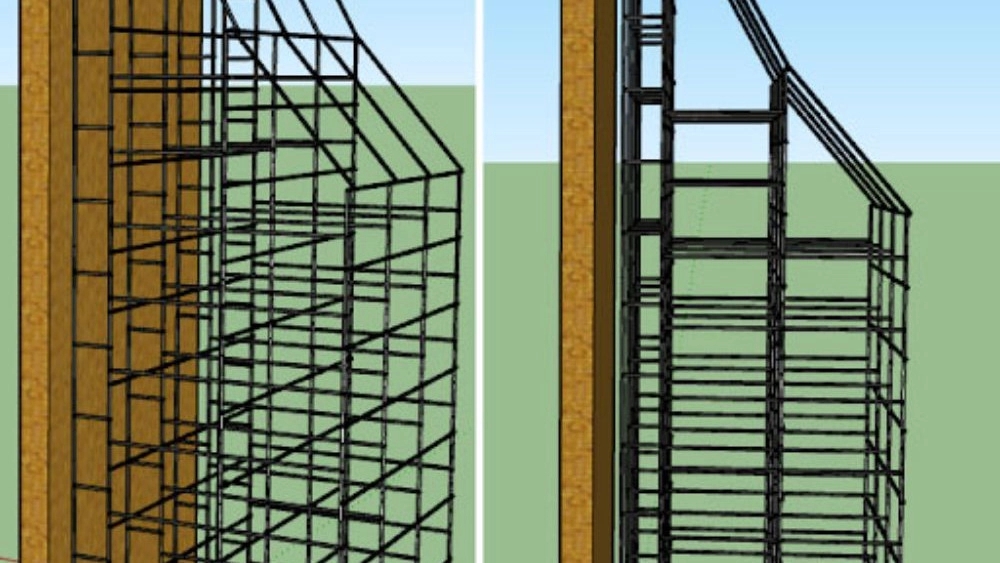
Introducing all kinds of infidels
Types of formwork are classified based on the material used in its construction and have various models. Its types include wooden formwork, metal formwork, plastic formwork, fiberglass and polymer formwork, sliding or movable formwork, and permanent formwork. In this section of the article, explanations are provided about each of them.
Foam
In this type of formwork, chipboard and three-layer boards are used to make the mold. The templates made in this model are very simple and easy to work with. It is also possible to change the size of wooden molds, because they are connected with nails and screws. This type of formwork is relatively resistant to heat and has a low weight. One of the drawbacks of this type of formwork is that it is time-consuming in large projects. Also, this model is not friendly to nature due to the large use of wood and can cause a lot of damage to the environment. On the other hand, when making these molds, the size and shape of the wooden boards should be considered. Because the seams of the mold may not be well matched and the material may leak out during concreting.