Structural
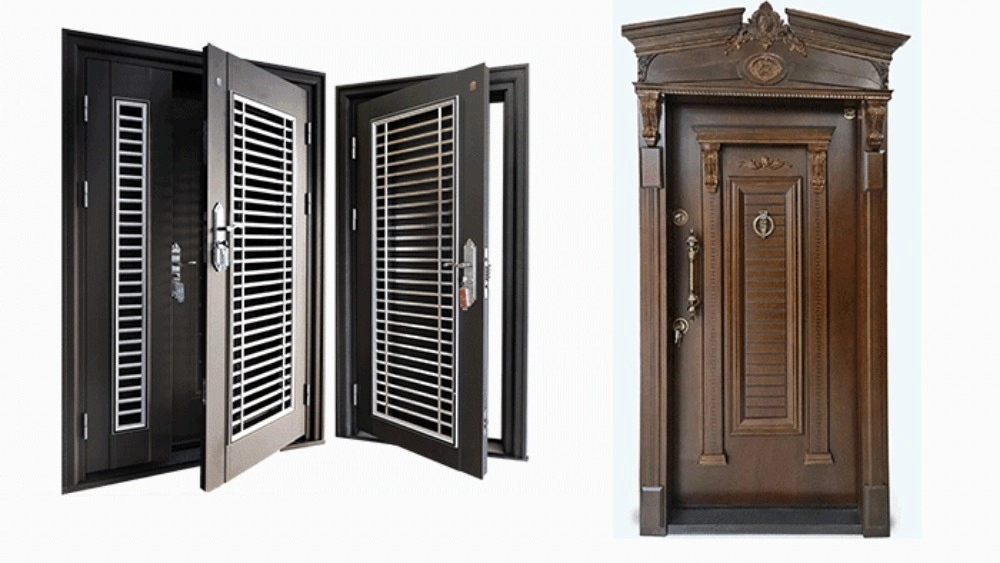
Almost all Iranian anti-theft door metal structures are made of bent sheet. And iron cans are also used to strengthen the structure. In order to make the Iranian anti-theft door structure, the raw sheet that has good bending properties is used. that the minimum ST for the desired sheet should be 12. This type of sheet is one of the preferred types in Iran by companies such as Foulad Mobarakeh and Haft Almas. After the desired sheet arrives at the anti-theft door manufacturing factory, the parts are cut in the desired sizes and then punched and instead of locks and fittings are prepared on it. One of the luxury anti-theft door designs can be mentioned the Termwood anti-theft door.
Anti -theft door internal structure
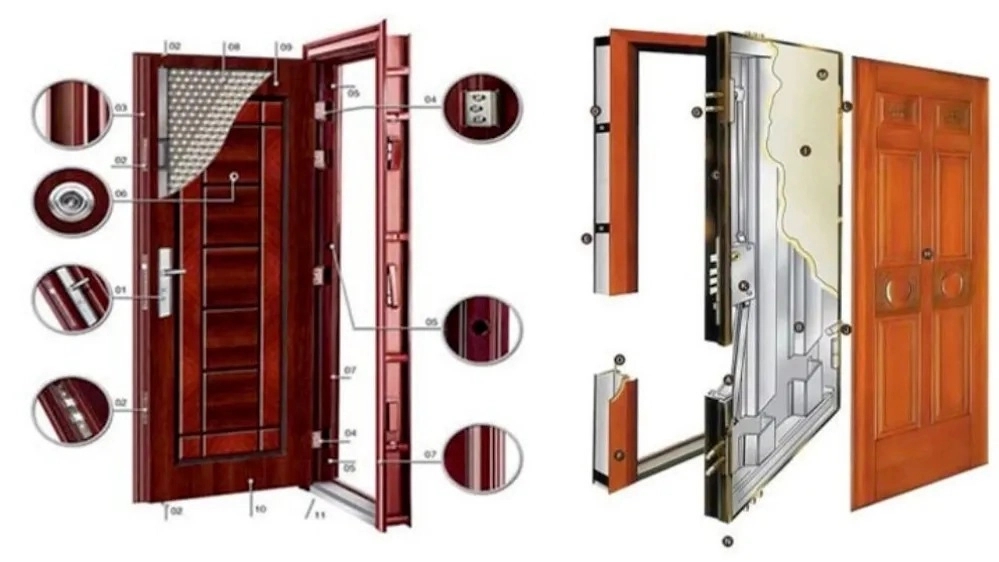
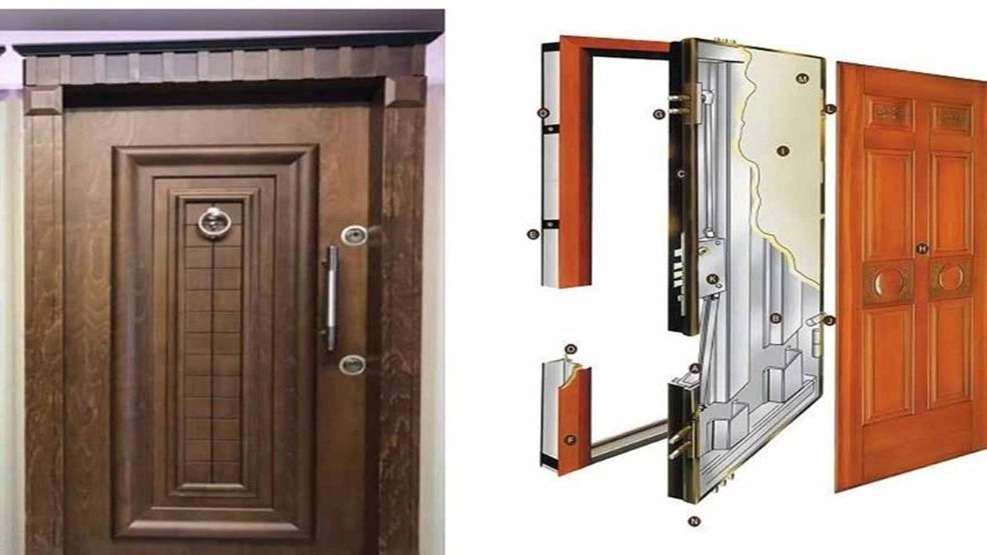
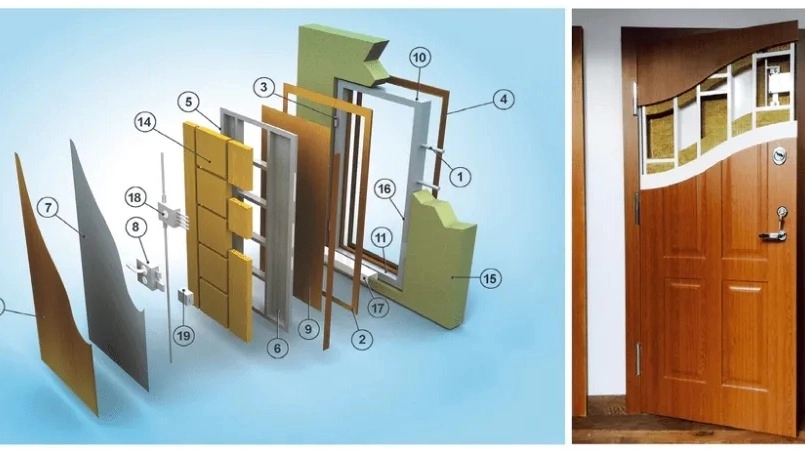
One of the most important and fundamental components of anti-theft doors is the internal structure of the anti-theft door. This part is the real material or anti-theft door sash. All other components can be installed on it as well. It is necessary to remember that the higher the quality and strength of the structure, the higher the security of anti-theft doors. The most important materials that will be used in the production and modeling of the structure are metal coils, steel plates, metal belts and others.
Anti -theft door interior
The internal structure of the anti-theft door consists of many different types. The companies that manufacture anti-theft doors are also aware of this issue and they like to produce a product that will attract a lot of attention from their buyers to their company. Among the most important and main types of structures, the following can be mentioned:
They are bent sheets whose diameter is around 0.7 to 1.5 mm. And it is used as an angular sinusoid.
There are steel sheets with the dimensions of anti-theft doors, on which a layer of topmost insulation can be placed. Polyurethane is usually used as insulation in this model of doors.
Importance
The type of structure used in anti-theft doors is directly related to the security factor of the doors. Basically, the higher the quality and stability of the materials used in the structures, the higher the quality and safety factor of anti-theft doors.
Tips to be observed in the construction of the door -by -door
In making the door structure, it is necessary to pay attention to the following:
Using high quality and durable steel sheets
Steel has high resistance; Therefore, using it in the construction of the door structure increases the security of these doors.
Using quality welding electrodes to connect steel sheets
In fact, the function of the electrode is to connect the steel sheets and profiles used in the structure, and the higher the quality of these electrodes, the longer the durability and resistance of the parts connected in the structure increases.
The first type of door structure:
The door structure is made in such a way that a metal coil is made around the steel profile. Then, a steel sheet with a thickness of 0.7 to 1.25 mm, which is already made in a sinusoidal shape, is welded on this coil. This sinus coil is mainly used on the outside of the door and the door facing the external environment.
This sinusoidal sheet will increase the resistance of the door against bending or possibly the force of the door used by thieves for theft. It should be noted that in some production models, a steel sheet with a thickness of 0.7 to 1.25 mm is welded in the opposite direction of the mentioned steel coil.
The second type of door structure:
The door structure is made with a metal coil with steel profiles. It should be noted that the type and size of this profile is determined depending on the thickness of the door. Then, in order to make the door more resistant to bending, 3 to 4 steel bars with exactly the same size as the peripheral profiles are welded horizontally to two vertical peripheral profile bars, then a steel sheet with a thickness of 0.7 to 1.25 mm is welded on this coil. to be
It should be noted that exactly like the sinusoidal structure (first type) in some production models, a steel sheet with a thickness of 0.7 to 1.25 mm is welded in the opposite direction of the indicated steel coil.