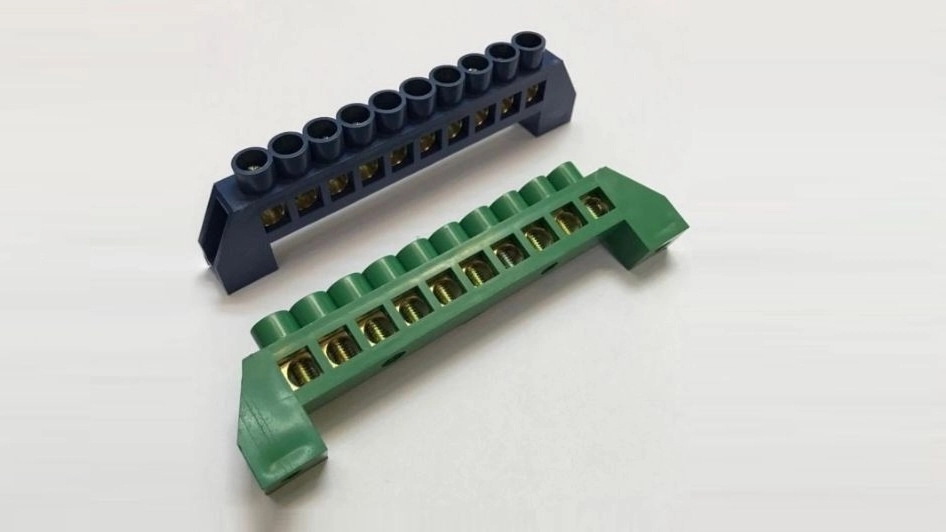


1) The Screw Terminal
This type of branch terminals includes those used as a method of holding a cable or wire with screws. It is common to see that screws have flat head connections and these types of terminals are often found in situations where their voltage and current demands are moderate. While the wires attached to a branch terminal are not physically joined by soldering, if done correctly they are extremely strong and can be used in permanent scenarios. Great care must be taken when tightening the plug terminals, as over-tightening can damage the inserted cable and result in an unreliable and potentially dangerous connection.
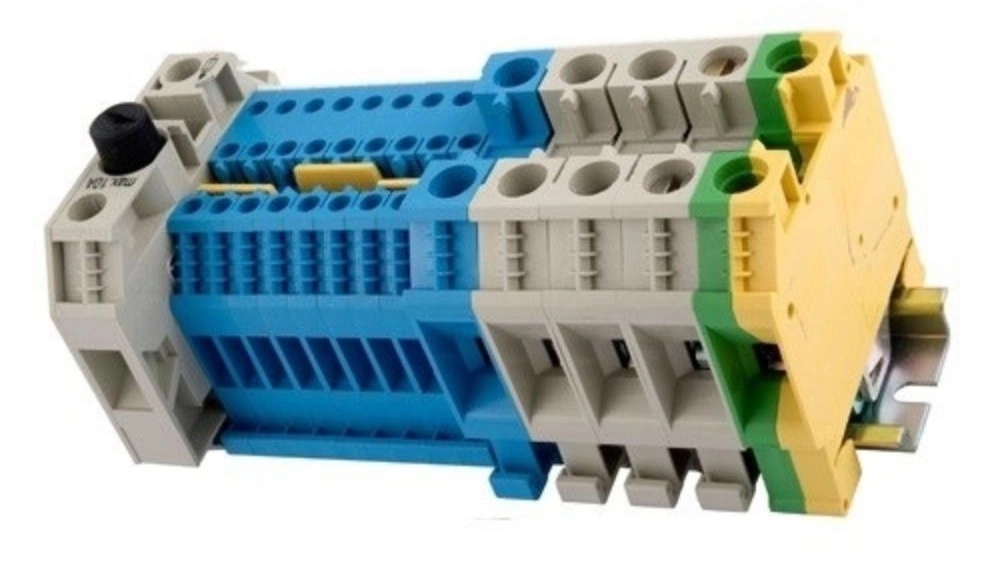
2) Barrier Terminal
Barrier branch terminals are very similar to screw terminals in that they use screws as a cable retention mechanism. Barrier branch terminals often have more than one termination point for multiple cables. For this reason, they have small barriers for terminal isolation. These types of terminals can have a small cover and housing to further protect the cabling and are commonly used in home wiring and other high voltage scenarios. At the same time, such terminals are needed to prevent arcing or possible short circuit.
3) Push-Fit terminal
Push-fit terminal blocks use small spring-loaded levers. This mechanism allows cables to enter the branch terminal from one direction but does not allow them to exit and keeps the wire in place. Hence, the name "fit-fit" is also called. This type of connection has more advantages than screw terminals. Because it prevents over tightening. But as a result, the designer relies on a spring that has enough force to contact the wire with the conductor body. Another issue with these types of terminals is that some of them are not designed for reuse and do not have a release lever. This will make the repair work difficult.
3) Pluggable terminal
Pluggable plug terminals are those that have a cable input for connecting a wire or cable but a two-prong output to allow easy connection to a socket. These types of branch terminals are very useful in situations where in-line switching may be important or where the connection is expected to be disconnected for service or inspection. Screw contacts are the most common connection method for incoming cables, but the screw often has a small metal plate attached to the end, which allows it to grip both small and large cables.
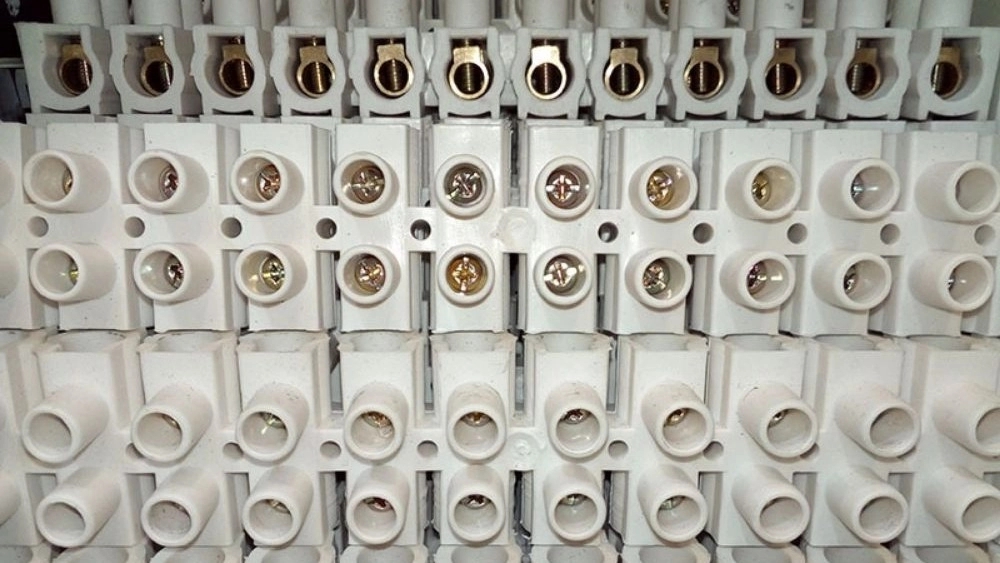
Select the appropriate type of power terminal
Choosing the right type of electrical terminal for a small project may seem trivial, but it's actually more complicated than you might think. The various aspects of the branch terminal that should be considered typically include: 🔸 flow Voltage 🔸 Wire used Mechanical resistance 🔸 Environment