

History of stone milk
Historians disagree on the year of construction of the stone lion, and some archaeologists consider it to belong to the time of the Medes. On the other hand, the way of the carvings and the proximity to the Parthian rampart and the discovery of the coffin from the Parthian period seem to be like this. It belongs to the Parthian period, and it is possible that Alexander built it in honor of his general Hephaistion. br>
Map and introduce different sections
The stone lion statue is built on a hill, and this hill itself is considered an ancient relic, because a coffin belonging to the Parthian period came out of it, and it is kept in the Hegmatane Museum of Hamadan.
This stone lion was placed at the gate of the city of Hamedan at the beginning of its construction, which the Arabs call Bab al-Asad when they conquer Hamedan, which means the gate of the Lion of Diliman. In 319 AD, they attacked Hamedan and completely destroyed the city gate. .
At that time, Mardavij wanted to transfer the stone lions to Ray, but because he failed to do so, he completely destroyed one of them and broke the paw of another one. The statue that was damaged was on the ground until 1328, when engineer Sihun, who designed the tomb of Abu Ali Sina, placed it in its current location.
In Islamic times, this lion was called as the protector of the city and they believed that it is a talisman to ward off illness.
What is the symbol of the symbol?
Lion, due to its unique characteristics, has always had a special place in the oral and visual culture of many ethnic groups over time. The motifs of coins, column heads and other images left from ancient times testify to this.
By adapting this philosophy, the Bakhtiaris have chosen and introduced the lion as their symbol. This people freed the symbol of the lion from court decorations and motifs and presented a simple symbol mixed with the taste, culture and art of their people.
An art that combines simplicity with dignity and at the same time violence. The origin of stone lions should be sought in the ancient and ancient tradition of the inhabitants of this region, and now the Bakhtiari people show off their originality in the form of lions.
Chaharmahal & Bakhtiari Province stone milk
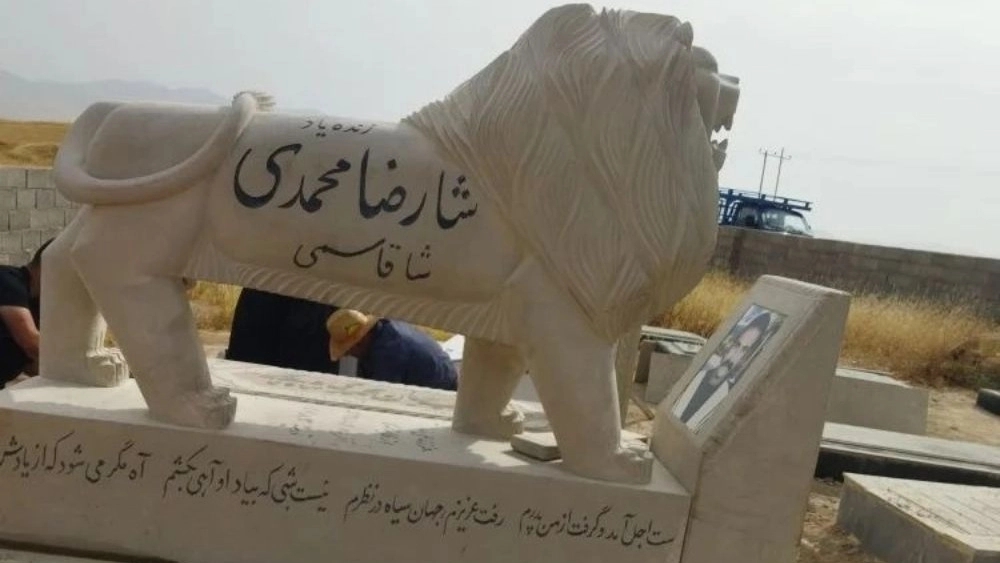
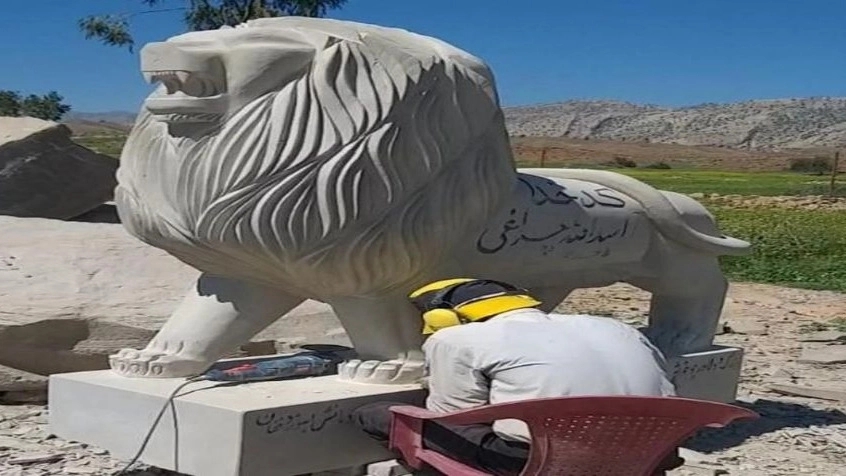
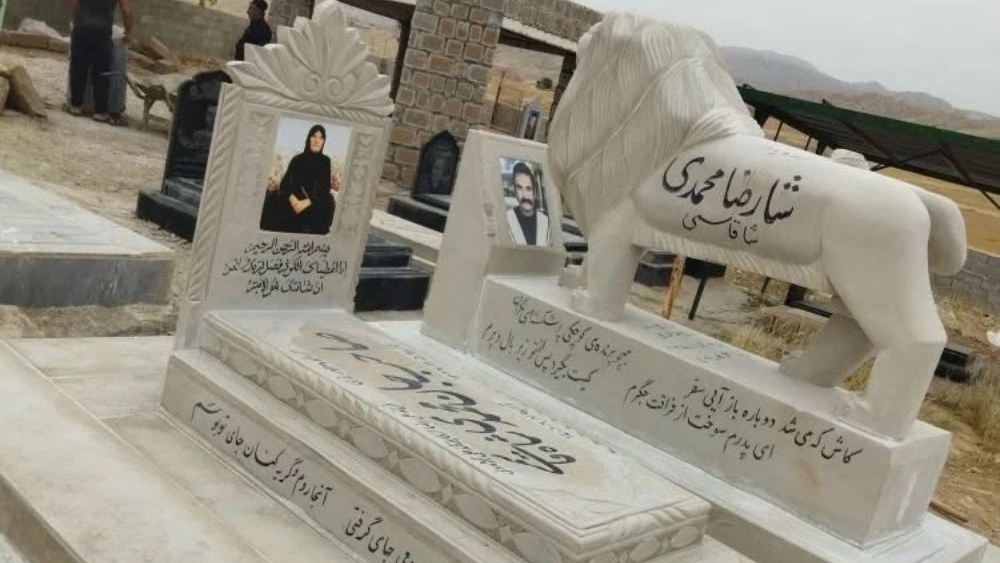
Sherstones standing in place in the cemeteries of Farsan, Kohrang, Ardel, Kiyar are actually a legacy that has been left among the Bakhtiari people since the past and it tells about the courage and bravery of Ilkhan, the warriors. , horsemen, khans, sheriffs, kodkhodayans and elders of Bakhtiari clans are likened to a lion, and for this reason, with the death of one of these Elders A stone lion was made by local masons and placed on the graves of these elders.
A lion on the body of which shapes such as swords, guns and horses were carved along with the details of the deceased person.
Sculpture
Stone lion statues are located in Chaharmahal and Bakhtiari province and in the north of Khuzestan province. Shaheswar cemetery or Shaheswar shrine is called the cradle of stone lions, which is located in the village of Kohbad Ik in the north of Izeh city, and visiting this place is recommended to all tourists and history enthusiasts to buy plane tickets and enjoy the attractions. Visit the sights of this area.
These statues, which are one of the must-see places in Khuzestan province, are made of stone and were carved in the shape of a lion by the stonemasons of Ail in the past. This is what they put on the graves of the elders of the people.
The difference in the size of these statues may attract attention and make you wonder why there are lion statues of different sizes in this cemetery. In response, we must say that the size of these statues belongs to the survivors of the deceased, they chose a certain size based on the bravery and bravery of the deceased person and placed them on his tombstone.
Stone lions
Nearly 40 types of images with variations in shape and type can be seen on stone lions. These pictures are placed in several categories of humans, animals, plants, weapons, books, lines, tools and accessories. On the two sides and waist of the stone lion, the name of the person, the date of birth and death, and the name of the father, his family and clan are written, or on the sides and on it, images of swords, daggers, partridges, rams and mountain goats, horses, They engrave guns, sun, camera and tools of war and hunting.