




Genetics: You inherit your skin type from your parents. So one of the most important factors in determining the type of dry, oily and sensitive skin is your genes. Your skin type may be similar to your father or mother.
Weather: Changing the city of residence and entering a new environment can change your skin type.
Hormones: Hormonal fluctuations in different stages and times of life, such as during pregnancy, can affect your skin type.
Medicines: Medicines that you consume It can cause complications such as dryness or sensitivity of your skin.
Diet/allergies: The food you eat during the day definitely affects the improvement or deterioration of your skin. is If you think a food allergy may be the source of your skin discomfort, talk to your doctor. Your skin will be disturbed.
How to detect your skin type?
The first step for effective skin care is knowing its type and characteristics. You can determine your skin type with a simple test. To do this, follow the steps below.
First step: First, clean your skin thoroughly with mild cleansers. Remove any makeup, oil or dust from your face.
Second step: Dry your skin with a soft towel (so that you put it on your skin and remove it slowly). Avoid using any moisturizer or skin serum. Let your skin return to its natural state.
Step 3: Wait an hour. Do not touch your face during this time (resist any temptation). After an hour, look closely at your skin and pay attention to its quality.
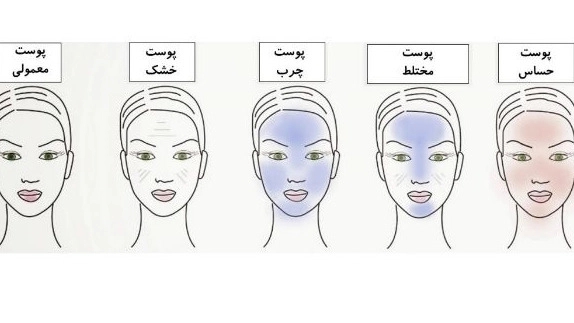
✅Your skin type is dry if you have itching, stretching and flaking.
✅Your skin type is oily if your skin is oily and shines. In the T area of the face, oil shows itself more.
✅Your skin type is mixed if the T area of your face is oily and other areas of the face are dry.
✅Your skin type is normal if none of the above symptoms You haven't seen it on your face. Your skin type is sensitive, if your skin is sometimes red, itchy and inflamed.