
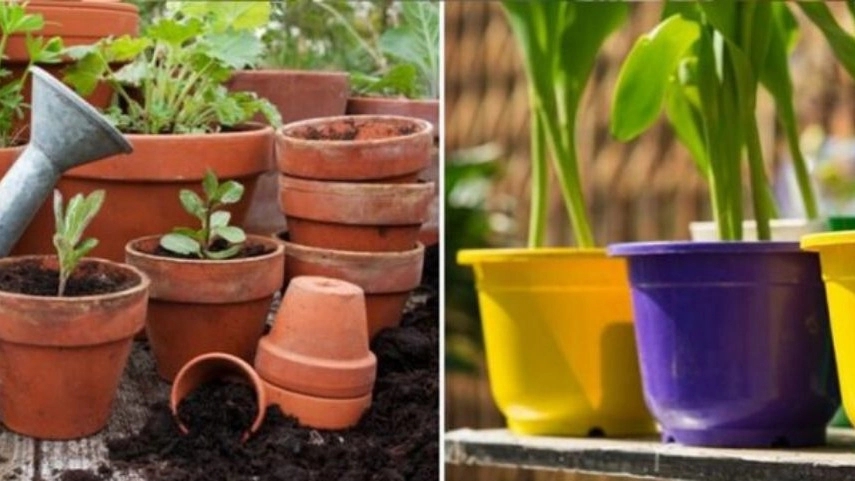


- those without glaze, i.e. pure clay
- clay vases Glazed
Clay pots better plastic?!
Plastic and clay pots have different characteristics that affect the soil conditions of plants. In general, plants that prefer moist soil are suitable for plastic pots, and plants that prefer drier soil are more suitable for clay pots.
1. Plastic pots
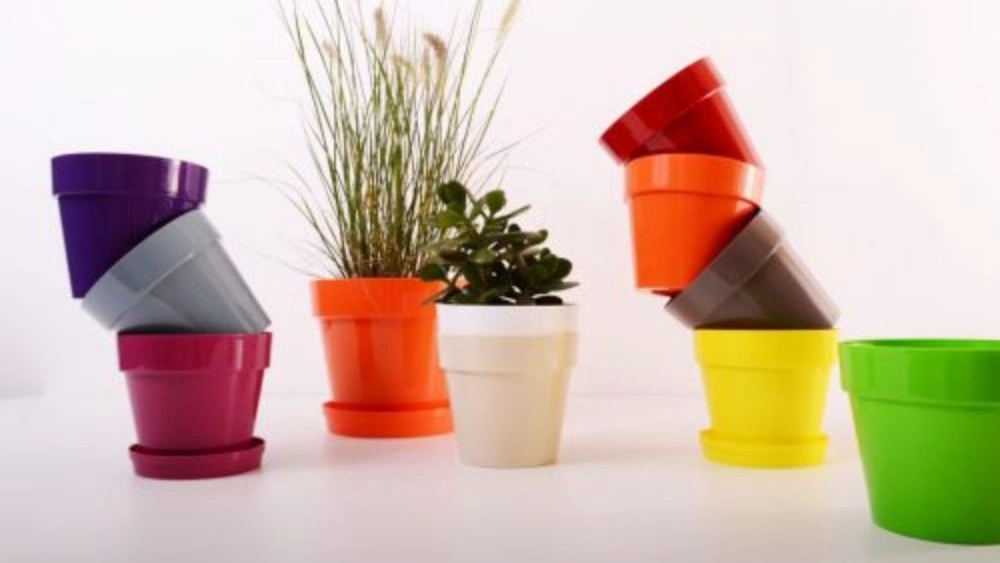
When you enter a gardening area or a greenhouse, you will encounter a large amount of plastic pots. Plastic or fiberglass pots are the most common containers for gardening. Due to the process of growing plants, they can be purchased cheaply and come in different colors, sizes, and shapes.
When buying plastic or fiberglass pots, look for containers that have high strength. And they are a little flexible. These pots withstand the passage of time and seasons better than thin and inflexible pots.
For what plants should you use plastic pots?
Plastic pots work best for plants that like moist soil and do not dry out the soil quickly. Plastic is not a porous material, so air movement does not occur on the sides of the container. After watering the plant, the soil in the pot remains moist for a longer time and more water remains in the root zone. Plastic pots also work well for gardeners who rarely water or have trouble remembering to water their plants.
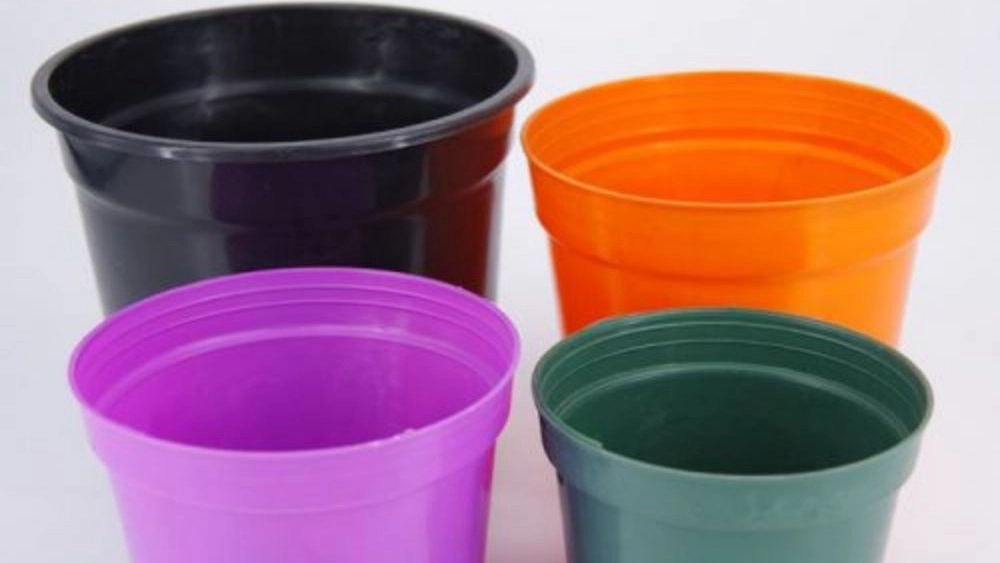
The benefits of plastic pots
1. Due to the presence of non-porous walls that minimize the movement of air in and out of the root zone, it keeps the soil in the pot moister and is useful for plants that need more water.
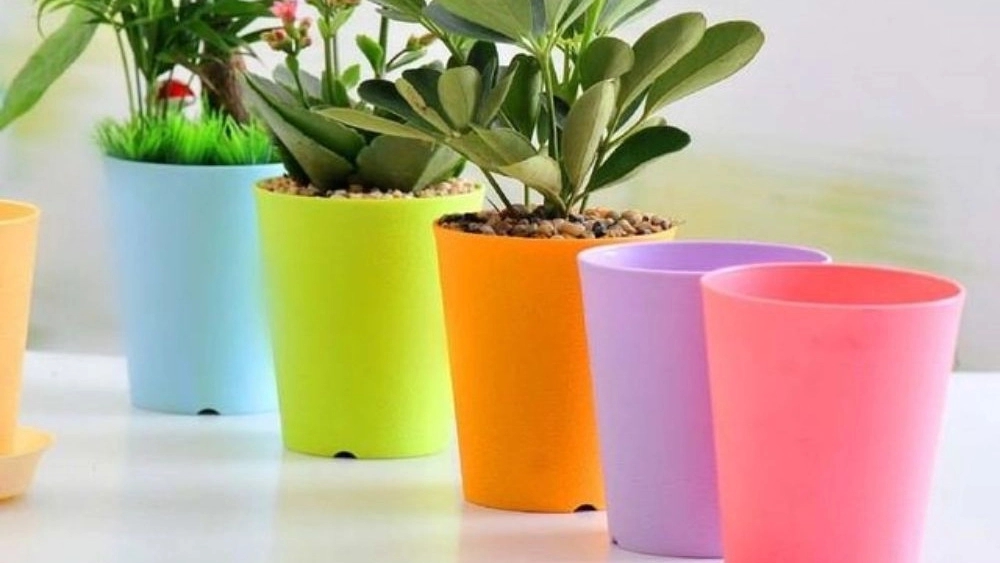
2. Unlimited color and size variety with your decoration style. You can choose from a rainbow of colors and circular, square or even rectangular shapes.
3. Plastic is strong and flexible, for this reason, due to its high durability, there is no need to replace them often.
4. They are very light weight. If you regularly move your plants, they are suitable for you.
5. Reasonable price. Injection molding is a manufacturing process that can be done cheaply and keeps the cost of plastic containers much lower than other materials.
6. It is easy to add additional drainage holes in them. If you buy a plastic pot that doesn't have drainage holes in the bottom, you can easily add a few holes if you have access to a drill.
2. Unlimited color and size variety with your decoration style. You can choose from a rainbow of colors and circular, square or even rectangular shapes.
3. Plastic is strong and flexible, for this reason, due to its high durability, there is no need to replace them often.
4. They are very light weight. If you regularly move your plants, they are suitable for you.
5. Reasonable price. Injection molding is a manufacturing process that can be done cheaply and keeps the cost of plastic containers much lower than other materials.
6. It is easy to add additional drainage holes in them. If you buy a plastic pot that doesn't have drainage holes in the bottom, you can easily add a few holes if you have access to a drill.
2.
Actually, there are two different types of clay pots:
1.2. Gum
For some people, clay pots are the main and traditional choice for potted plants. These pots have long been used to keep indoor and outdoor plants. The way to prepare these pots is that natural soil is baked at a low temperature in ovens. The minerals in the soil are partially melted, resulting in a hard yet porous material.
The iron compounds in the clay give earthenware pots an earthy color. Most pots are known to be red-orange in color, but they are available in various shades of red, orange, yellow, brown, white, to light gray depending on the clay content and its source.
When is it better to use pottery pots?
Because clay is more porous than plastic, air moves easily through the side walls of the container, which dries out the potting soil faster. Therefore, if you have a plant that prefers its roots to be a little dry, you should use these pots.
The benefits of pottery pots
1. Pottery is a durable and natural material. Some people prefer this to plastic containers.
2. They have a traditional beauty combined with many decorations. As they age, they acquire different types of patina and add to their attractiveness.
3. Their heaviness means they are stronger and more stable, so they don't tip over as easily as plastic containers. This can be a big plus if you have pets or children who are prone to knocking over plants.
2. They have a traditional beauty combined with many decorations. As they age, they acquire different types of patina and add to their attractiveness.
3. Their heaviness means they are stronger and more stable, so they don't tip over as easily as plastic containers. This can be a big plus if you have pets or children who are prone to knocking over plants.