
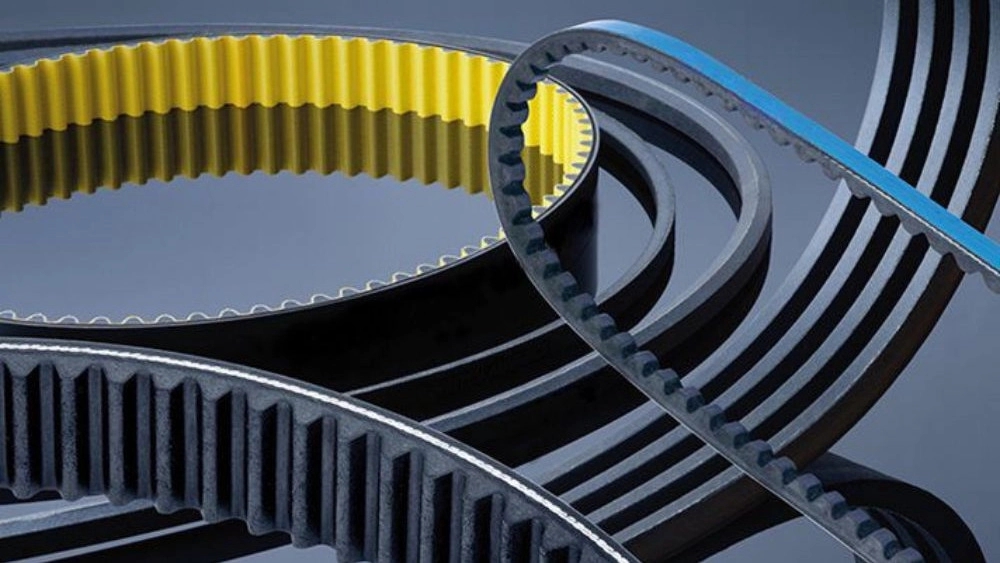


Industrial belts are one of the key components in the transmission of power and movement in various machines and equipment. These belts are produced in different types, each of which has its own characteristics and uses. Let's examine the different types of industrial belts:
V-Belts
These types of belts are designed in a V shape and are used to transmit power in various systems.
Features
- High load capacity: due to the special design, these belts can withstand heavy loads.
- Wear resistance: usually made of resistant materials. They are made against wear.
Applications
- In electric motors, pumps and fans.
Flat Belts
Flat belts are usually designed smooth and without grooves and are used to transmit power in various machines.
Features
- Flexibility: these belts can be easily Bend at different angles.
- Suitable for high speeds: usually they perform well at high speeds.
Applications
- In Conveyors and industrial machinery
Toothed belts Timing Belts
These belts have teeth that are connected to the teeth of the gears and are used for precise transmission of motion.
Features
- Precise transmission of motion: Due to the teeth, these belts They transmit movement accurately.
- Suitable for timing systems: they are used in systems that require precise coordination.
Applications
- In car engines, clocks and automatic equipment.
Chain Belts
These types of belts are made of metal chains and are used to transmit power in harsh conditions and heavy loads. These belts are very resistant.
- Heavy load capacity: suitable for heavy and industrial applications.
Applications
- In heavy machinery, construction equipment and systems transmission Power.
Conveyor Belts
Conveyor belts are used to transport materials and products in production lines and warehouses.
Features
- Long and flexible: usually designed in different lengths and with high flexibility. - suitable for different loads: they can carry light to heavy loads. Packaging.
Conclusion
There are different types of industrial belts, each designed for specific applications. Choosing the right type of belt depends on the specific needs of the system and working conditions.
Bearings are one of the key components in machinery and industrial equipment
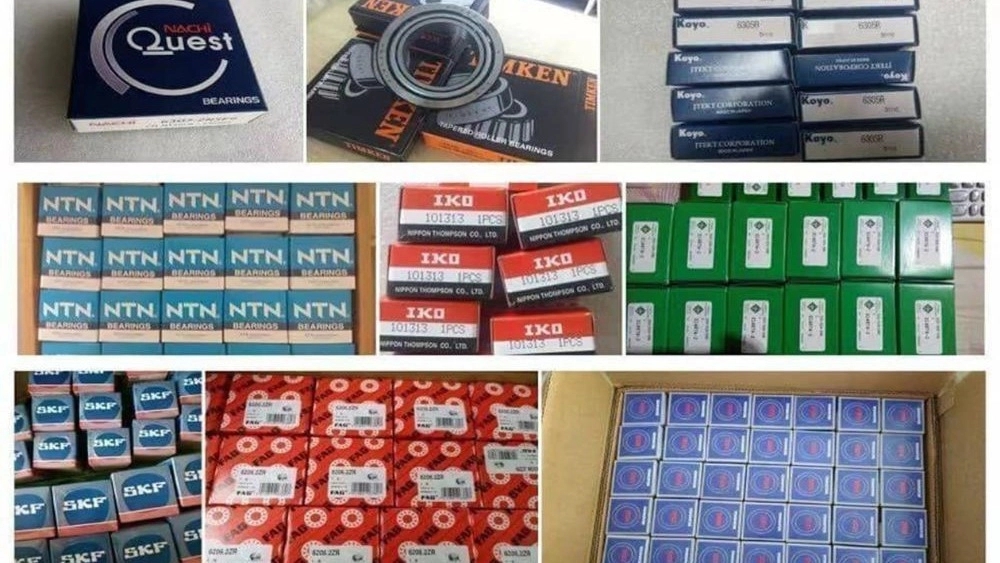
Bearing is one of the key components in machinery and industrial equipment designed to support and maintain rotating shafts and axes. This piece acts as a connection point between the shaft and the machine body and helps reduce friction and wear. Let's talk more about bearings:
Features and applications of bearings
1. Friction reduction: Bearings are mainly designed to reduce friction between the shaft and the machine body. This reduction in friction helps to increase the life of parts and improve performance. 2. Load support: Bearings support axial and radial loads and support shafts against various stresses. 3. Different types: Bearings come in many different types, including:
- Rolling bearings: including ball bearings and cylindrical bearings that use a ball or cylinder to reduce friction.
- Plain bearings: which include There are simple bearings and bearings with oil layers.
4. Materials: Bearings are usually made of different materials such as steel, bronze, plastic and ceramic, which are selected depending on the type of application and working conditions. Applications: b
- Automotive industry: in car engines, gearboxes and power transmission systems.
- Industrial machinery: in pumps, compressors, and other industrial equipment.
- Home appliances: in refrigerators, washing machines and other household devices.
Conclusion:
Bearings play a very important role in the optimal performance of machinery and equipment. Choosing the right bearing is very important depending on the type of application and working conditions.
Grease is one of the lubricants used to reduce friction and wear in various machines and equipment. This material is specifically designed for applications that require protection against water, dust and harsh conditions. Let's talk more about Grace
Features and uses of grease:
1. Composition: Grease is usually made from a combination of a base oil (usually mineral or synthetic oil) and a thickener (such as soap). This combination makes the grease adhere well to the surfaces and prevent it from leaking. 2. Reducing friction: Grease helps reduce friction between moving surfaces and prevents wear and damage to parts. 3. Corrosion protection: Grease usually contains anti-corrosion agents that protect parts from rust and corrosion. 4. Suitable for harsh conditions: greases perform well especially in conditions where there is water, dust and high temperatures.
5. Different types: Greases are produced in different types, including:
- Lithium greases: for general and industrial applications.
- Calcium greases: suitable for wet and watery conditions.
- Polyurethane greases: for high temperatures. and harsh conditions.
Applications:
- Automotive industry: in bearings, suspension systems and Gearboxes.
- Industrial machinery: in pumps, compressors and other industrial equipment.
- Household equipment: in refrigerators, washing machines and other household appliances.
Greases play a very important role in maintaining the optimal performance of machinery and equipment. . Choosing the right type of grease is very important depending on the type of application and working conditions.