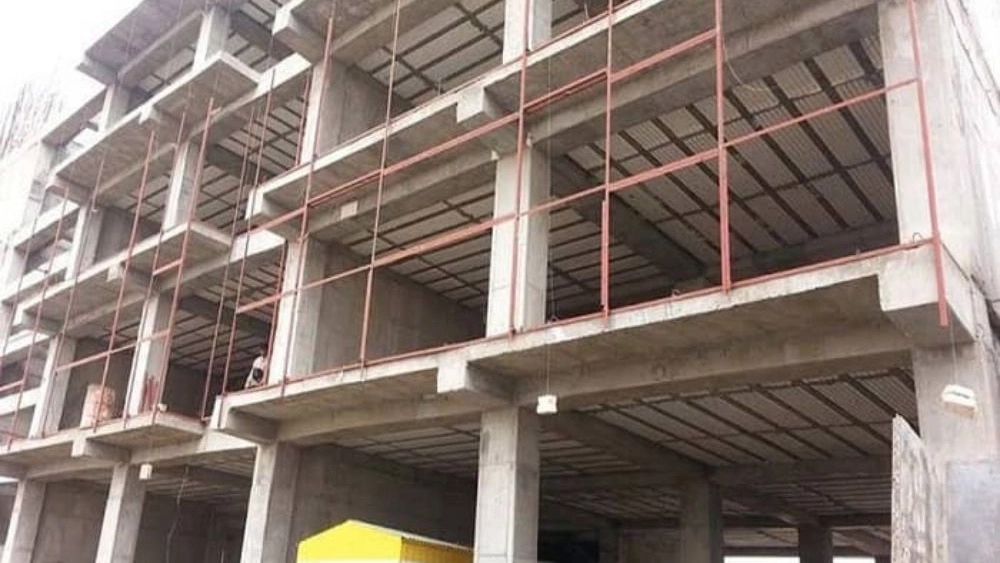


Implementation of bed rebar in buildings is one of the most widely used methods to improve their strength; For example, the rebar of the wall bed is used to increase the resistance during an earthquake. These products are made of steel and their thickness is usually equal to 4 mm; They are also designed as ribbed to increase their contact surface with concrete or mortar.
To increase the resistance of these steel sections against erosion, rust or corrosion, these sections are covered with a layer of zinc.
What is a bed rebar?
According to the definition of the eighth topic of the National Building Regulations, the bed rebar is a combination of a pair of deformed longitudinal wires and ladder transverse wires that are welded on them. To implement bed rebar, it should be placed on the mortar joints inside the wall or column so that these parts can be resistant to damage caused by earthquakes or other disasters.
Bed rebar is an economical choice for Making the walls and other parts of the building resistant to earthquakes or various pressures. This section has the task of overcoming all tensile forces applied to the material and showing good resistance against such pressures.
Types of bed rebar
Generally, bed rebar is produced and marketed in two types, "truss" and "ladder", depending on the placement of transverse wires. Although both types are used in the construction of various structures and in different parts of the building; Nevertheless, the resistance of the truss type is much higher than that of the ladder type. For this reason, truss rebar has been more welcomed by customers and the principle is to use this type of cross-section. Another criterion by which these reinforcements are classified is the method of implementing the bed rebar; Based on this, these sections are divided into two categories, vertical and horizontal. While arranging the block, the vertical samples are placed and fixed vertically inside the empty spaces.
But the horizontal types of this product are used inside the wall parallel to the ground during the wall arrangement. For this purpose, the width of the rebar of the wall bed should be 2 to 3 cm less than the width of the joists, column or wall, and its diameter should be around 4 to 6 mm. In this way, it will be completely hidden inside the mortar and will strengthen the building.
Ladder bed rebar
In this type, longitudinal and transverse wires are placed at an angle of 90 degrees to each other. The rebar of the ladder bed is made of ribbed galvanized steel. Note that the galvanized and ribbed steel section is an important necessity in its production and supply; Because it is only in this way that it can have sufficient strength and on the other hand, it will not rust. This reinforcement is produced in a length of 300 cm and one of the widths of 5.5, 11 and 15 cm (depending on the wall thickness). In the type of ladder rebar, the middle wire is connected vertically to the side wire and cut on it.
Rebar truss rebar
Armatures in which transverse wires are placed in a figure of eight are called trusses. Truss bed reinforcement is basically not much different from the ladder type. This section must be made of ribbed galvanized steel (so that it sticks well in the concrete). The length of the truss bed rebar is 300 cm and its width will be 5.5, 11 or 15 depending on the wall width. In this type of bed reinforcement, two ribbed steel wires are placed parallel to each other and a simple wire is placed in the middle in the form of 7-8 or zigzag.
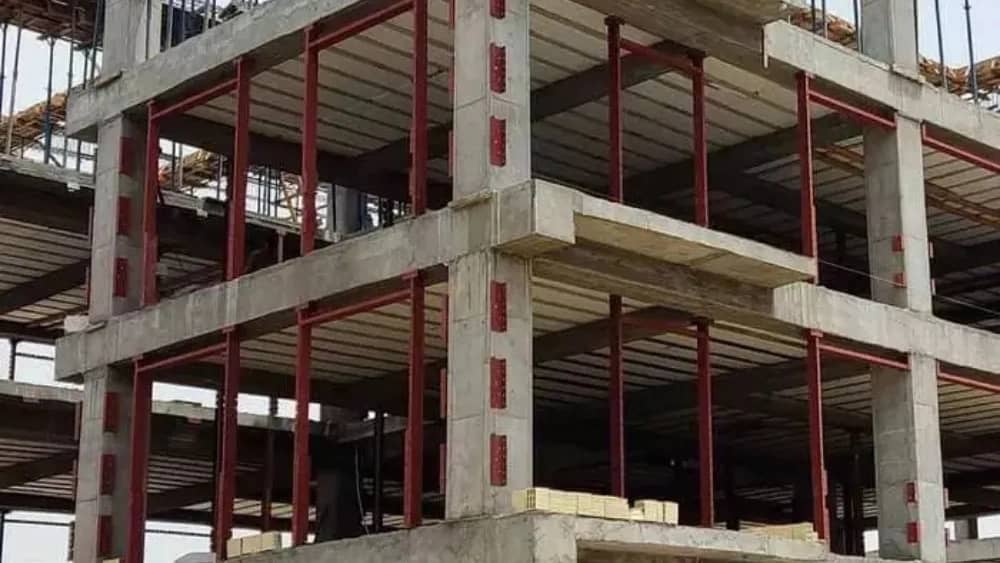
Benefits and Applications of Bar Rebar in Different Structures and Industries
Using wall bed rebar in various structures and industries improves the integrity of this part of the building and prevents it from collapsing during an earthquake. Also, by using this section, the width and distance of cracks caused by contraction or heat can be controlled and reduced to a great extent; In this way, the tensile strength of walls and structures and their malleability are improved. Some of the most important advantages of these iron sections are:
Using this type of reinforcement allows you to do bricklaying in bulk; It means to arrange consecutive rows of straight bricks together and use long openings on them. Also, in cases where the door or window is supposed to be installed on the wall or its length is long; The implementation of reinforced bed rebar can help improve efficiency and prevent pressure from entering the building. The important point here is that the use of this steel product can not only reduce construction costs; It is also effective in reducing costs caused by financial and life losses up to 70%.