
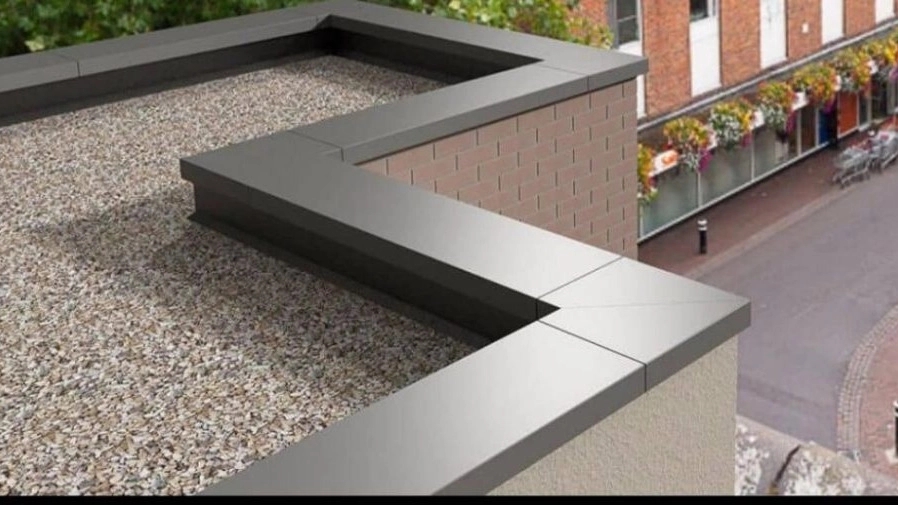

What is a building facade flashing?
Flushing the facade of the building is one of the methods that can be installed to prevent water from infiltrating the wall, in areas such as the edge of the courtyard wall, roof, balcony, or water infiltration to the back of the brick facade. And washing the mortar prevented it. There are several ways to prevent water from reaching the facade in the implementation of various types of building facades, such as using cap stones, nano Z90 sealing glue, and flushing. In general, flushing and capstone are better methods. Of course, flushing has a higher cost than capping stone, but its quality and beauty usually justify the cost difference.
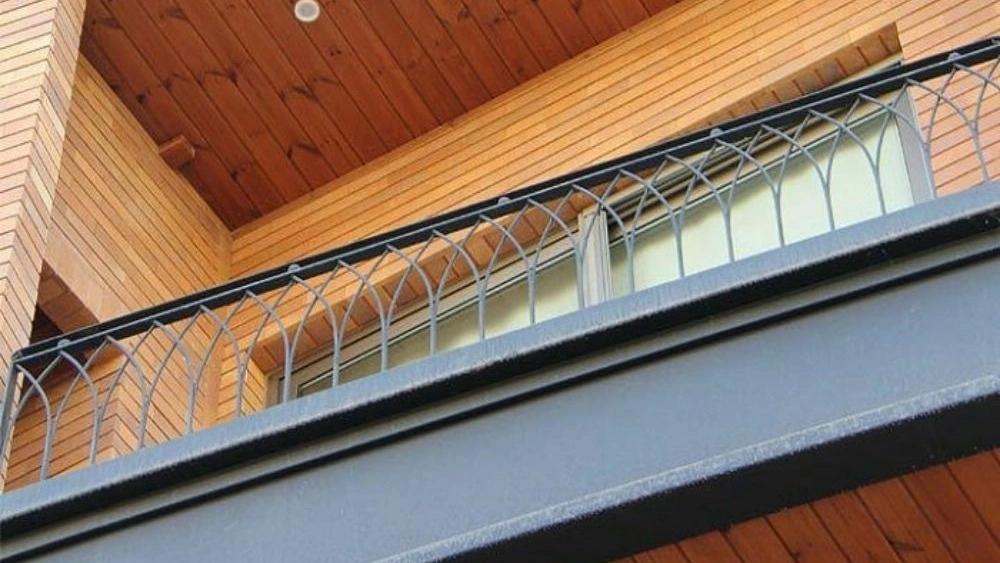
Flashing facade is a type of steel sheet that protects the exterior walls of the building from water penetration caused by rain or washing. This element can be used for different parts of the building, such as roof flashing, wall edge and balcony, which are important parts of the building that are exposed to water.
Flashing of the facade
Dimensions of flushings vary according to the place where it is to be implemented. They are made of galvanized iron sheet, aluzinc or aluminum, each of which has different thicknesses. In general, the thickness of flushing can be from 0.4 mm to above.
In terms of appearance
Flushings are divided into 4 categories in terms of appearance.
1. Corner flashing or L -shaped
L-shaped corner flushing, whose bent edges can increase the strength of these parts. The application of this type is for parts such as wall-to-ceiling connection points, roof-to-ceiling joints, and ceiling-to-wall connection points. In other words, this flushing helps to improve insulation. For a better effect of this element, we can paint them according to the desired color. The dimensions of this type are determined according to the place where it is going to be used.
2. Flashing the Yu Model (U -shaped)
This type is made of connecting two plates with a 90 degree angle, both sides of the edges of which are bent inward. U-shaped flushing is more widely used than other types and is used in areas such as sealing sandwich panels and covering their edges. The bent edges of this type make sure that there are no waves in the facade of the building and there are no defects in the appearance of the facade. Flushing model U has high strength and resistance compared to other types. This type is also used in different dimensions and colors like corner flushing.
3. Flashing Model Three Step or Z -shaped
Flushing of the three-step model has curved edges, which protects the building against water and atmospheric conditions such as sunlight and prevents the panels from rotting or failing. The application of this type is mostly in the front part of the roof sandwich panel in the catchment area and the bottom part of the wall sandwich panel because it prevents water penetration and prevents sunlight from reaching these parts. In choosing the type of three steps, there are variations in dimensions and colors.
4. Flashing the crown model or pound
In terms of the place of use
Types of flushing in terms of application and place of use are:
1) Gable roof
edge of the wall
Balcony edge, door and window
The front of the building
Roof
Flashing sheets
Generally, these sheets can be in the following three types:
Aluminum sheets
Oily black sheet
Galvanized sheets
Each of these sheets have different prices depending on their quality, but generally black oil sheets are of lower quality compared to aluminum and galvanized sheets. Also, aluminum sheets have the highest quality and price.
Importance of execution
1) prevent water penetration
As we said in the definition of this concept, the main importance of flushing is in preventing water from penetrating the wall. For example, in a brick facade, if water penetrates from the edge of the windows or the roof, it will wash the mortar under the brick facade and the brick will loosen.
2) Beautification
Flushing also has a significant effect on the beauty of the facade, and many designers use these elements for the beauty of the facade.
3) Airtight, sealed and dustproof
In the roof of attic buildings or sheds, the presence of flushing also prevents the penetration of dust and wind, so-called airtightness of the roof.
Executive Tips
The distance of the outer edge of the flushing from the wall should be such that when it rains, the rainwater flows over it and does not penetrate the facade of the building.
The part where the flashing is to be installed must be smooth and solid.
If the installation location of this element is windy, a can or corner should be used for the foundation.
The part of the yard wall, roof, balcony and window where the flushing is installed should be slightly inclined so that the water from snow and rain flows to the outside of the building.

Flashing benefits
Prevention of water and dust penetration No wind penetration under the gable roof Covering the joints The beauty of the facade of the building Preventing damage to the facade at the edge of the wall, terrace, balcony and windows Sound and moisture insulation for building seams, especially sandwich panels