
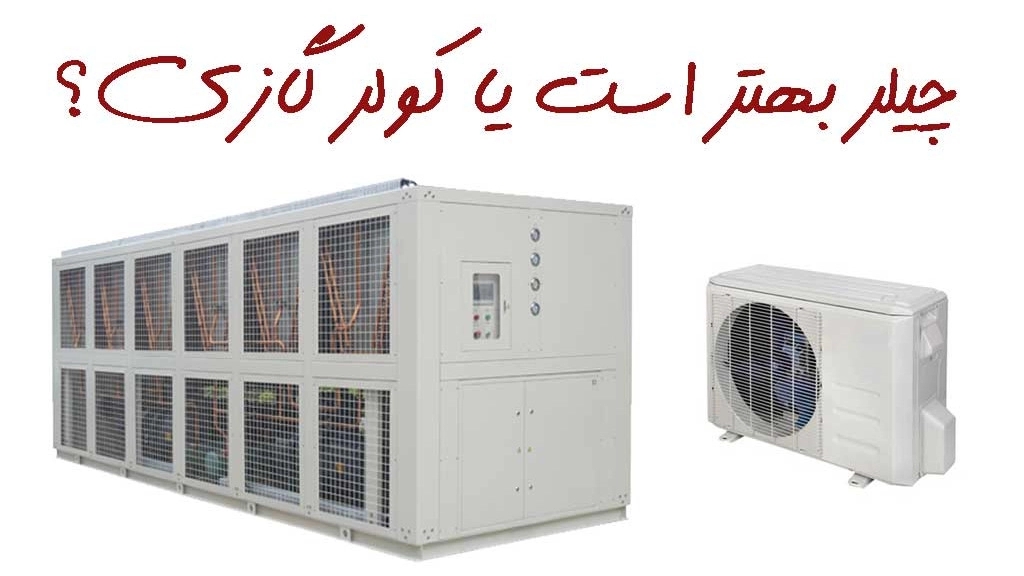




Choosing the right system for air conditioning projects is influenced by various factors. Factors whose knowledge can lead the employer to the correct and optimal choice. Especially in the current situation where significant diversity is seen in air conditioning equipment. Chiller or mini chiller and air conditioner (split) are among the common equipment that we have tried to compare in this article to identify the right conditions for choosing each one. But before that, we need to review some definitions in simple language.
Introducing the chiller and fan coil system
A chiller is a device that produces cool water flow based on a thermodynamic cycle (vapor condensation or absorption) and with the help of an intermediate fluid called refrigerant. The water flow with a temperature of 7 degrees Celsius enters the terminal units called fan coils that are placed inside the room or any other desired space. The fan coil is a unit consisting of a blower fan and a coil in which the flow of cool water circulates. The fan sucks the air in the room and passes it over the cold pipes of the coil to blow it into the room after cooling.
Introducing Split System (Gas Cooler)
Split air conditioner consists of two separate units:
External unit (condensing unit) including compressor and condenser
Internal unit (ventilator) including expansion valve, Air evaporator and blower
The outdoor unit, which is installed in the open environment, prepares the flow of refrigerant for cooling and sends it to the indoor unit. The refrigerant enters the evaporator coil at a low temperature and thus, similar to the working mechanism of the fan coil, the air in the room is cooled.
The benefits of chiller
High efficiency: Chillers use large and powerful compressors that allow them to effectively cool the heat in the environment. In other words, chillers can cool the environment at very high temperatures.
Long life: Chillers use water to cool the air. This means that the cooling system fails much less often and has a much longer lifespan.
Sound: Chillers are very quiet compared to gas coolers.
br>
When should we use chiller?
The use of chillers to cool air and water in industrial and commercial environments is suggested due to its many advantages compared to other methods. Here we will mention some of the cases that require the use of a chiller:
High energy consumption: If you need to cool air or water in an environment with high consumption If you have high energy, using a chiller is a good solution. According to its type and capacity, the chiller consumes less energy than other systems.
Maintaining air quality: As one of the best ways to cool the air, the chiller maintains the air quality and This is because it does not directly cool the indoor air, it prevents the humidity of the building and the reduction of humidity means the best air quality. Cooling units for each The part creates less noise than other systems.
Usage in hot and dry areas: In areas where the temperature is high and humidity is low, the use of a chiller causes cooler air to be produced and Make the working environment more comfortable. As mentioned, the use of chillers is usually widely used in industrial and commercial environments due to the higher initial cost. If you are a company or factory and need a large cooling, chiller is the best option for you. Also, if you use a central cooling system for several buildings, chillers are suitable. In addition, chillers are useful in environments that require long cooling due to their lower energy consumption than air conditioners. For example, in hospitals, universities, hotels, cinemas and theaters that need cooling all day long, it is suitable to use a chiller. So, whenever you need a big cooling and want to reduce your energy costs. It is appropriate to use a chiller.
When should we use a gas cooler?
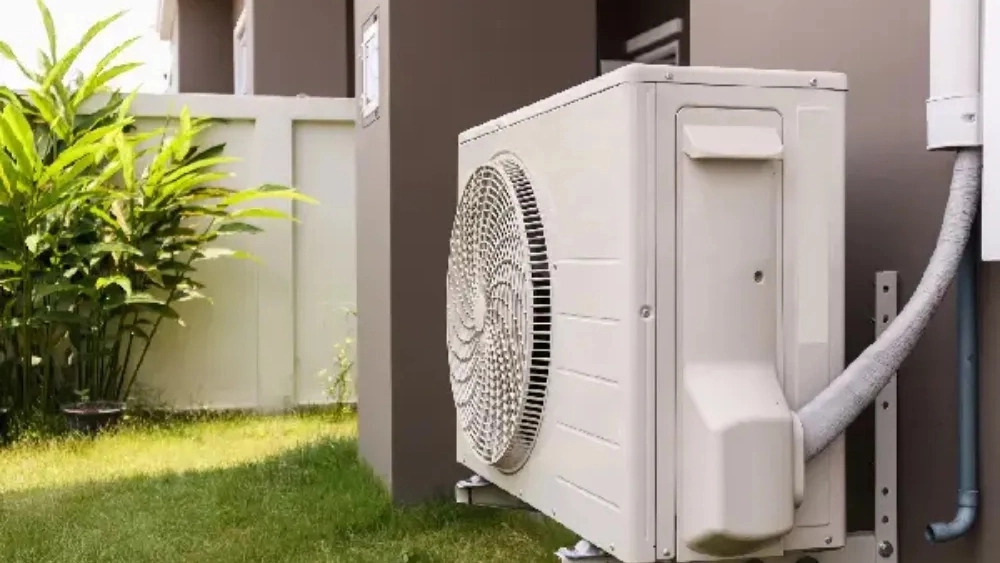
Air conditioner is one of the suitable options for cooling small to medium spaces. In environments where the air temperature rises temporarily and there is a need to cool the space, an air conditioner can be a suitable option. Also, in areas with high humidity, an air conditioner works better than a chiller, and because it has the ability to adjust the temperature, Energy consumption is also saved. Since air conditioners are usually used for small spaces, this option may not be useful in larger spaces and requires several devices to cool spaces. be bigger. Also, this device may consume more energy than a chiller, especially when it has to be continuously active during the day. Therefore, air conditioners are suitable for cooling small spaces and Areas with a high humidity ratio can be a suitable option, but for larger spaces or when you need long-term cooling, it is better to use a chiller.
Tips to consider when choosing a chiller or a gas cooler!
The size of the building or environment: If you have a small environment, using an air conditioner can be the best option. But if you have a large building, it is better to use a chiller.
The type of space that needs cooling: If you need to cool a closed space without ventilation, It is better to use a chiller. But if you have a space with good ventilation and high probability of mechanical ventilation, air conditioner will be the best option.
Air conditioning needed all year round: If you need air conditioning You have it all year round, it is better to use a chiller. But if you need air conditioning only in the hot season, air conditioners can be the best option.
Installation and maintenance costs: Chillers have more installation and maintenance costs. If you have a limited budget to buy and install a cooler, a gas cooler can be a better option. For this reason, they need more water; As a result, it is not possible to save much water.