
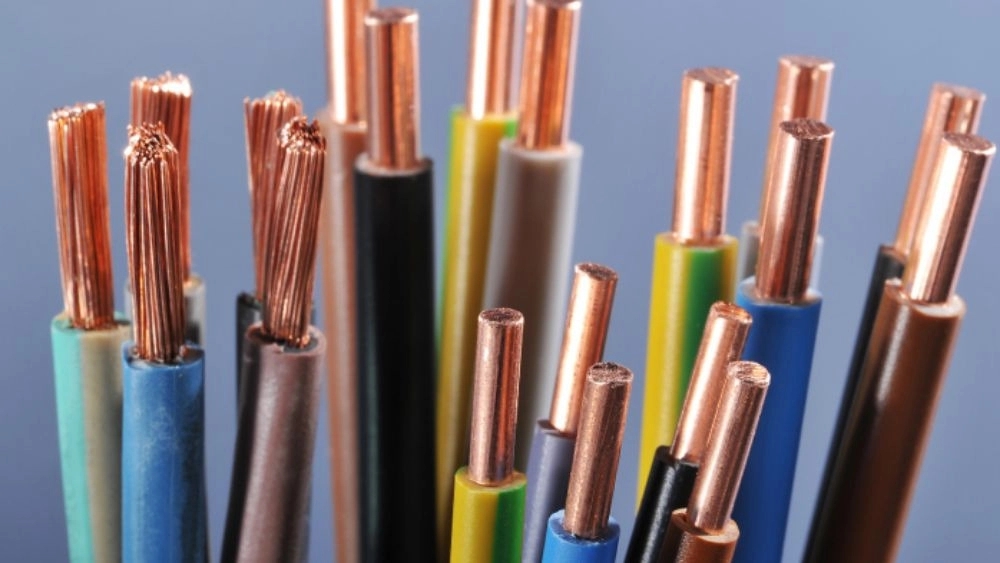


There are many types of this product and they are available in various forms. For this reason, the price of cable is different in different types. For example, the type used in telecommunications are different from the type used in the building network. Conductive material is one of its main components and usually it is made of copper. Conductors can have different shapes. Electric current transmission is done through conductors and they can usually be made of copper and aluminum. If you want the desired wire to pass more current, use a type whose conductor is made of copper. Conductors can be circular or triangular in shape. In addition to conductors, semiconductors are also used to make the electric field uniform. Note that semiconductors are not available in all these types of products and are only available in low pressure types. The insulation on the conductors is usually made of plastic. Insulators can also have different types and according to its application, they use the appropriate type of insulation. The sheath is also responsible for protecting the inner layers from mechanical damage. Of course, in addition to the conductor wire and sheath, electrical and mechanical protection is sometimes used for the cable as its other components.
Cable and wire difference
Sometimes cable and wire are confused, but actually they are two different devices. The cable actually consists of several strands of wire, and the wire consists of one or more strands of conductive electrical materials such as copper or aluminum, which has a wider range of applications. Wires are visible but cables are generally insulated.
Types of cable
There are different types of cables based on various criteria such as voltage level, conductor shape, function and number of strands, which we will examine each of them below:
Cable Types based on the amount of voltage
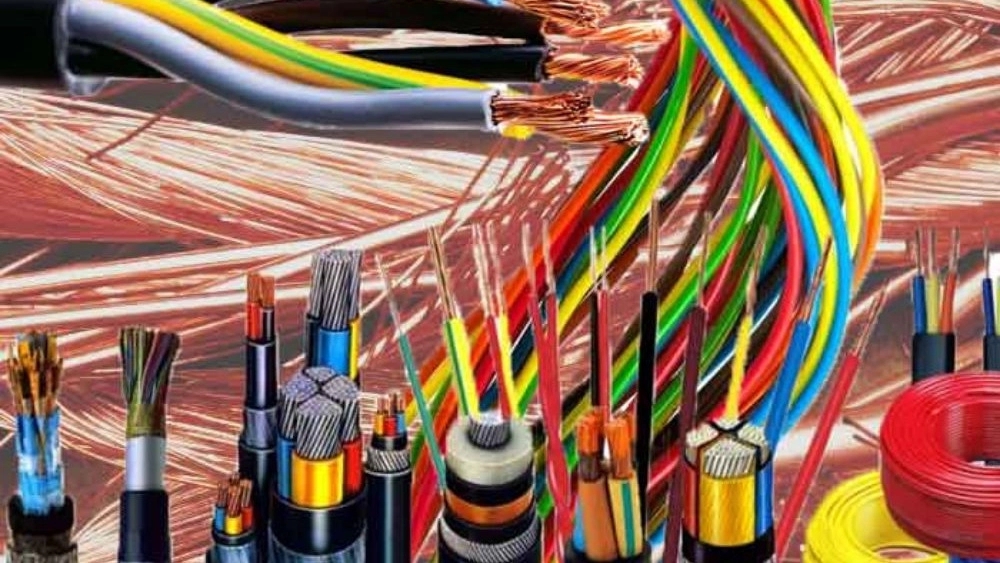
Cable Types based on the form of conductive
One of the criteria for dividing the cable is the shape of the conductor, which determines the flexibility of the cable. At this level, we have three types of cables:
▪️Mafshan, which has the least flexibility compared to the other two types, and the wire inside the cable is in the shape of a circular or triangular wire. A simple twisted wire is formed and its flexibility is more than that of a wire cable. Afshan, which has high flexibility and bending rate, and further explained about it. It will be.
Cable
In these cables, there is more than one filament. The conductor used in this type is made of copper metal and the insulation used in them is usually made of PVC. These cables do not break easily, they can be bent and made into desired shapes. These cables are very soft, this is the reason to avoid using them for long distances. Afshan cables are produced in two ways, round and flat, and each has its own special use. Also, it should be mentioned that the price of the spraying cable usually depends on the type and also its size.
Wire
It is a single-stranded wire whose conductor is copper and the insulation used in it is polymer-type, just like Fashan cable. Due to their high flexibility, these single-stranded wires are used in dry environments such as pipes and under and on plaster. We do not use them directly in cabling. Wire sprinklers are usually available in the market in two nominal voltages.
Electrical devices are used to protect lighting systems.
Types of cables based on the type of operation
Considering that the function of the cable is to transmit, it is important to know what this tool is going to be used to transmit. Cables are usually used to transmit electricity (power), signals and light, which in turn is a different way of categorizing cables. Low, medium, strong and super strong pressure cables are used for electricity transmission, but telecommunication, network and coaxial cables are used for signal transmission.