

Types of cement facade
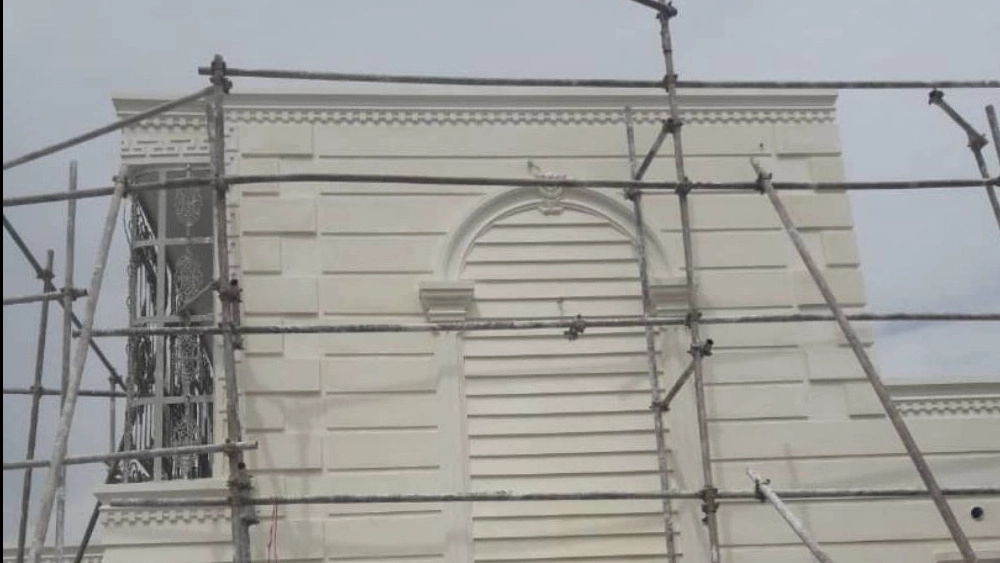
The classic facade of the building, or the Roman facade, is one of the most popular and popular styles in building design and construction. Cement and stone are Roman facade materials that are used depending on the choice of the architect.
White cement view
As its name suggests, this facade is executed using white cement. This facade carries the appearance and physical characteristics of white cement and gives the facade of the building a completely white appearance. The facade made with white cement gives the building a luxurious and beautiful appearance.
Washed cement facade
This facade is made of a combination of colored aggregates, stone powder, white or black cement, and mineral colors and coated. The high strength and beautiful appearance of this view has made it very widely used. Rectangular, square and rhombus molds are often used in the construction of this facade, and apart from the facade, it is also used in the staircase and garden wall. It is also possible to color this view.
Trowel
In the implementation of this view, two layers of lining and trowel board are needed. The lining layer is 2 cm thick using sand and cement mortar on the cement block or brick wall (compressed brick without binding) and the second layer is 0.5 cm thick, a mortar consisting of sand, stone powder, stone soil and cement is used. which is drawn on the lining by means of a trowel board. In order not to crack and increase the beauty of the appearance, the facade is divided into separate parts through a line or stone facade.
Hailstick
This cement facade of the building usually consists of 2 cm thick layers of cement mortar, stone powder and stone soil, which is sprayed on the facade through a grouting machine. The name of hail is derived from the use of coarse-grained materials, but if fine-grained is used in its mixture, the name of this facade will be Mahoti. Hailstone facade may not be as luxurious as white cement facade, washed or trowel board, but a simple and modern appearance can be created by combining other materials.
A look
This cement facade consists of two layers of coating. The first layer, which is a 2-cm-thick lining, is executed with sand mortar and white cement or colored cement, and a 1.5-cm-thick layer of mosaic mortar is stretched over it. The second layer, which is applied with a trowel, has bands that are filled with glass, and after the coating dries, its surface is smoothed with special axes.
Laundry
This facade is composed of a lining layer with sand and white or colored cement mortar and a mosaic mortar layer, but it has a different finishing method. To implement this view, before drying, wet the surface of the layer with water and brush the work surface until the stone materials are visible. If, after drying, the final layer is sanded with a sanding stone and rubbed until it becomes completely polished and like a mosaic, it is called a mosaic cement surface. Another method is polishing with water and acid. In this case, before the lining hardens, it is rubbed with water and acid so that the stones appear in raised and coarse forms and the cement appears in fine and sunken forms, which is called cement lining. They say.
Scratch facade
Another type of building cement facade is called scratched facade. After applying the lining layer with sand and cement mortar and the trowel layer with sand mortar, stone powder, stone soil and cement, a small amount of stone materials with a thickness of 2 mm It is applied to the work surface, then a special trowel is used to create scratches on the surface.
Roman cemented view
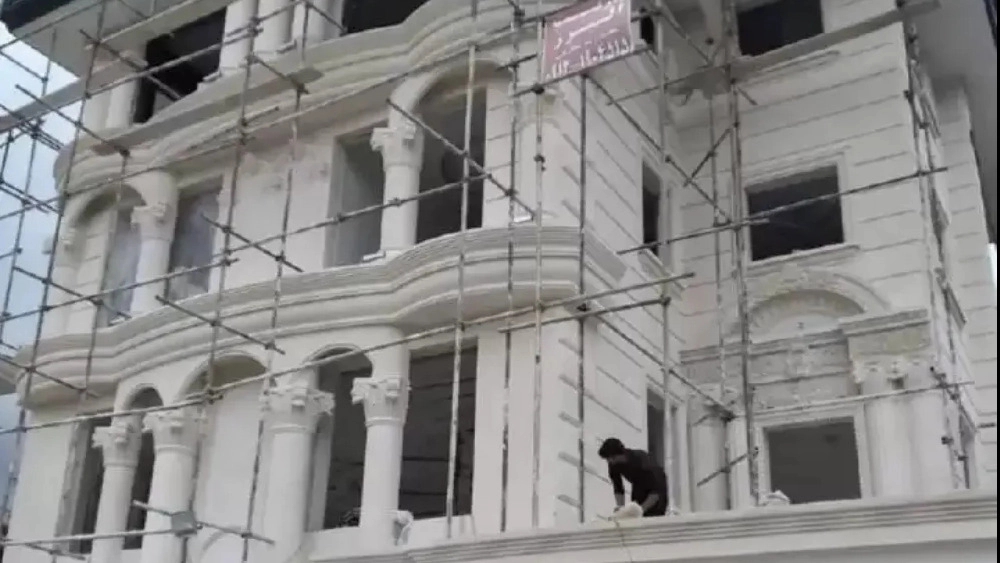
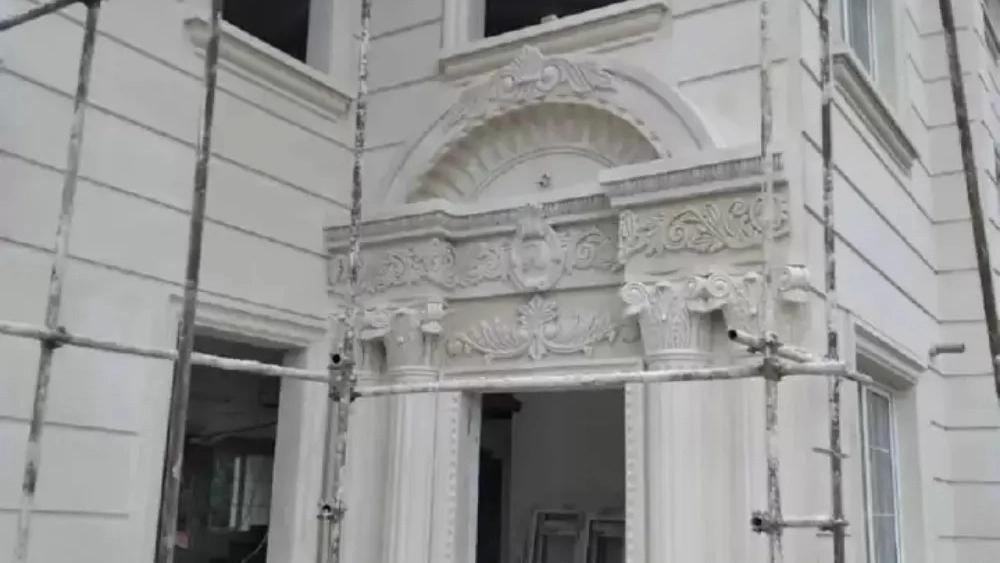
The classic facade, also called the Roman facade, is inspired by the ancient Roman facade. This facade evokes the grandeur, splendor and beauty of the building, which is usually made of travertine stone. But to reduce construction costs, cement can be used instead of stone. However, the Roman cement facade is often seen in villa houses.
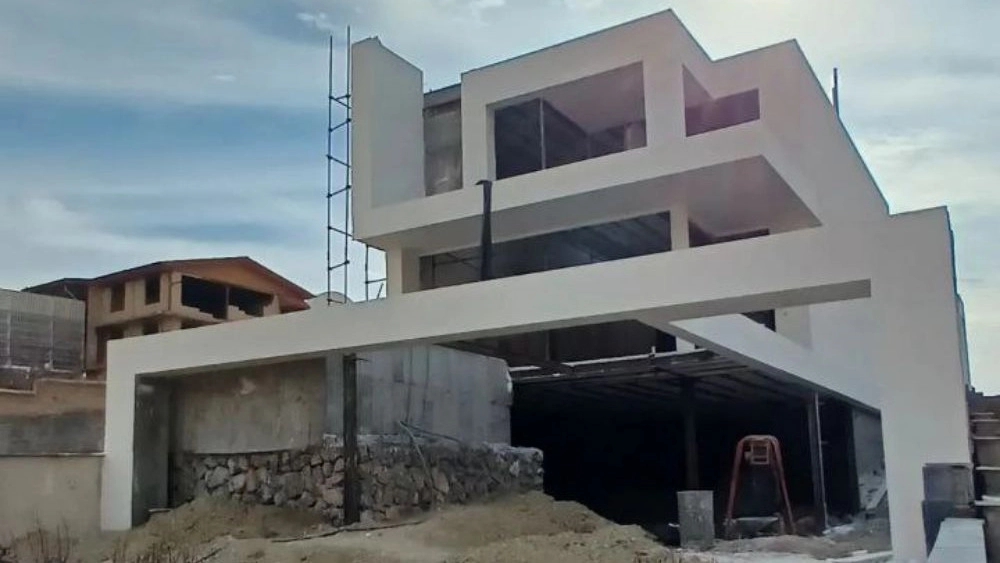
Modern cement facade
Cement material can be used in fluid and curved facades that eventually lead to modern style. Modern facades that are implemented with white cement material have a much lower implementation cost than stone.