How to rock rollers
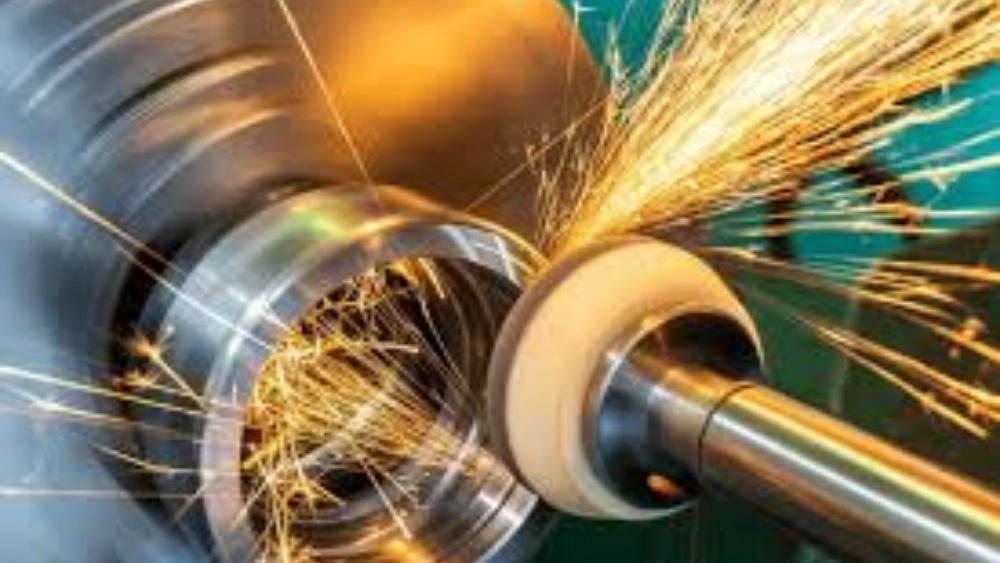
Grinding of rolling rollers is done in order to repair and maintain the roller. This work has an effect on the optimal performance and lifetime of the roller and is done to fix its defects and damages. Grinding rolling rollers helps to restore the shape of the roller by removing a little of the surface.
Grinding
In hot sheet rolling production line as well as cold sheet rolling production line, rollers play an important role in changing the shape of steel sheets. Therefore, it is necessary to check and maintain the rollers and, if necessary, fix their damages. For example, since it is necessary for the cold-rolled sheet to be of good quality, any defect on the surface of the rollers is attributed to the cold-rolled sheets. Grinding is one of the ways to fix surface defects of rolling rollers. There are different types of grinding, each of which is used for a specific purpose. Grinding machines include a cylinder with a bird, a cylinder without a bird, inner surface (inner surface) and bottom surface (flat surface).
Grinding process components
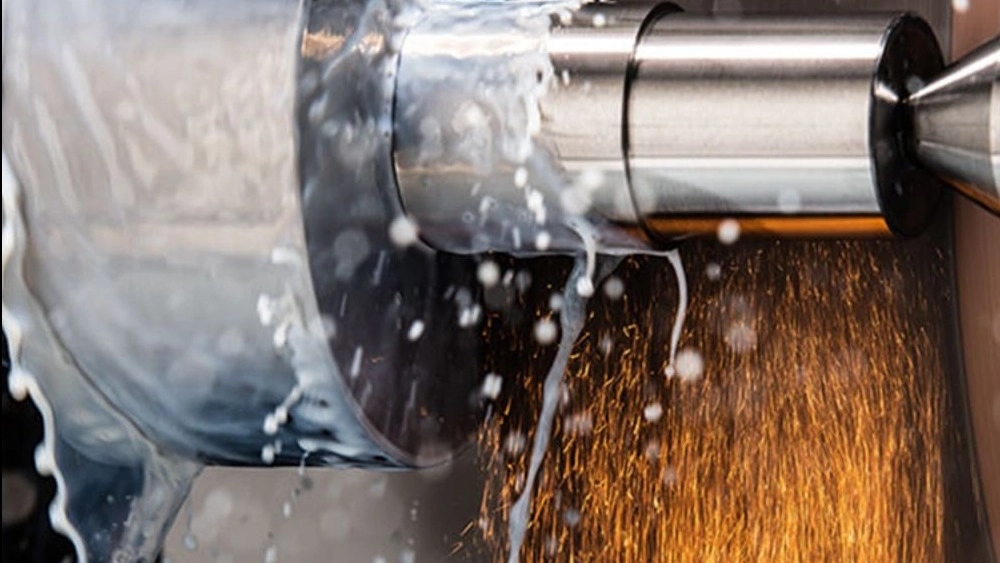
The most important part of the grinding process is the sanding stone. Emery stone causes shavings from surfaces. Sanding stones are made of abrasive materials that are held together by a very strong adhesive. The resistance and hardness of these abrasive materials is very high. Abrasive materials with aluminum oxide or cubic nitroboron (CBN) can be used for grinding rolling rollers. Abrasive materials can also be made of silicon carbide, but it is not very suitable for grinding steel parts. The size of the abrasive grains is selected according to the smoothness of the desired surface. The grinding machine consists of a driving motor and a bed. The motor rotates the stone at the desired speed. The substrate also holds the part in the fixture. Another component of the grinding process is cooling. A cooling system is used to prevent the temperature of the part from getting too high during operation. The grinding result mainly depends on the tension between the wheel and the roll at the point of contact. The stress in the grinding area depends on several factors. Things like wheel speed, roll speed, cross feed rate or traverse, sequential input rate, cooling type and flow.
Rolling rollers
At the beginning of the grinding operation of rolling rollers, the roller is transferred to the grinding machine by an overhead crane and placed on fixed bases. The purpose of the roller grinding operation is to remove the surface defects and increase the quality and create the desired crown on the roller surface. Crowns are the curves in the rollers of hot and cold rolling lines that should be checked. The stoning process has 3 stages:
Roughing: To remove the core and create the crown.
Half payment: setting the crown created in the rough stage in a favorable way.
Finishing: polishing the surface and preparing it for the tandem line.
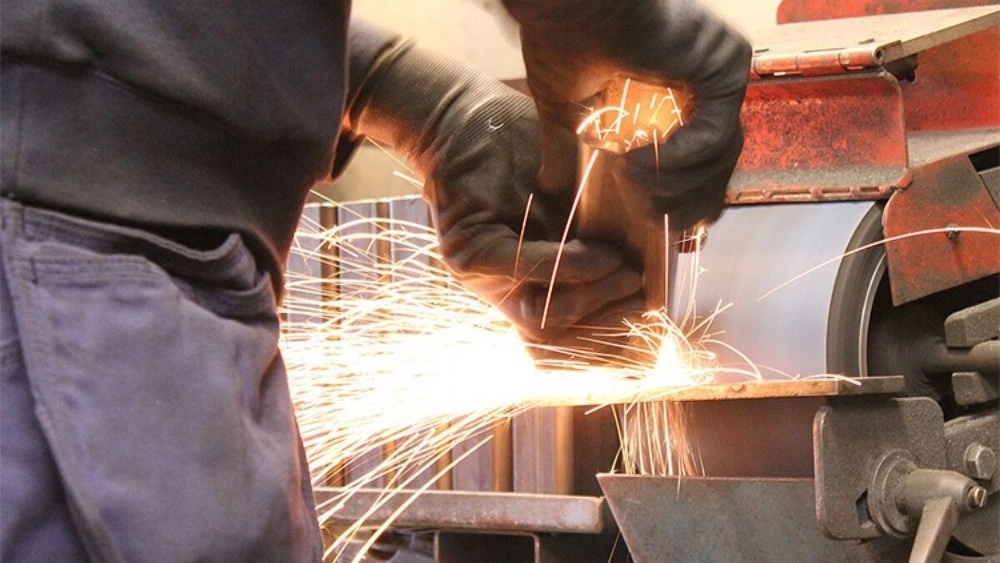
We discuss how to carry out grinding operations of rolling rollers, including cylindrical methods with and without birds. In the stone grinding of rolling rollers, the outer cylindrical surface and the shoulders are stoned by the bird-shaped cylindrical grinding method. In this type of grinding, the piece is placed between the birds or is attached to the system plate in the head. The motors move the axis of the part and the stone at different speeds. Due to the fact that in the sheet rolling production line, the rollers are large and heavy, the table and work piece are fixed and the stone wheel moves back and forth. The roller grinding machine can also grind rollers up to 1.8 meters in diameter. For this reason, the cylindrical grinding machine with birdcage is also called axial, where the piece is placed on a vertical or horizontal axis. In the grinding of rolling rollers by the grinding method without a bird, the part is kept by the supporting blade. In this type of rolling roller grinding, there is no need to place the roller between two birds or other fixtures. In this type, there is no axis to rotate the part. The roller is placed between the stone wheel and the adjusting wheel to press it to the stone wheel. The stone wheel and the adjusting wheel rotate clockwise. After that, the roller rotates counter-clockwise. At this time, the supporting blade under the roller is supporting it. Due to the fact that in this method, the force does not enter the two ends of the piece, it is suitable for grinding long pieces.
Tips to be observed in grinding
In the process of stoning rolling rollers, it is necessary to observe some points, some of which are given below:
Place the rollers carefully on the machine.
To prevent warping during grinding, it is necessary to hold the parts firmly. The parts must be properly held by the magnetic table, system and fixture.
Discontinuous surfaces should be avoided to avoid vibration, especially when dimensions must be precise.
Before the grinding process, the throat of the roller should be smoothed by sandpaper.
In all stages of grinding, the diameter of the roller should be measured with great accuracy and several times, and the deviation of the crown should be corrected in the roughing stage.
The concentration of the coolant must always be within a standard range.
The type of stone should be chosen so that it is neither too soft nor too hard.