
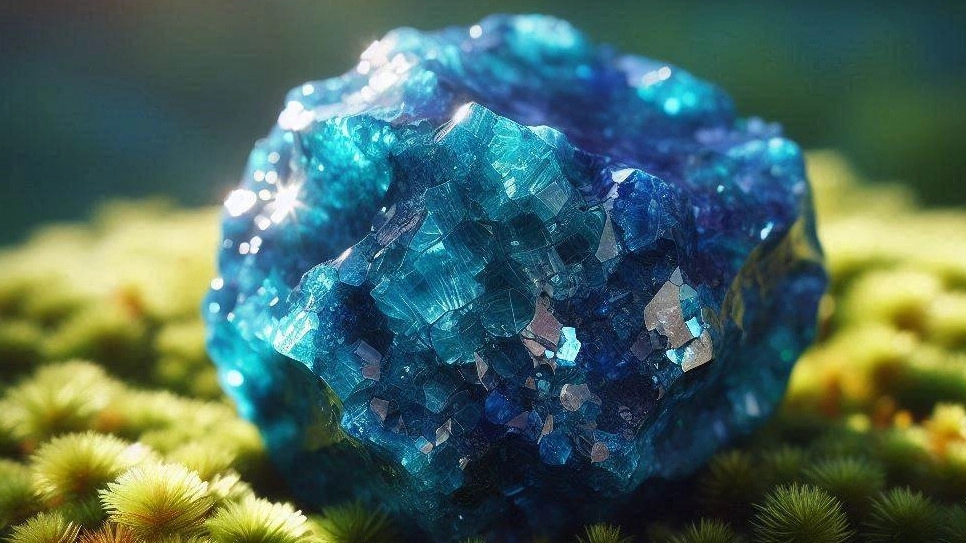
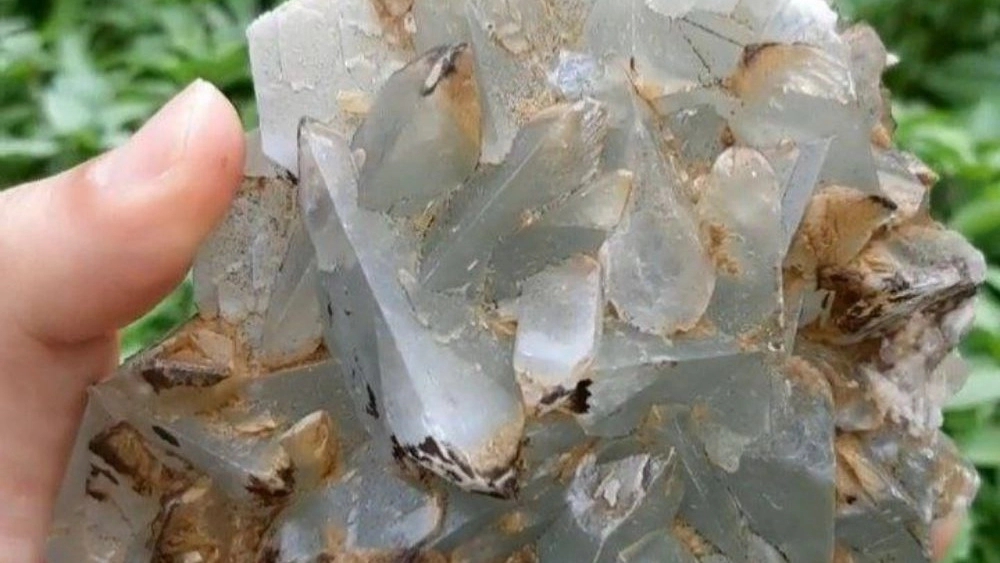


Azorite stone
Azurite is a copper carbonate hydroxide mineral. Azurite is one of the most beautiful stones in nature, which has a high variety of colors, mostly because of the blue and green color spectrum of azurite, which has attracted many people to use this stone. Known as "azure", it is like the indigo blue sky often seen in high deserts and winter landscapes. and takes this color from the element. For thousands of years, azurite has been used by people in many parts of the world. In the distant past, azurite was used as a copper ore, pigment, precious stone, and ornament. p>
Currently, azurite stone is still used for this purpose. The chemical formula of this stone is Cu3(CO3)2(OH)2. The color diversity of azurite is summarized in the following color spectrum: azure blue, blue, light blue, dark blue; Green, purple, yellow, phosphor green and... Azurite stone is a mine and mineral deposit where you can find metals such as iron, copper, nickel, cobalt, gold, silver, lead, zinc and magnet. The name azurite and azur has Persian origin and is derived from the root of the ancient Persian language (Lazord) which means "blue". In the past, azurite could also be found in the place where lapis lazuli was found in Badakhshan (which was part of ancient Iran in the past) and this In the past, the stone was also known as "Azure Stone".
And in fact, the name Azurite was given to this stone by Francois Sulpice Beaudent in 1824. Azurite was also known in the ancient world. In ancient Egypt, it was used as a pigment obtained from Sinai mines. . The ancient writers of Mesopotamia report the use of its powder and a special mortar to grind it. It does not appear to have been used in ancient Roman frescoes, but Roman writers certainly knew about its use as a pigment.
Also, in the past, Azurite was used as a copper mine and was used to extract copper. Today, azurite is known as a precious mineral and is popular in jewelry making. Jewelry made from azurite is often available in the market in a variety of designs and sizes, and many people like it as an attractive and beautiful stone for jewelry and ornaments. Azurite also has important metaphysical and metallurgical properties and is considered as a source of copper in some minerals and mining areas. This mine is mainly mined in famous mining areas such as Kansas, the United States, South Africa and Central Asia.
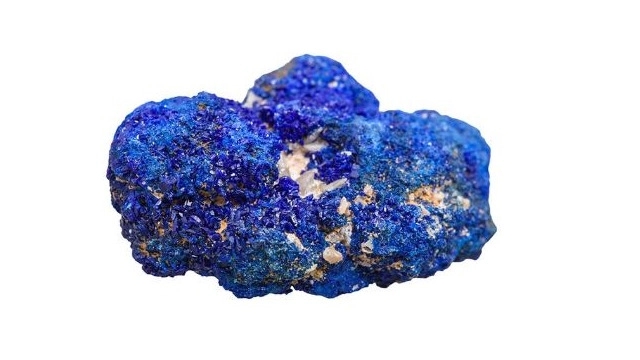
The characteristics of azorite stone
1. Color: Azurite is known as an attractive stone with blue to green colors. Its main color varies from dark blue to slightly green.
2. Luster: Azurite has a glassy to showcase luster, which gives it a beautiful luster when used in a polished form.
3. Shapes and Density: Azurite is found as crystals with a tetragonal or monoclinic structure. These crystals are usually condensed in the form of lumps or smaller pieces.
4. Hardness: Azurite has a hardness of about 3.5 to 4 on the Mouse hardness scale. This means that it is susceptible to easy scratches and must be carefully cared for.
5. Clarity: This stone is usually transparent or semi-transparent, but sometimes it may be more transparent in valuable specimens.
6. Openings and elasticity: Azurite stone may have openings that give it a special character. Also, in contact with light, it may have the ability to display optical phenomena such as glazing or different colors. 7. As a gemstone: Azurite is used as one of the gemstones due to its beautiful color and luster. Beautiful jewelry is made using azurite, which is often used in rings, earrings, necklaces, and other decorations.
As a beautiful gemstone, azurite is highly valued in jewelry and artistic adornment, and receives much attention from It has attracted jewelry lovers.
How to form azorite
Azurite is a secondary mineral that is usually formed when water laden with carbon dioxide seeps into the ground and reacts with subsurface copper rocks. The carbonic acid of these waters dissolves the small amount of copper in the ore. Dissolved copper is transported by water until it reaches a new geochemical environment. This new environment could be a place where the chemistry or temperature of the water changes, or where evaporation occurs. If the conditions are right, the mineral azurite may form. If these conditions persist for a long time, a significant accumulation of azurite may occur. This has happened in many parts of the world. Azurite deposition occurs in the pore spaces, cracks and cavities of the subsurface rock. The resulting azurite is usually lumpy or nodular. In rare cases, azurite is found as stalactitic and botryoidal growths. Well-formed monoclinic crystals are rarely found. These can only occur if azurite precipitates unconfined in a crack or cavity and is not disturbed by subsequent crystallization or rock movement.
Collex
Azurite stone is especially popular among collectors. Excellent specimens can sell for hundreds, thousands, or tens of thousands of dollars, depending on their quality and size.Rough azurite is uncut and completely natural.If exposed to heat or high humidity, specimen surfaces may begin to weather to malachite. . This creates a cloudy, faded or green appearance depending on the severity of the change.
How to keep azorite
Azurite can slowly erode and cause its dark blue color to become lighter and greener (malachite). Store azurite jewelry in the dark, away from heat and where air circulation is limited. This may be in a jewelry box or drawer. Azurite jewelry is difficult to clean. Gentle cleaning with a soft damp cloth or cool soapy water is best. Abrasive cleaners or over-cleaning will damage the stone. Hydroxide minerals are very sensitive to heat. Heat turns azurite green or black.